1894
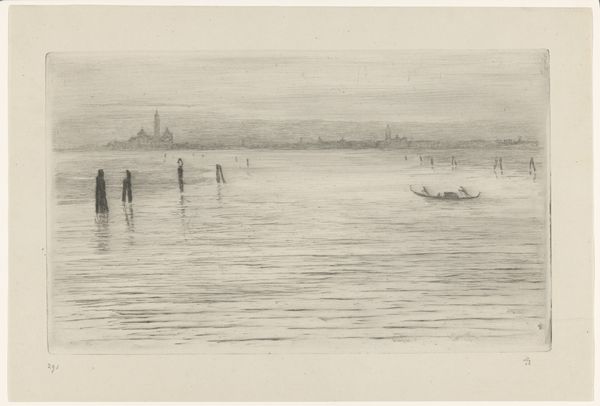
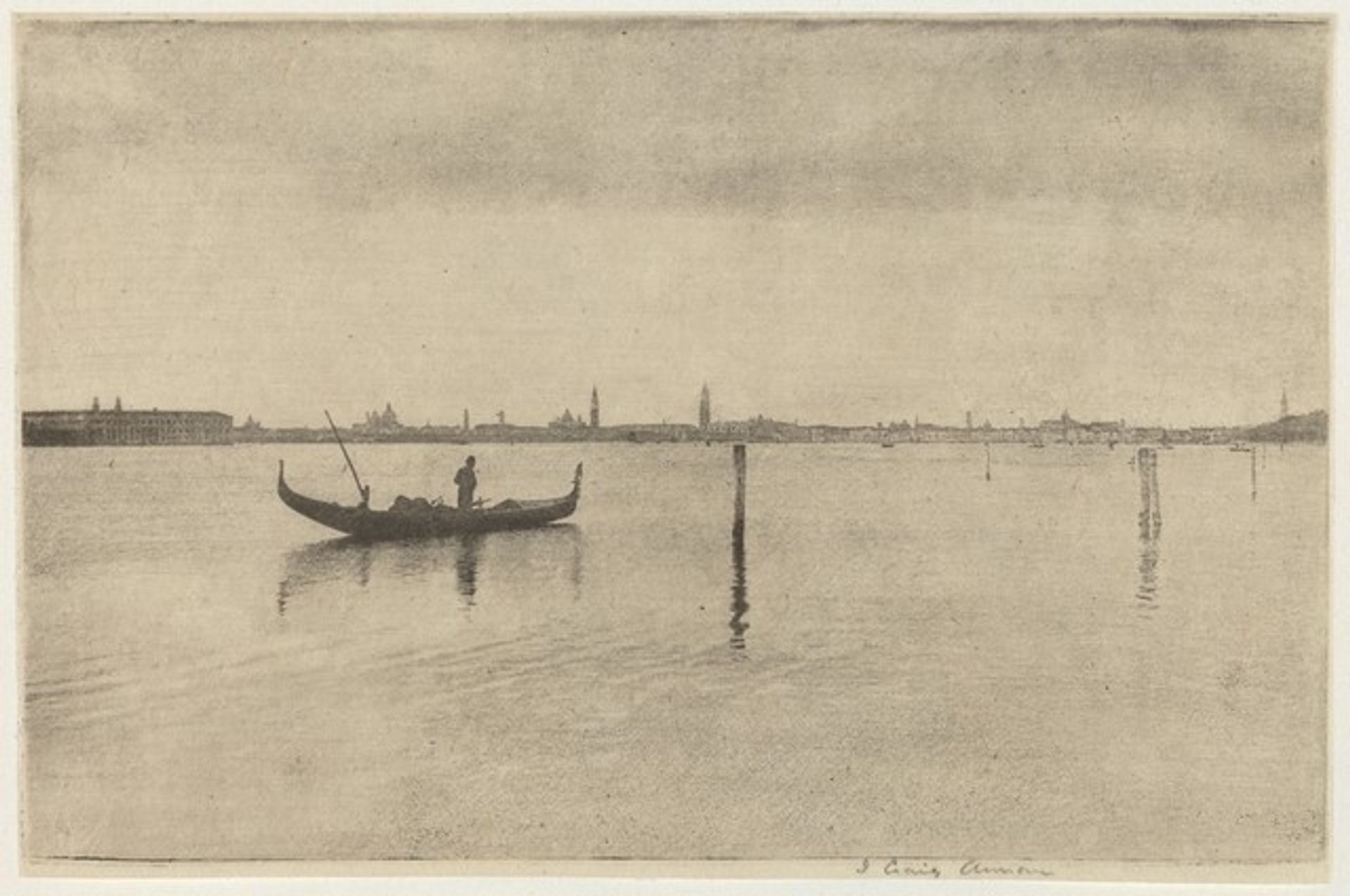
Venice from Lido


Listen to curator's interpretation
Curatorial notes
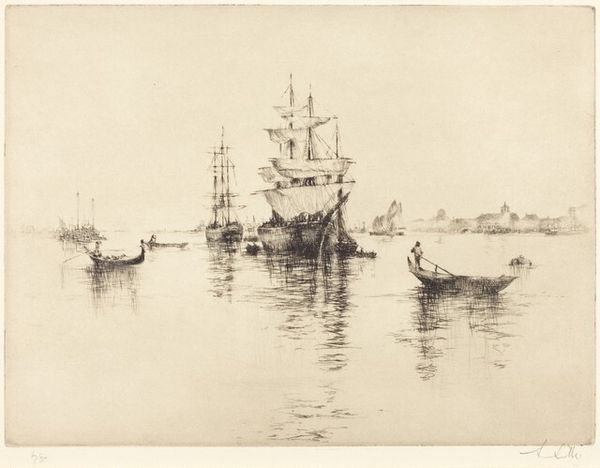
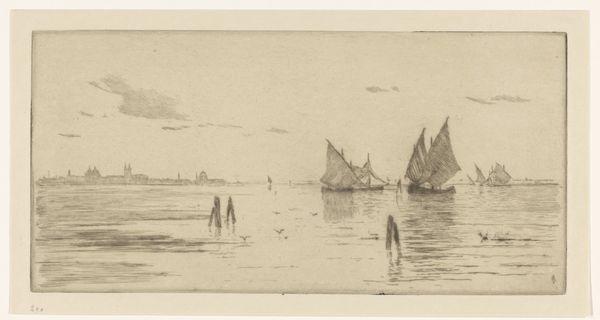
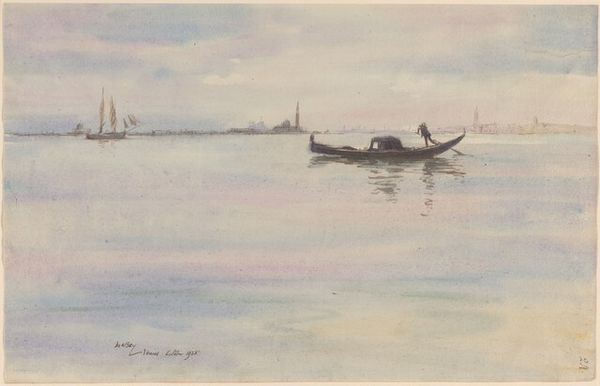
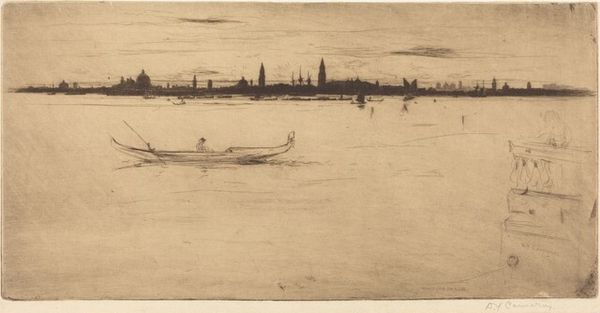
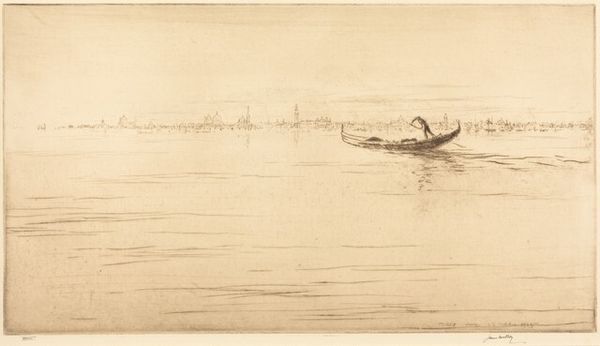
Editor: So, this is *Venice from Lido*, a photograph from 1894 by James Craig Annan. It's very quiet, almost like a memory. I’m curious about the stillness, the soft grays... it almost doesn't feel like a photograph. What strikes you about this piece? Curator: It whispers, doesn’t it? Annan, firmly rooted in pictorialism, masterfully uses photography not as a mirror to reality, but as a painterly tool. Forget crisp details; he prioritizes mood, evoking a feeling, an experience. Look at the gentle gradations, the almost dreamlike quality... what does that stillness suggest to you, though? A certain solitude, perhaps? Or maybe a longing? Editor: Definitely a sense of longing, now that you mention it. I was so caught up in the overall softness. But how does he achieve that painterly effect with photography? Was it common at the time? Curator: Ah, that’s the magic, isn’t it? Pictorialists like Annan used special lenses, printing techniques... they manipulated the process to soften the image, to almost *erase* the sharp lines we associate with photos. Think of it as rebelling against the mechanical eye. It was a conscious effort to elevate photography to the realm of ‘high art.’ Don’t you think they're kinda romantic like that? Editor: They were definitely going against the grain. It's interesting how this blurring actually clarifies the overall feeling... Curator: Precisely. It’s a lesson in how what we *don't* show can be as powerful as what we do. We are creating depth with the absence of elements. Editor: I never considered the perspective on the "absence" of components before! Thanks, that really clarifies the artist’s purpose, and his commitment to create depth in his photos. Curator: My pleasure, I will go back and read about the author with you sometime.