
1766
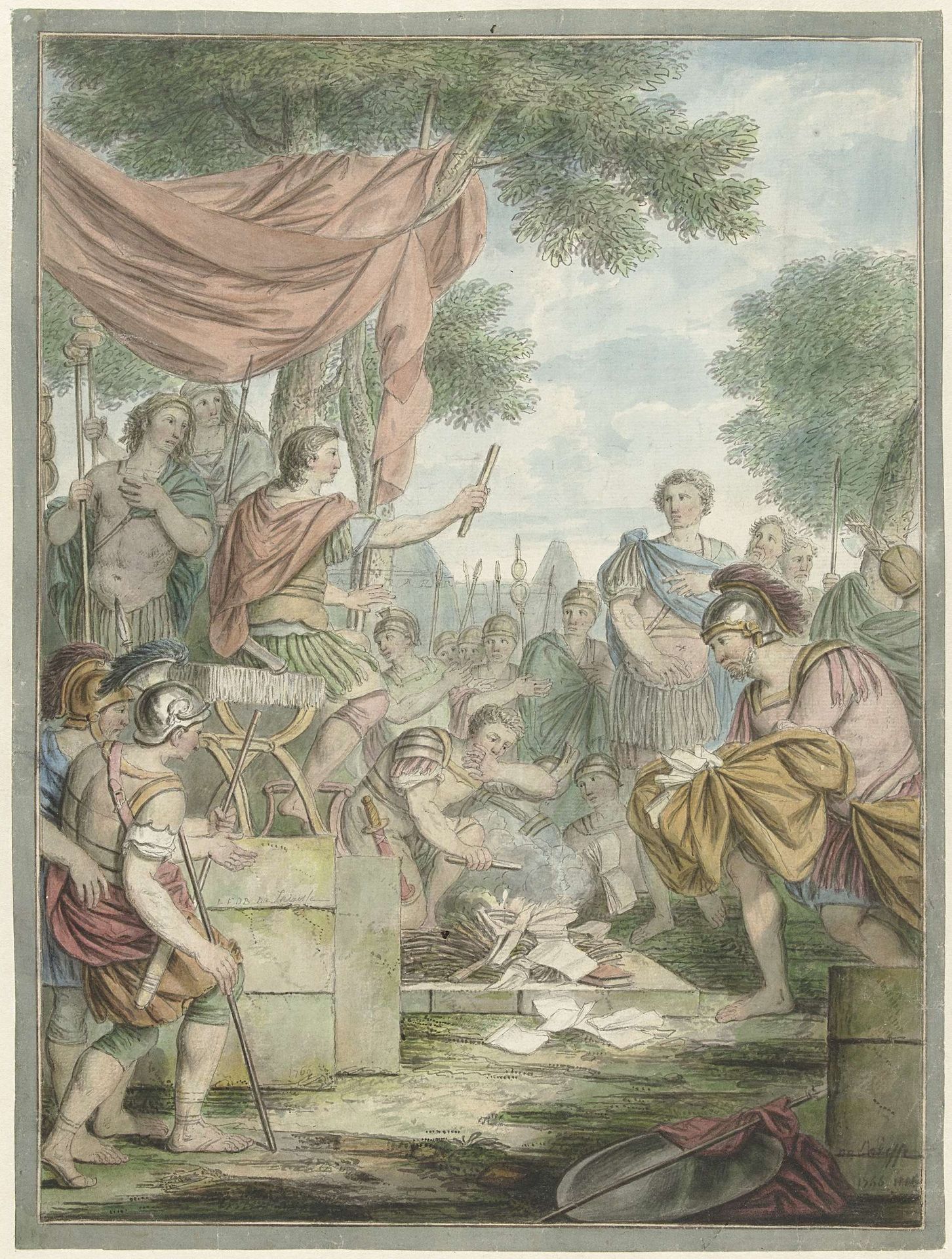
Pompeius laat de brieven van Sertorius verbranden

Louis Fabritius Dubourg
1693 - 1775Location
RijksmuseumListen to curator's interpretation
Curatorial notes
Editor: This is Louis Fabritius Dubourg's "Pompeius laat de brieven van Sertorius verbranden," a watercolor drawing from 1766. It's a dramatic scene, with the fire and the Roman soldiers. What do you see in this piece beyond just a historical depiction? Curator: Well, consider the performative aspect. Pompeius’ act of burning these letters is a political spectacle, a carefully constructed image of power and control. It begs the question: who benefits from this narrative being controlled, and whose voices are being suppressed? What does it say about transparency versus manipulation within power structures, both then and now? Editor: It does seem staged, especially with Pompeius elevated on a platform like that. Are there other layers of meaning here? Curator: Absolutely. Think about what it means to destroy written evidence. Whose stories are erased when those letters turn to ash? In many ways, this is an act of silencing dissent. Reflect on the implications for marginalized voices throughout history when dominant narratives are preserved through censorship. Editor: That's a powerful point. So, it’s not just a history painting; it’s a statement about the control of information? Curator: Precisely. And note Dubourg's embrace of Neoclassicism. While seemingly a style rooted in the revival of a purified past, how might we view its employment as serving a specific contemporary ideological purpose of instilling so-called “order” or “reason” during the Enlightenment, possibly furthering an unequal power dynamic? Consider its loaded visual rhetoric and what that does to us as viewers now. What silences still persist? Editor: That shifts my perspective entirely. It feels much more relevant to today’s world than I initially thought. I really appreciate your insight into the underlying power dynamics within the piece. Curator: It's through this kind of critical engagement with art that we can start to unpack complex social and political narratives that continue to shape our present.