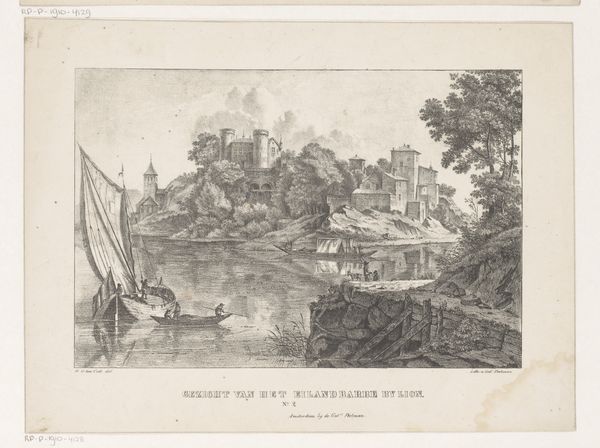
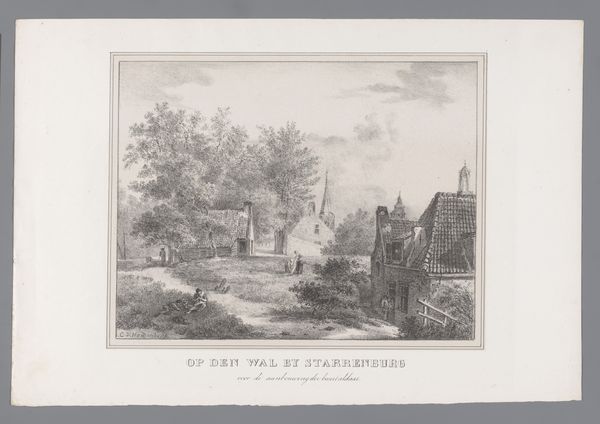
drawing, paper, ink
#
drawing
#
neoclacissism
#
landscape
#
paper
#
ink
#
romanticism
#
cityscape
#
realism
Dimensions: height 275 mm, width 415 mm
Copyright: Rijks Museum: Open Domain
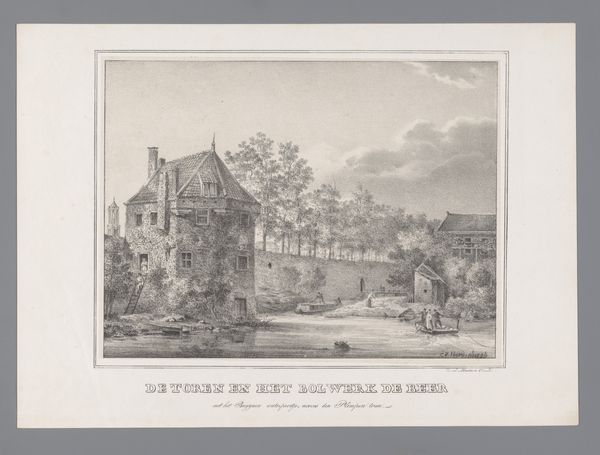
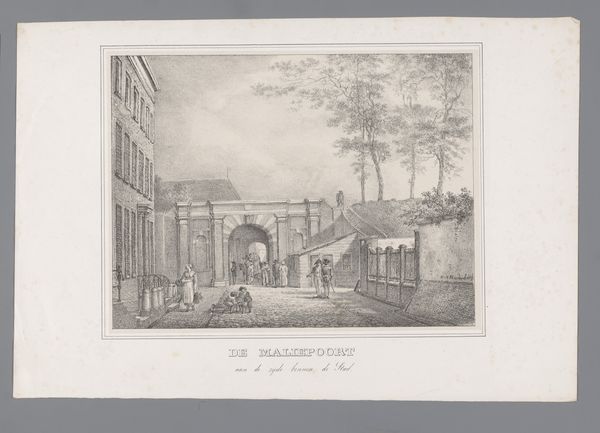
This is "Waterpoort bij het Begijnhof in Utrecht," made by Cornelis van Hardenbergh at an unknown date. It’s an etching, which means the image was incised into a metal plate, inked, and then printed onto paper. Etching allowed artists to produce multiple copies of an image, making art more accessible. The technique involves applying a waxy, acid-resistant ground to a metal plate, drawing through it with a needle to expose the metal, and then immersing the plate in acid. This creates the lines that hold the ink, and the printmaker wipes the surface clean before pressing paper to it. Consider the labor involved: preparing the plate, drawing the image in reverse, carefully controlling the acid, and then the printing process itself. In its time, printmaking played a crucial role in disseminating knowledge, satire, and artistic ideas, connecting cultural production to social and political life. By looking closely at the materials and processes used to create this work, we can appreciate its role in a broader history of visual culture and mass communication.
Comments
No comments
Be the first to comment and join the conversation on the ultimate creative platform.
 Collect
 React
React Comment
More like this