

1637 - 1692
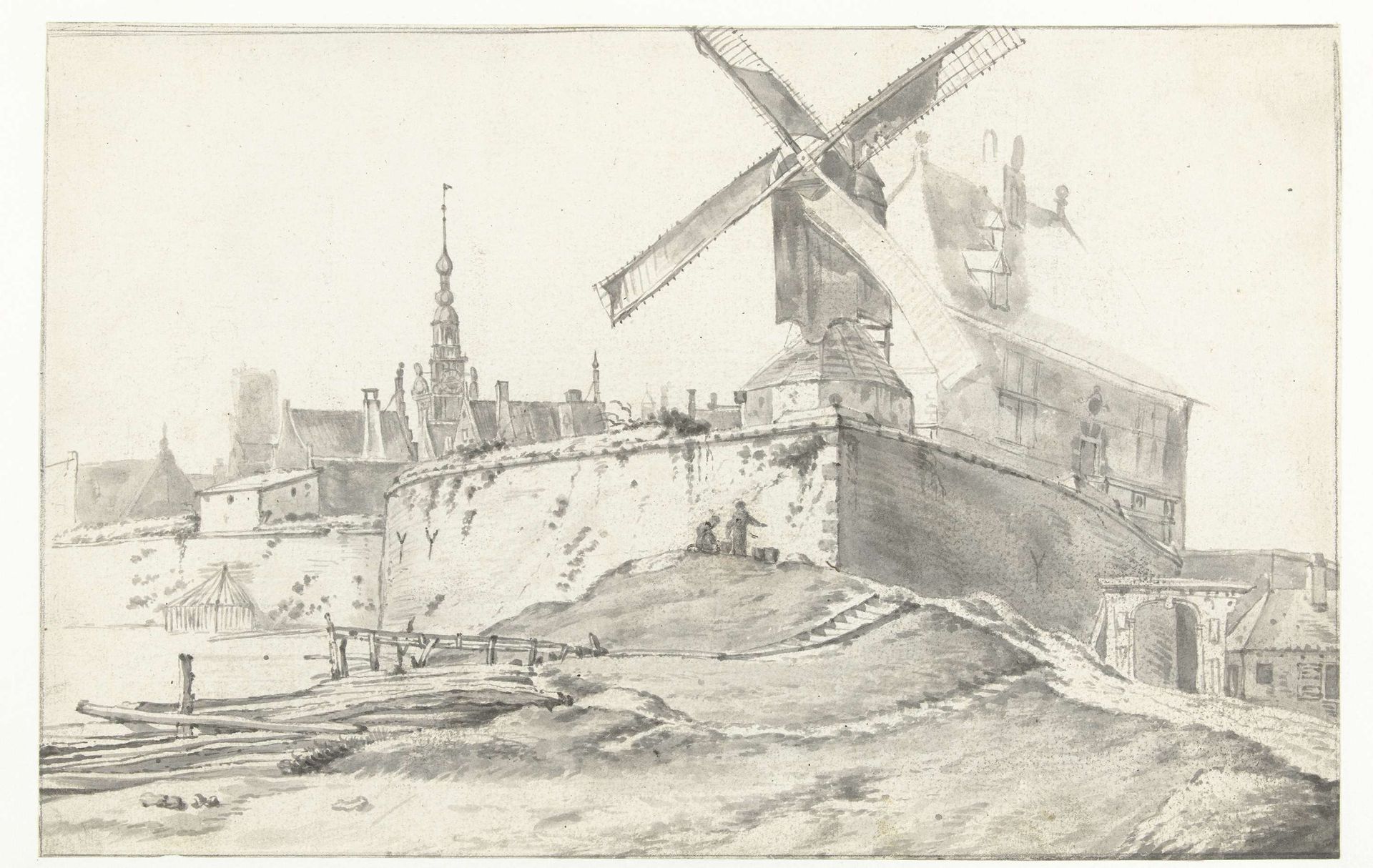
Gezicht op Dordrecht

Roelant Roghman
1627 - 1692Location
RijksmuseumListen to curator's interpretation
Curatorial notes
Curator: Before us, we have "Gezicht op Dordrecht," or "View of Dordrecht," a work attributed to Roelant Roghman, and it's part of the Rijksmuseum collection. We believe it was created sometime between 1637 and 1692. Editor: What strikes me immediately is the texture and the grey hues; it feels like an imagined dreamscape. The scale feels monumental given it’s rendered simply with pen on paper; it evokes a mood of melancholy with such grandeur of scale. Curator: Roghman's works are interesting from a materialist perspective. Here, we see a sketch made using what appears to be simple ink on paper. But notice the precision! This wasn't mere illustration, but served as designs which were etched as illustrations for a book which was printed, allowing him to profit from multiple copies. This commodification shifts it, creating cultural visibility to many new buyers for prints, whereas previously art patronage came from aristocracy and the church. Editor: The composition and inclusion of that large windmill are particularly striking. Windmills, as far as I know, aren’t just functional. They are heavy with symbolic weight from the Netherlands and they feature prominently as symbolic carriers throughout the whole period. A clear indicator of ingenuity and prosperity, yet a reliance on uncontrollable weather. It feels to have a direct connotation to the book of Job or of a national prayer to weather uncertainty. The inclusion creates a unique and memorable picture; I want to ponder over this for a while. Curator: I'm struck by the ways that we don't often think of these seemingly quiet works on paper in terms of labor, trade, commerce, and the production and dissemination of images—all supported by very physical means and by the very materials around us. Editor: Seeing how the image creates lasting cultural memory around an important hub in the Netherlands opens up so many questions; what this says to its buyers? Or what it suggests when looked at in later life after Roghman and after Dordrecht's status changed, reveals something truly remarkable! Curator: Exactly, and it's in those subtle traces, and humble materials, that this whole story reveals itself in very subtle, intricate ways. Editor: Yes, in these lasting sketches of memory and materials, we uncover both the universal and deeply local dimensions, captured in seemingly simple lines.