About this artwork
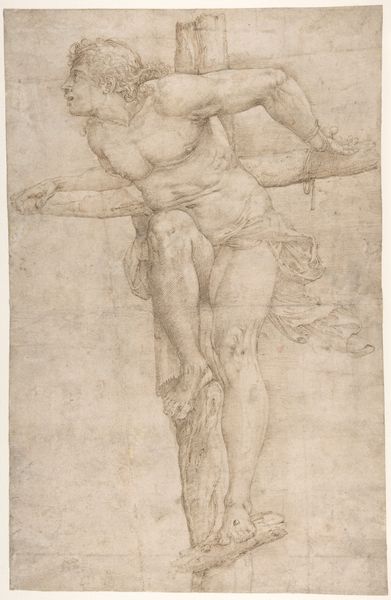
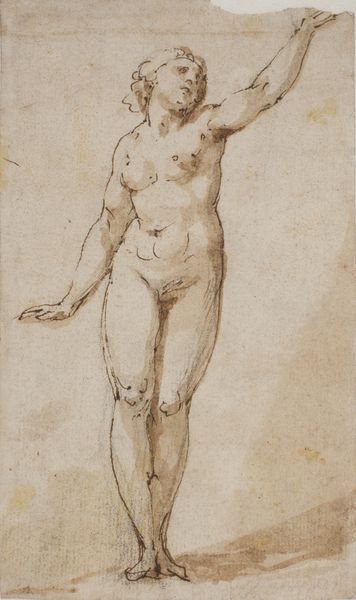
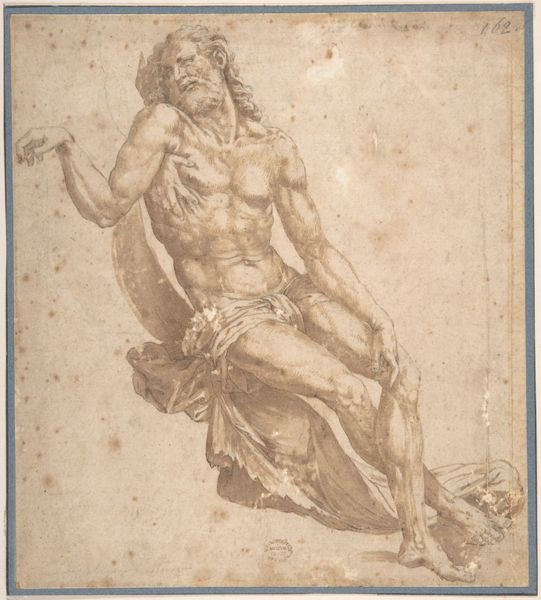
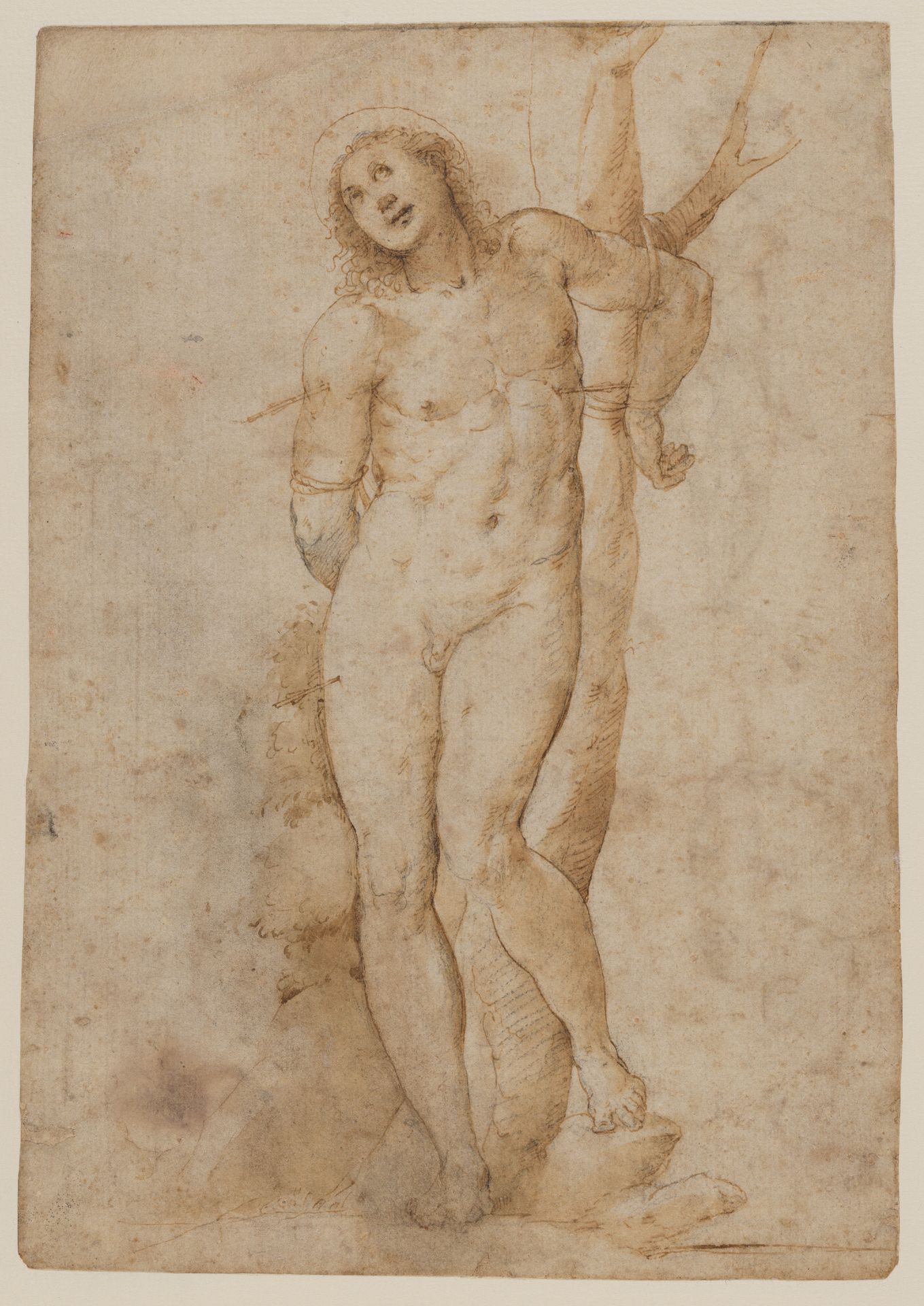
This is Sodoma’s “Saint Sebastian,” a drawing made with pen and brown ink. Sodoma, a contemporary of Michelangelo, was working during the High Renaissance in Italy. Saint Sebastian, a popular figure in art, was a Roman soldier martyred for his Christian faith. This drawing presents a nude, muscular figure, bound to a tree, his head tilted back in what seems to be a moment of spiritual ecstasy. During the Renaissance, the male nude was often used to express ideals of beauty and strength. However, in the context of Saint Sebastian, the body also becomes a site of vulnerability and suffering. Sodoma lived in a society where religious identity was deeply intertwined with political power. In his depiction, we can consider how issues of faith, sexuality, and power intersect. The drawing captures a moment of intense emotion, inviting us to contemplate the complexities of faith, devotion, and the human body.
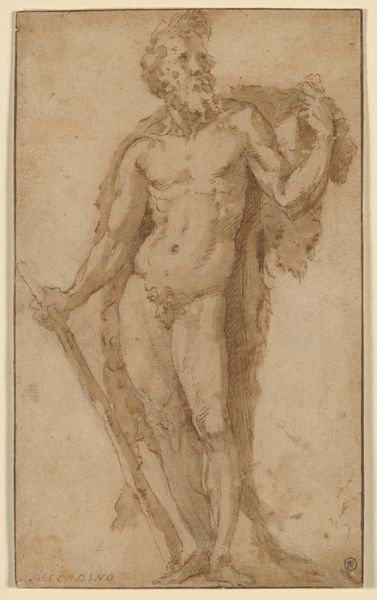
Saint Sebastian (recto); sketches of a male head and a standing figure in a short cape; a copy of the figure on the recto (verso)
1500 - 1549

Sodoma (Giovanni Antonio Bazzi)
1477 - 1549
The Metropolitan Museum of Art
Metropolitan Museum of Art, New York, NYArtwork details
- Medium
- drawing, ink
- Dimensions
- 10 3/8 x 7 1/4 in. (26.4 x 18.4 cm)
- Location
- Metropolitan Museum of Art, New York, NY
- Copyright
- Public Domain
Tags
Comments
Share your thoughts
About this artwork
This is Sodoma’s “Saint Sebastian,” a drawing made with pen and brown ink. Sodoma, a contemporary of Michelangelo, was working during the High Renaissance in Italy. Saint Sebastian, a popular figure in art, was a Roman soldier martyred for his Christian faith. This drawing presents a nude, muscular figure, bound to a tree, his head tilted back in what seems to be a moment of spiritual ecstasy. During the Renaissance, the male nude was often used to express ideals of beauty and strength. However, in the context of Saint Sebastian, the body also becomes a site of vulnerability and suffering. Sodoma lived in a society where religious identity was deeply intertwined with political power. In his depiction, we can consider how issues of faith, sexuality, and power intersect. The drawing captures a moment of intense emotion, inviting us to contemplate the complexities of faith, devotion, and the human body.
Comments
Share your thoughts