drawing, print, paper, pencil
#
architectural sketch
#
drawing
#
aged paper
#
toned paper
#
quirky sketch
# print
#
paper
#
form
#
personal sketchbook
#
sketchwork
#
pencil
#
line
#
sketchbook drawing
#
watercolour illustration
#
storyboard and sketchbook work
#
decorative-art
#
sketchbook art
Dimensions: sheet: 5 1/16 x 6 3/4 in. (12.9 x 17.2 cm)
Copyright: Public Domain
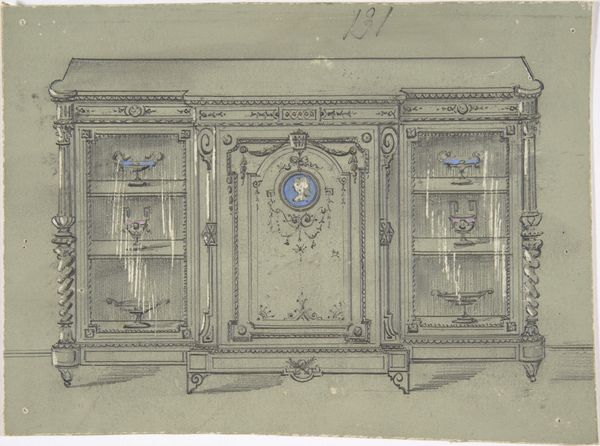
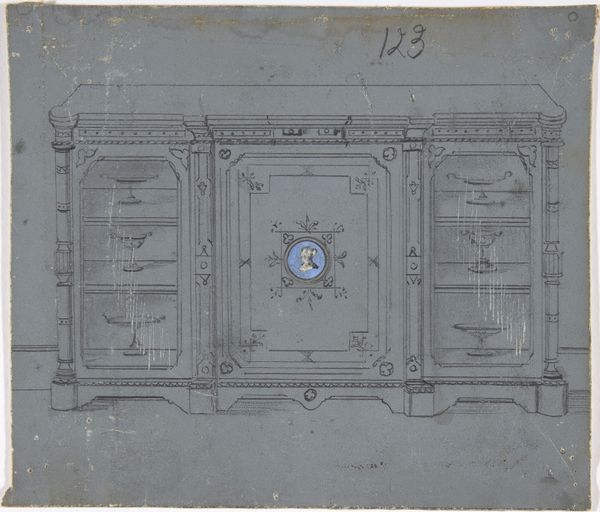
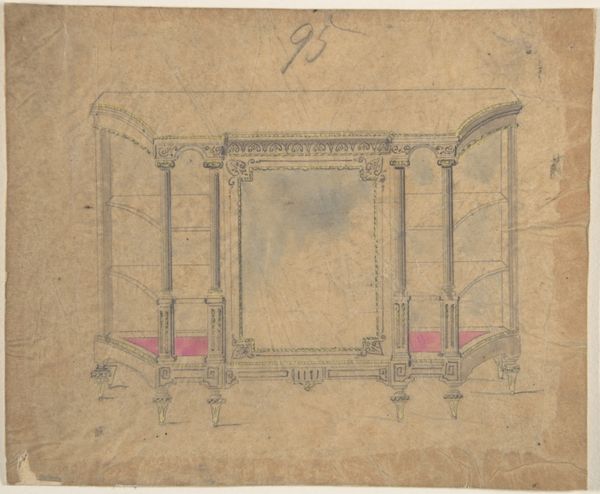
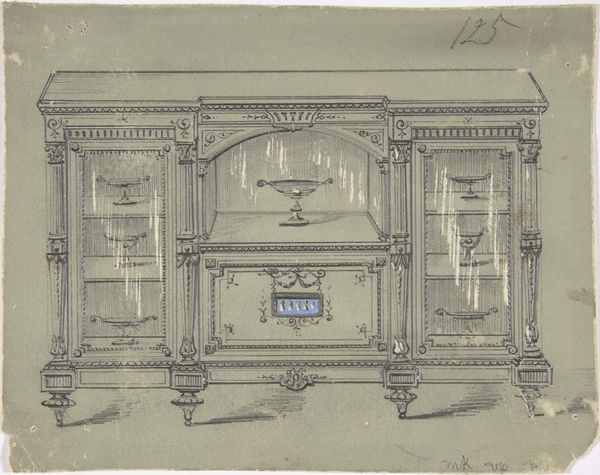
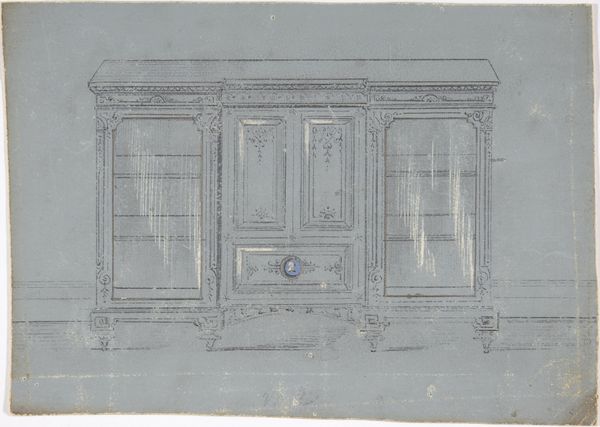
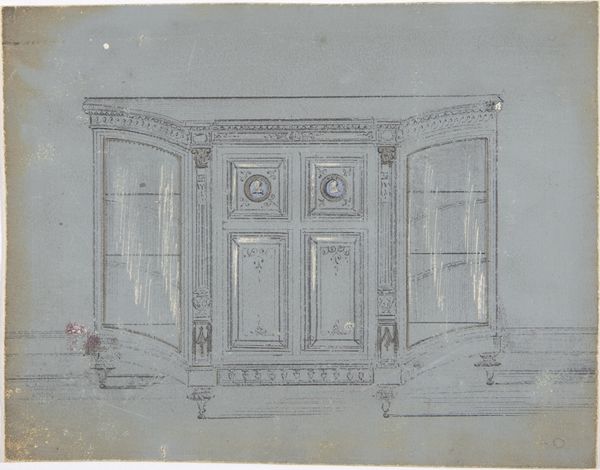
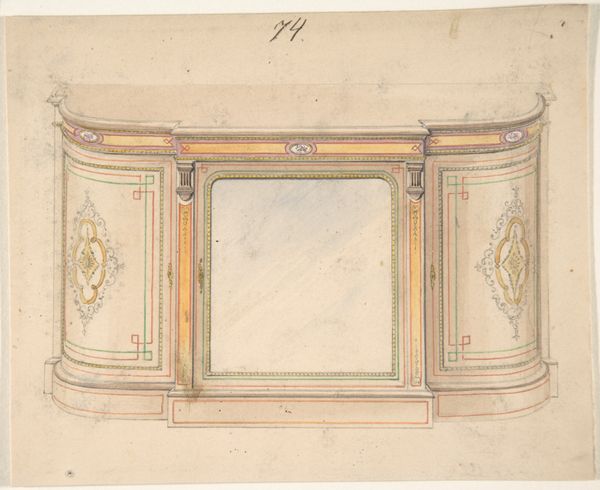
Editor: This drawing, "Cabinet Design with Glass Center Door," from between 1800 and 1900, looks like a pencil sketch on toned paper. It feels preliminary, like a peek into the design process. What strikes you when you look at it? Curator: It evokes the tension between aspiration and access that defined the decorative arts in that era. Consider who would have commissioned and owned such a cabinet. What does the design say about their identity, their social aspirations? It presents a very gendered vision of domesticity. Does it exclude certain groups and reinforce specific roles? Editor: So, you're saying the drawing reveals something about social hierarchies? Curator: Absolutely. Notice the cabinet’s proposed placement of glassware, likely expensive. This wasn't just about storage; it was about display. Think about the labor involved in acquiring and maintaining such status symbols, whose labor was it? These designs subtly reflect the inequalities inherent in that society. Editor: That's a perspective I hadn't considered. It seemed like a simple design sketch, but it really speaks to broader cultural themes. I’ll have to consider art as social commentary. Curator: Precisely. Even a seemingly innocent design choice can reflect the power dynamics of its time. By engaging in that critical lens, it brings an added appreciation to it. Editor: This makes me consider how consumerism, even today, impacts society. Thanks so much for your perspective. Curator: My pleasure. Thinking of art this way encourages engagement with difficult but necessary conversations, I’m glad to share the journey.
Comments
No comments
Be the first to comment and join the conversation on the ultimate creative platform.
 Collect
 React
React Comment
More like this