print, engraving
#
narrative-art
#
baroque
# print
#
old engraving style
#
form
#
line
#
cityscape
#
history-painting
#
engraving
#
realism
Dimensions: height 223 mm, width 275 mm
Copyright: Rijks Museum: Open Domain
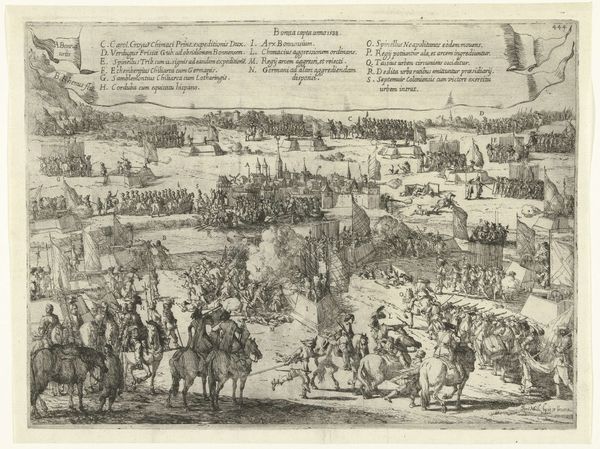
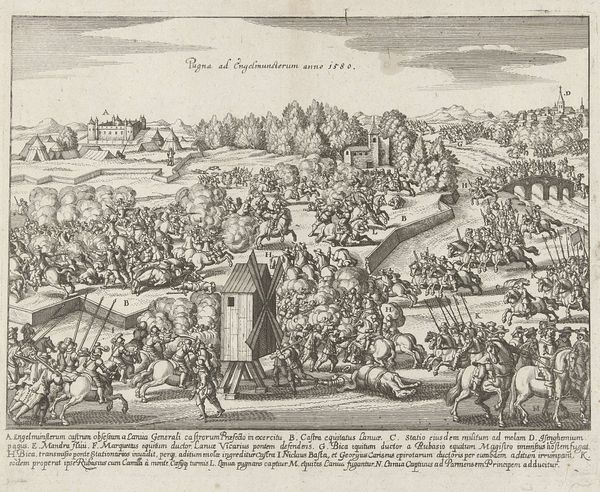
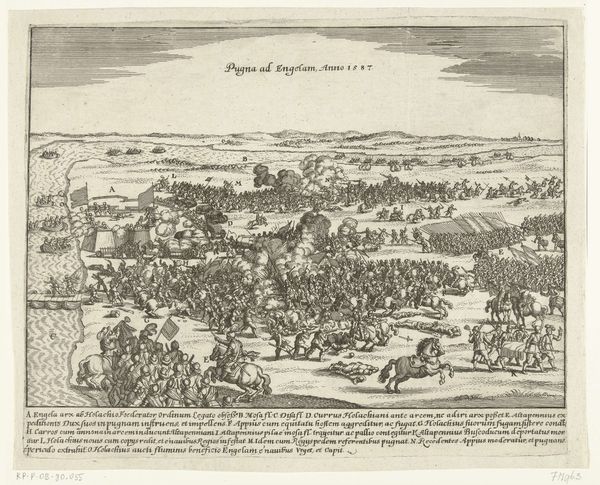
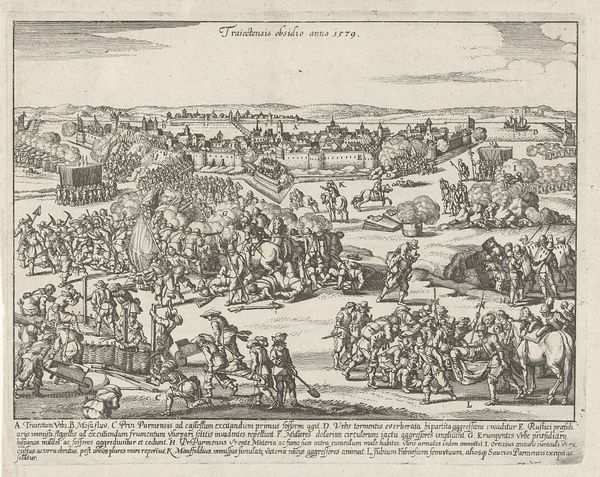
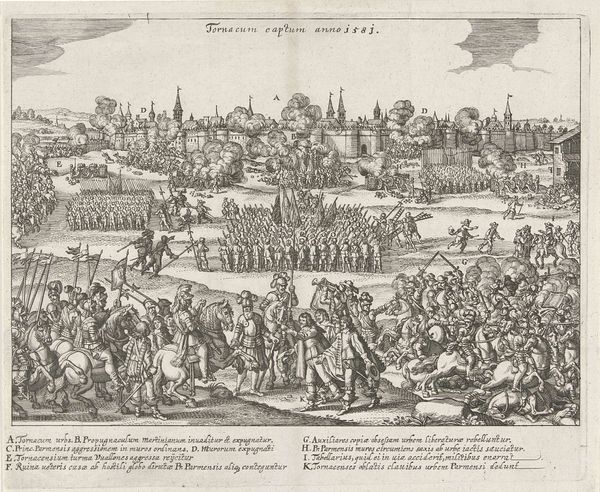
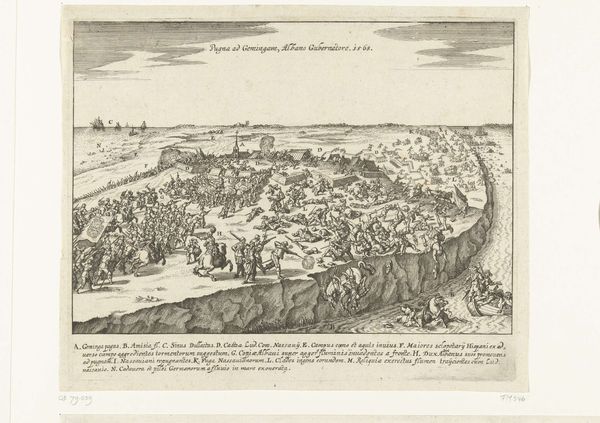
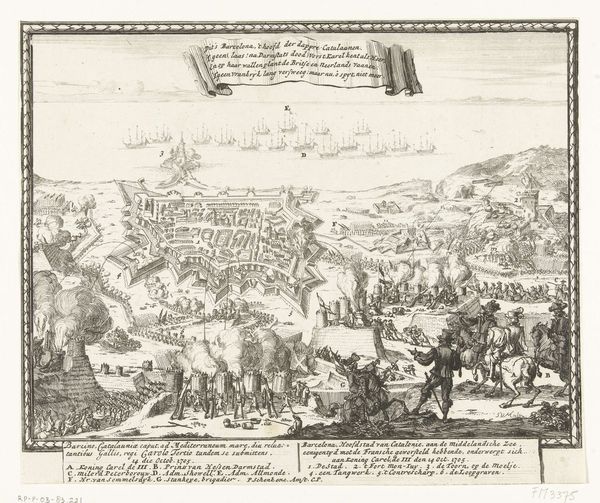
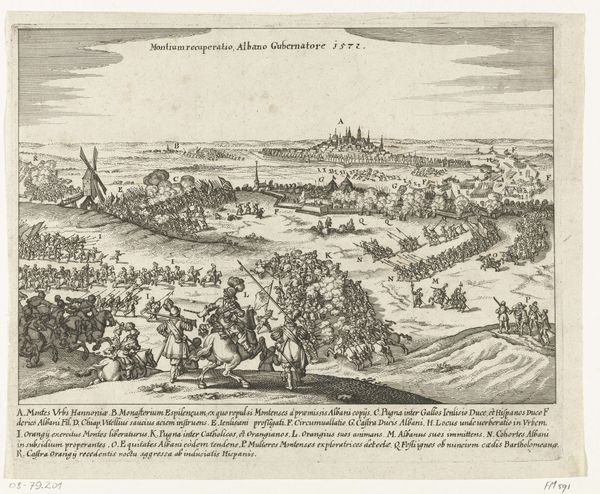
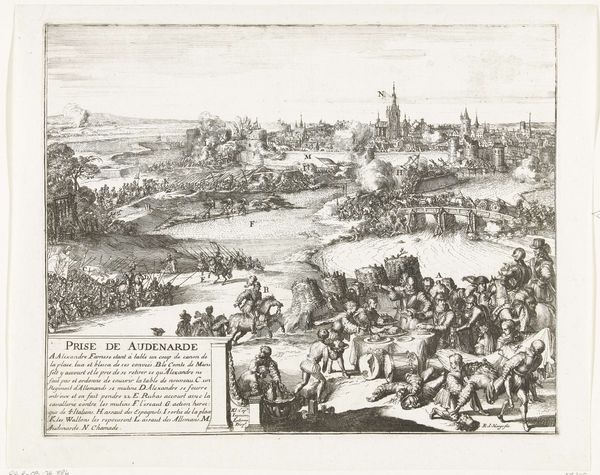
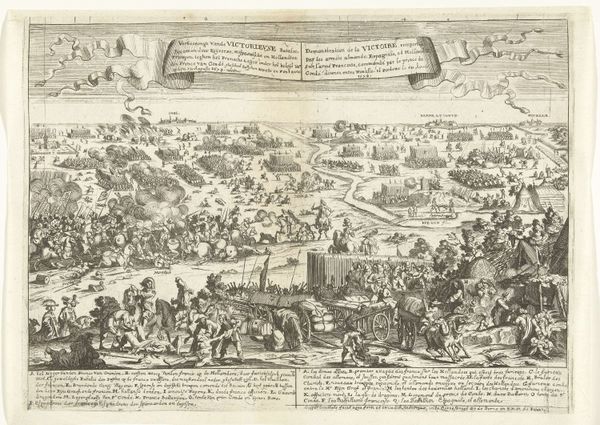
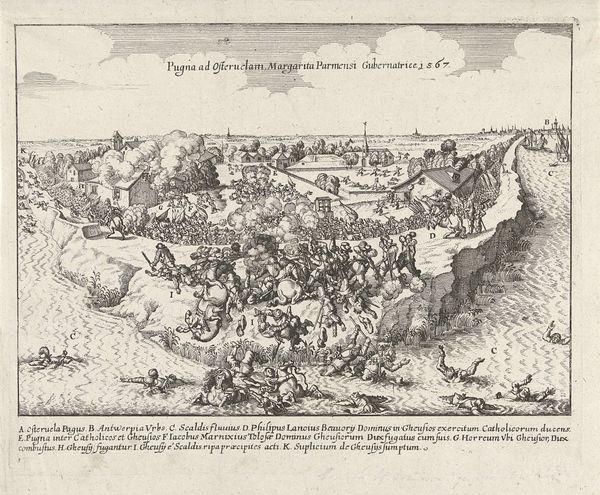
Curator: Ah, a grand historical tableau! What are your first thoughts on this engraving? Editor: My eyes don't quite know where to land. The density of detail is impressive but the mood feels overwhelmingly like…organised chaos. Like trying to narrate a hurricane. Curator: Exactly! This print, made between 1649 and 1651, depicts the "Conquest of Bonn in 1588." Though made much later, it visualises a key historical moment, now housed at the Rijksmuseum. Note the aerial perspective; it crams in every soldier, ship, and building possible. Editor: It reminds me of a painstakingly built ant farm…if ants were obsessed with warfare. There's a rigid structure, certainly. But what strikes me most is the sheer labour involved to meticulously translate a battle into lines and hatch marks. Did nobody think this baroque style, however precise, makes war seem somewhat ornamental? Curator: An interesting point. Its public function as an engraving normalises historical events by depicting violence from a comfortable, distanced perspective. It frames the events in Bonn for a wider audience – likely celebrating military successes, reinforcing political power. These weren't newspaper photos, were they? Such visuals built reputations, literally engraving them in cultural memory. Editor: In a way, it feels almost like propaganda – albeit highly detailed propaganda! One almost forgets the reality behind those tiny lines of soldiers. There are human stories obscured by its visual grammar: ambitions, fears, losses. Curator: I agree; but there’s something captivating. Like, beyond the politics and its historical significance, I see the engraver's passion. It almost feels devotional, all the dedication channeled through the stylus…to witness time, and translate a shared collective memory. Editor: Precisely. In a curious way, its technical perfection and obsessive scope are a monument to an effort – the effort of translating the chaos of war into ordered information and narrative. One must still imagine the screams, the mud, the terror behind the formal elegance.
Comments
No comments
Be the first to comment and join the conversation on the ultimate creative platform.
 Collect
 React
React Comment
More like this