

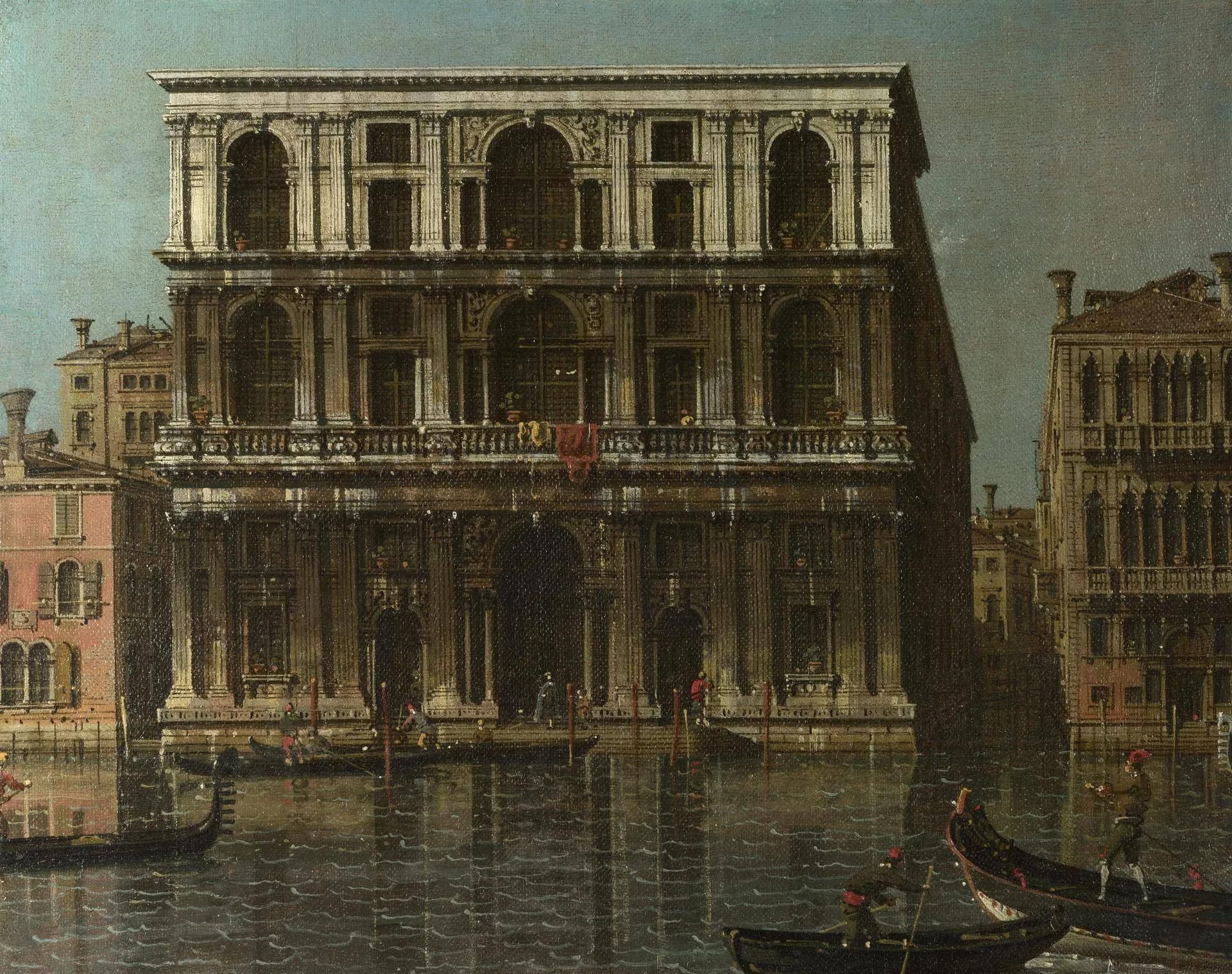
Venice: Palazzo Grimani


Listen to curator's interpretation
Curatorial notes
Canaletto’s painting of the Palazzo Grimani offers us a window into 18th-century Venice, a city in decline but still clinging to its former glory. Canaletto specialized in these views, known as vedute, which were popular with wealthy tourists seeking souvenirs of their travels. The Palazzo Grimani itself is a statement of power. Built by one of Venice's most influential families, its classical architecture echoes ancient Roman grandeur, an explicit attempt to legitimize the Grimani's authority by associating it with the power of the Roman Empire. But the image also speaks to the complex social hierarchy of Venice. We can notice the gondolas ferrying people along the canal, illustrating the vital role of maritime trade. However, the painting also subtly reflects the growing disparity between the wealthy elite and the working class. Art historians delve into archives, examining maps, letters, and financial records. By exploring these sources, we begin to understand how art is deeply embedded in the social and political fabric of its time.