About this artwork
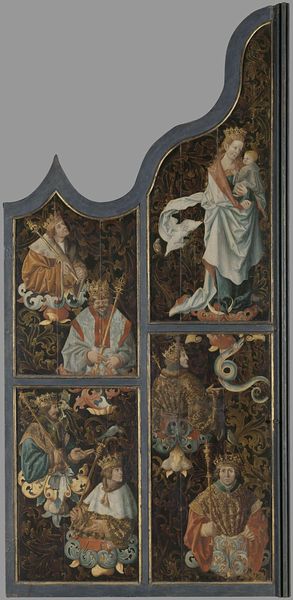
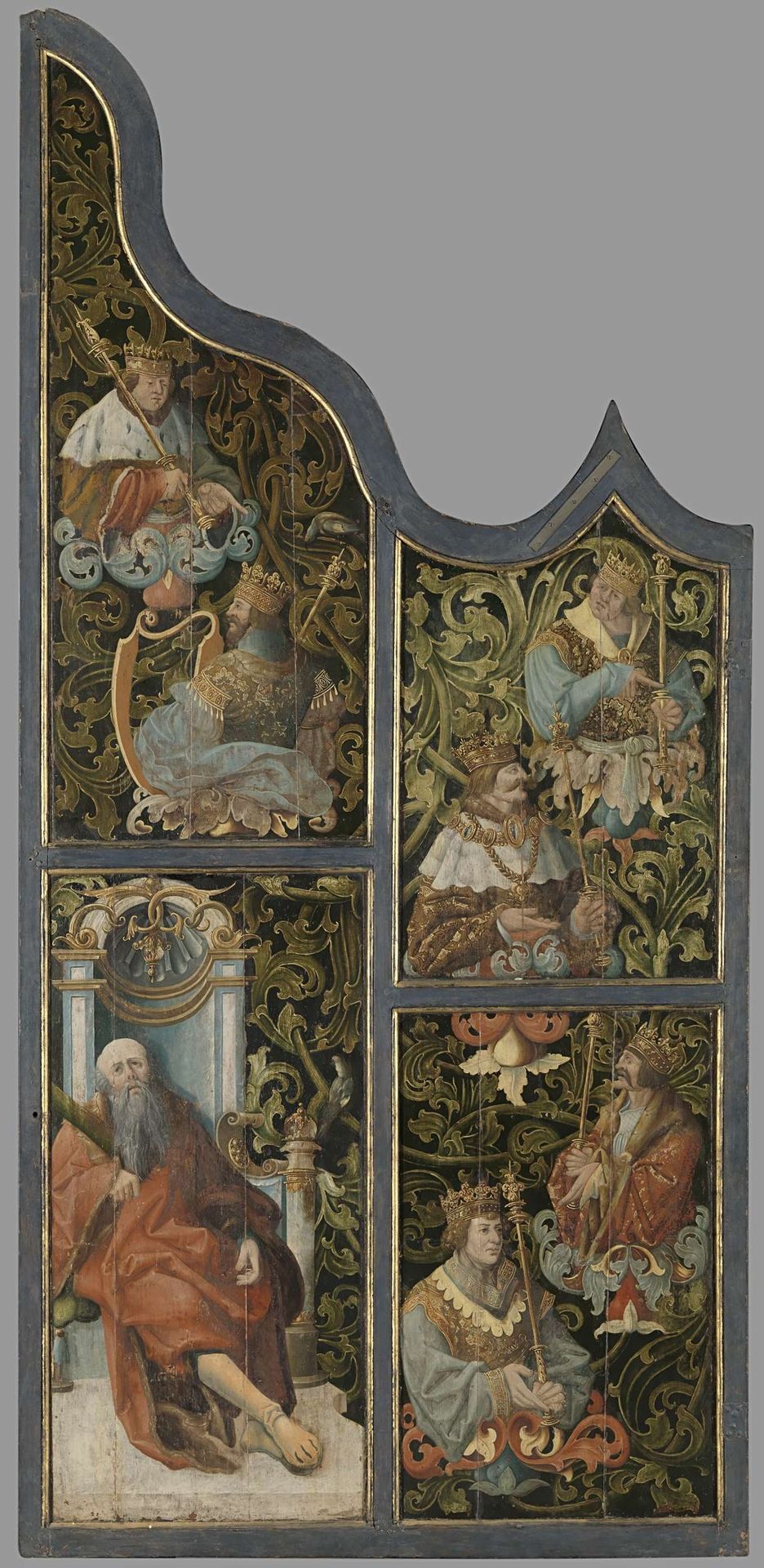
This is the right door of an organ, made from wood, which once belonged to the Dutch Reformed Church in Scheemda. Though the artist remains anonymous, the door likely dates back to the late 15th or early 16th century, a period of significant religious and cultural transition in the Netherlands. The panels depict regal figures playing musical instruments, alongside what appears to be an enthroned biblical character, perhaps King David. Notice how the artist uses visual cues such as crowns, fine robes, and musical instruments to indicate status and sophistication, reflecting the social hierarchies of the time. The presence of such an elaborate organ in a Reformed Church suggests a complex relationship between religious practice and artistic expression. To understand this artwork fully, we might consult church records, social histories of the Netherlands, and studies of the Reformation. This panel reminds us that art is always embedded in a specific social and institutional context.
Right door of the organ from the Dutch Reformed Church in Scheemda c. 1526

Anonymous
@anonymousLocation
RijksmuseumArtwork details
- Medium
- carving, tempera, painting, relief, wood
- Dimensions
- height 290 cm, width 137 cm, depth 3 cm
- Location
- Rijksmuseum
- Copyright
- Rijks Museum: Open Domain
Tags
portrait
medieval
carving
tempera
painting
sculpture
relief
figuration
wood
genre-painting
history-painting
northern-renaissance
mixed media
watercolor
Comments
No comments
About this artwork
This is the right door of an organ, made from wood, which once belonged to the Dutch Reformed Church in Scheemda. Though the artist remains anonymous, the door likely dates back to the late 15th or early 16th century, a period of significant religious and cultural transition in the Netherlands. The panels depict regal figures playing musical instruments, alongside what appears to be an enthroned biblical character, perhaps King David. Notice how the artist uses visual cues such as crowns, fine robes, and musical instruments to indicate status and sophistication, reflecting the social hierarchies of the time. The presence of such an elaborate organ in a Reformed Church suggests a complex relationship between religious practice and artistic expression. To understand this artwork fully, we might consult church records, social histories of the Netherlands, and studies of the Reformation. This panel reminds us that art is always embedded in a specific social and institutional context.
Comments
No comments