

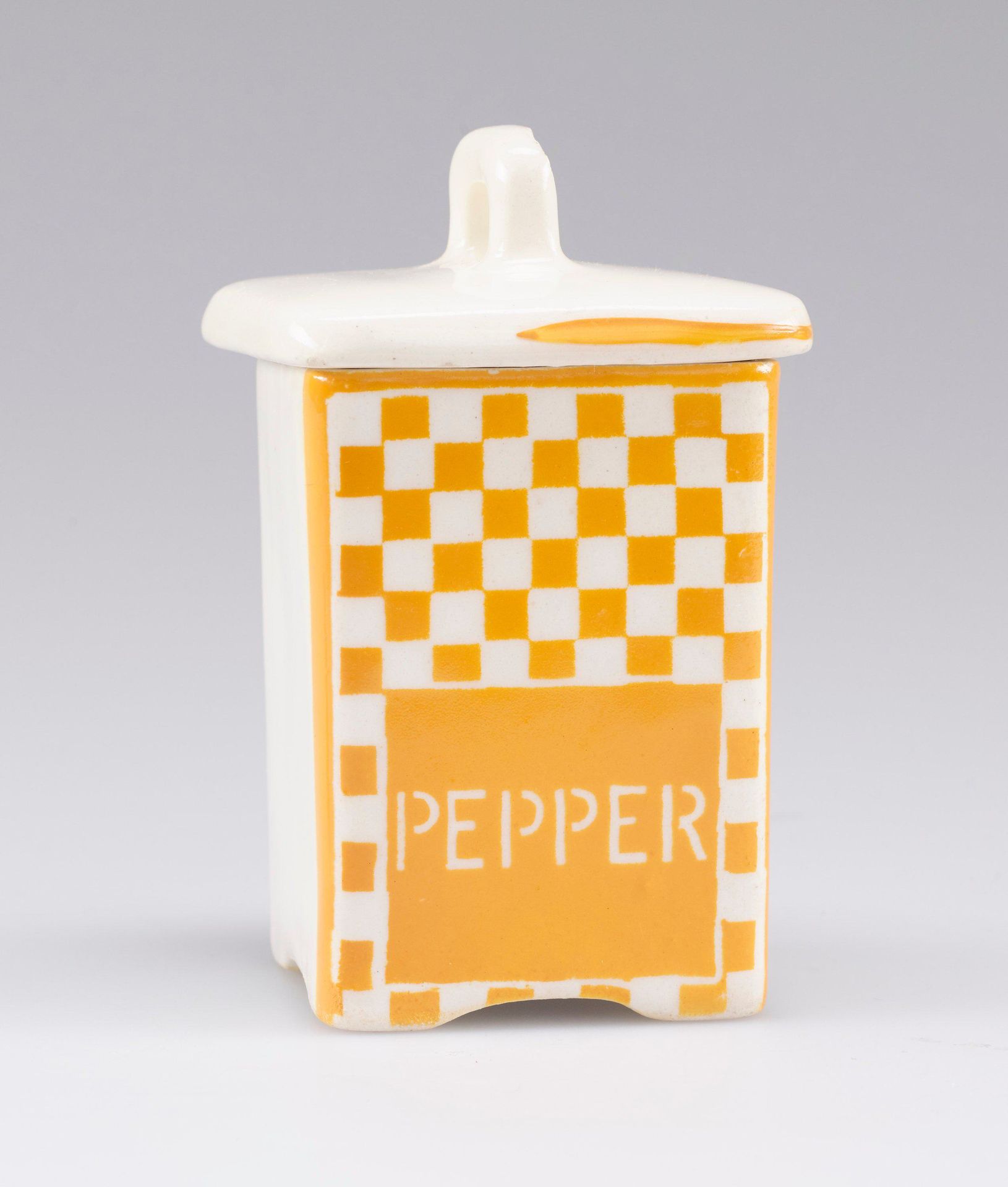
c. 20th century
Pepper container


Listen to curator's interpretation
Curatorial notes
Editor: This little ceramic pepper container, dating from around the 20th century, caught my eye. It's so simple, with that bright orange checkerboard pattern, yet it feels very deliberate. What do you see in this piece? Curator: Immediately, I see a commentary on domestic labor and the often-overlooked artistry inherent in everyday objects. The material, ceramic, shifts our perception from “high art” to craft. Consider the means of production. Was this mass-produced, or made in someone’s home studio? Editor: That’s interesting. I hadn’t considered the production aspect. The "Pepper" label makes it very utilitarian... Curator: Precisely! The pattern and decoration movement challenged traditional art hierarchies. The geometric design subverts the idea of painting, for instance, favoring repeated motifs suited for serial applications. Think about how it was made, too: was a stencil used? Was each square hand-painted? Editor: So, it’s elevating the everyday by using these art techniques, but also questioning what art should be. Curator: Yes. It questions what we consider "valuable." The choice of decoration speaks volumes about the society that consumes and creates objects like this. Does the choice of bright colors and checkered pattern challenge or confirm the values of the user of this object? What type of work and consumer culture does it serve? Editor: I see the container differently now, thinking about the labor and the challenges to art categorization. Curator: Exactly. It shows how considering materials and their processes reveals a social context often invisible in traditional art history. Editor: That connection is really illuminating, thank you!