About this artwork
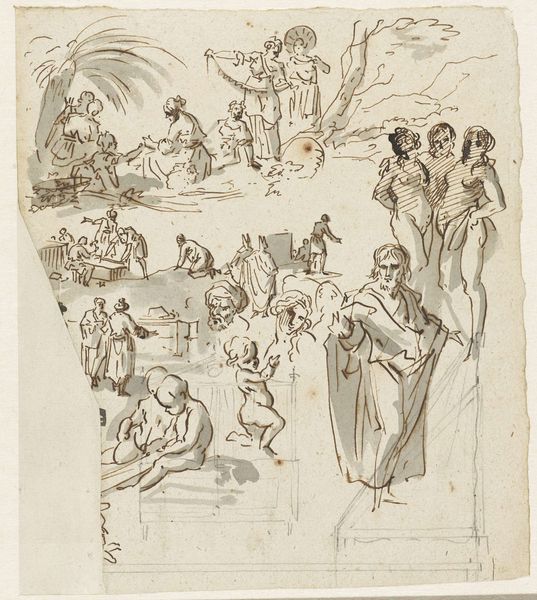
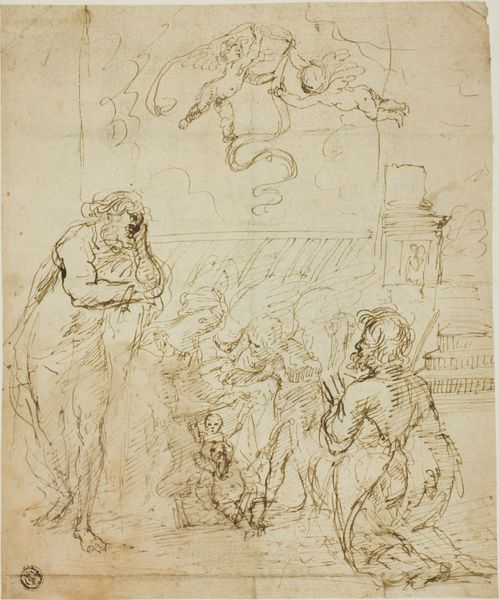
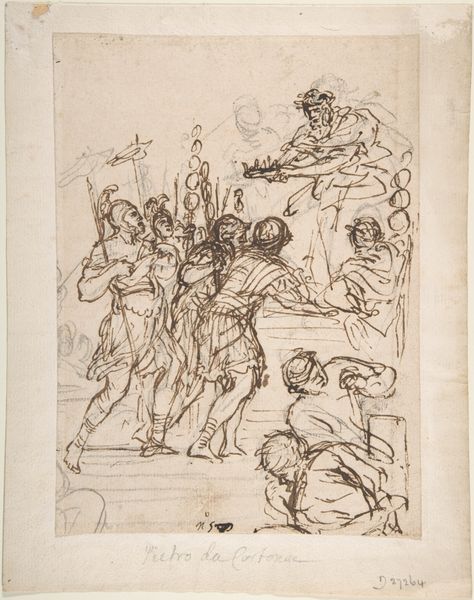
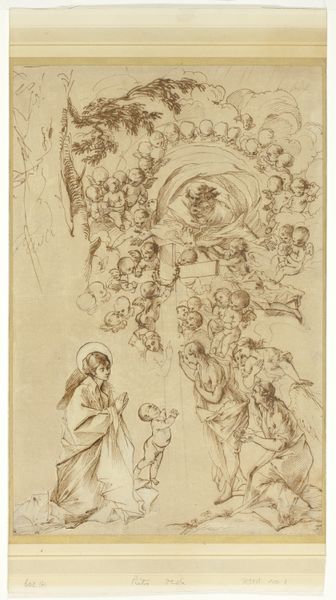
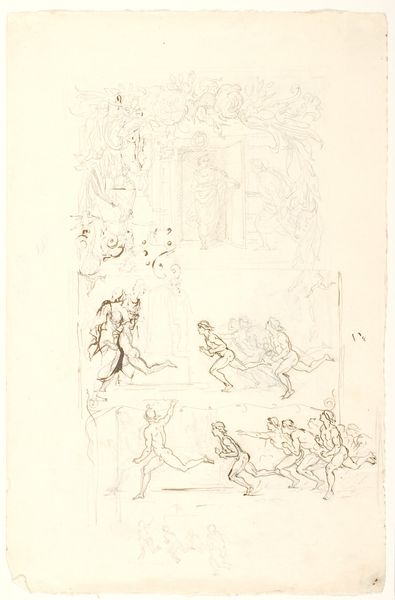
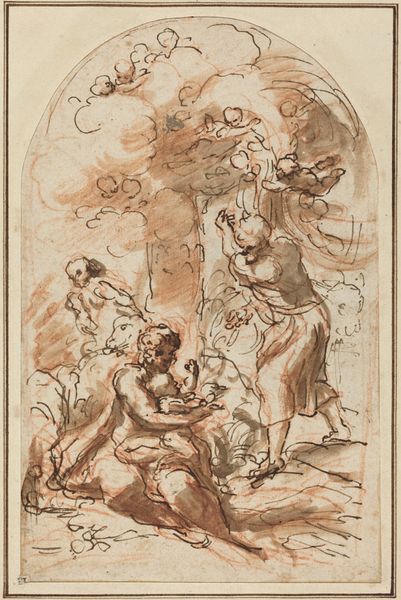
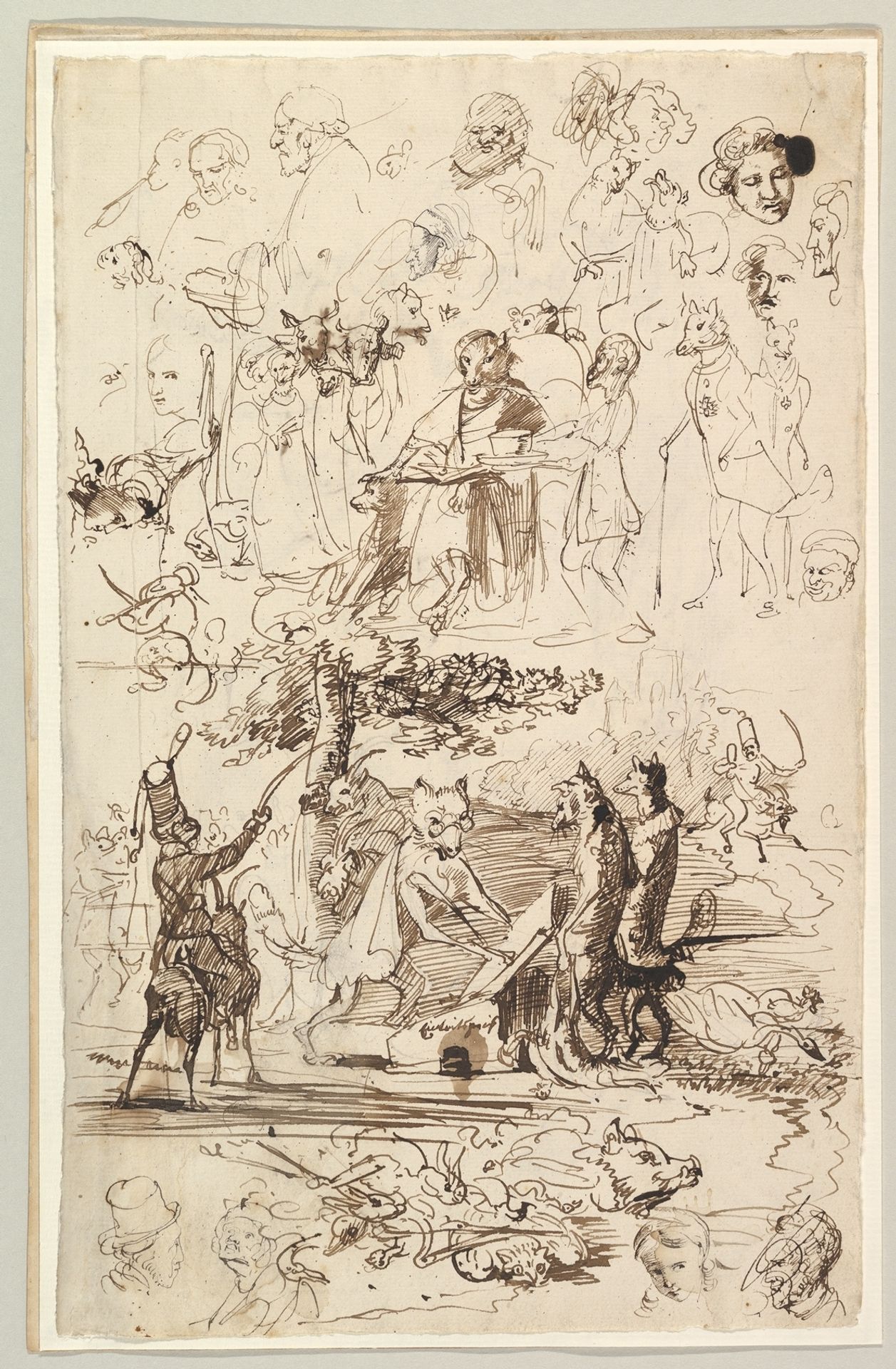
Wilhelm von Kaulbach created this sheet of studies with pen and brown ink in the 19th century. These sketches, now held at the Metropolitan Museum, offer a glimpse into the world of German Romanticism and its fascination with folklore and national identity. Kaulbach was closely associated with the Dusseldorf Academy, where he was director, as well as the Munich Academy. His involvement in academic institutions shaped his artistic output, and in turn the tastes of the rising artists during the period. The upper half of the sheet features studies for "Reineke Fuchs," a literary adaptation of traditional fox tales. Below, you'll notice studies of soldiers and a battle, perhaps related to the nationalistic fervor sweeping Europe at the time. The juxtaposition of folklore and military themes speaks to the cultural and political landscape of 19th-century Germany, then in the throes of unification. By consulting historical archives, literary sources, and biographical accounts, we can gain a deeper appreciation for the social and institutional forces that shaped Kaulbach's art.
Sheet of Studies, Including for Reineke Fuchs; verso: Studies of Soldiers and of a Battle in a Wood
1825 - 1874

Wilhelm von Kaulbach
1805 - 1874
The Metropolitan Museum of Art
Metropolitan Museum of Art, New York, NYArtwork details
- Medium
- drawing, print, ink, pen
- Dimensions
- sheet: 13 1/4 x 8 7/16 in. (33.7 x 21.5 cm)
- Location
- Metropolitan Museum of Art, New York, NY
- Copyright
- Public Domain
Tags
Comments
Share your thoughts
About this artwork
Wilhelm von Kaulbach created this sheet of studies with pen and brown ink in the 19th century. These sketches, now held at the Metropolitan Museum, offer a glimpse into the world of German Romanticism and its fascination with folklore and national identity. Kaulbach was closely associated with the Dusseldorf Academy, where he was director, as well as the Munich Academy. His involvement in academic institutions shaped his artistic output, and in turn the tastes of the rising artists during the period. The upper half of the sheet features studies for "Reineke Fuchs," a literary adaptation of traditional fox tales. Below, you'll notice studies of soldiers and a battle, perhaps related to the nationalistic fervor sweeping Europe at the time. The juxtaposition of folklore and military themes speaks to the cultural and political landscape of 19th-century Germany, then in the throes of unification. By consulting historical archives, literary sources, and biographical accounts, we can gain a deeper appreciation for the social and institutional forces that shaped Kaulbach's art.
Comments
Share your thoughts