1500 - 1534
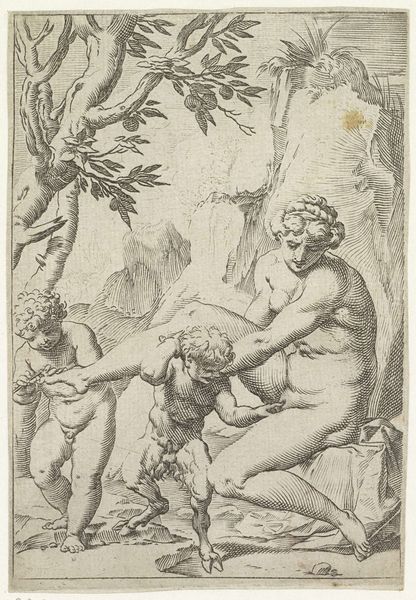
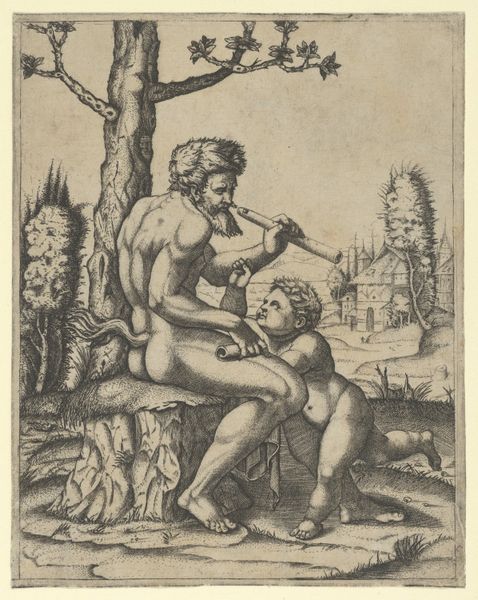
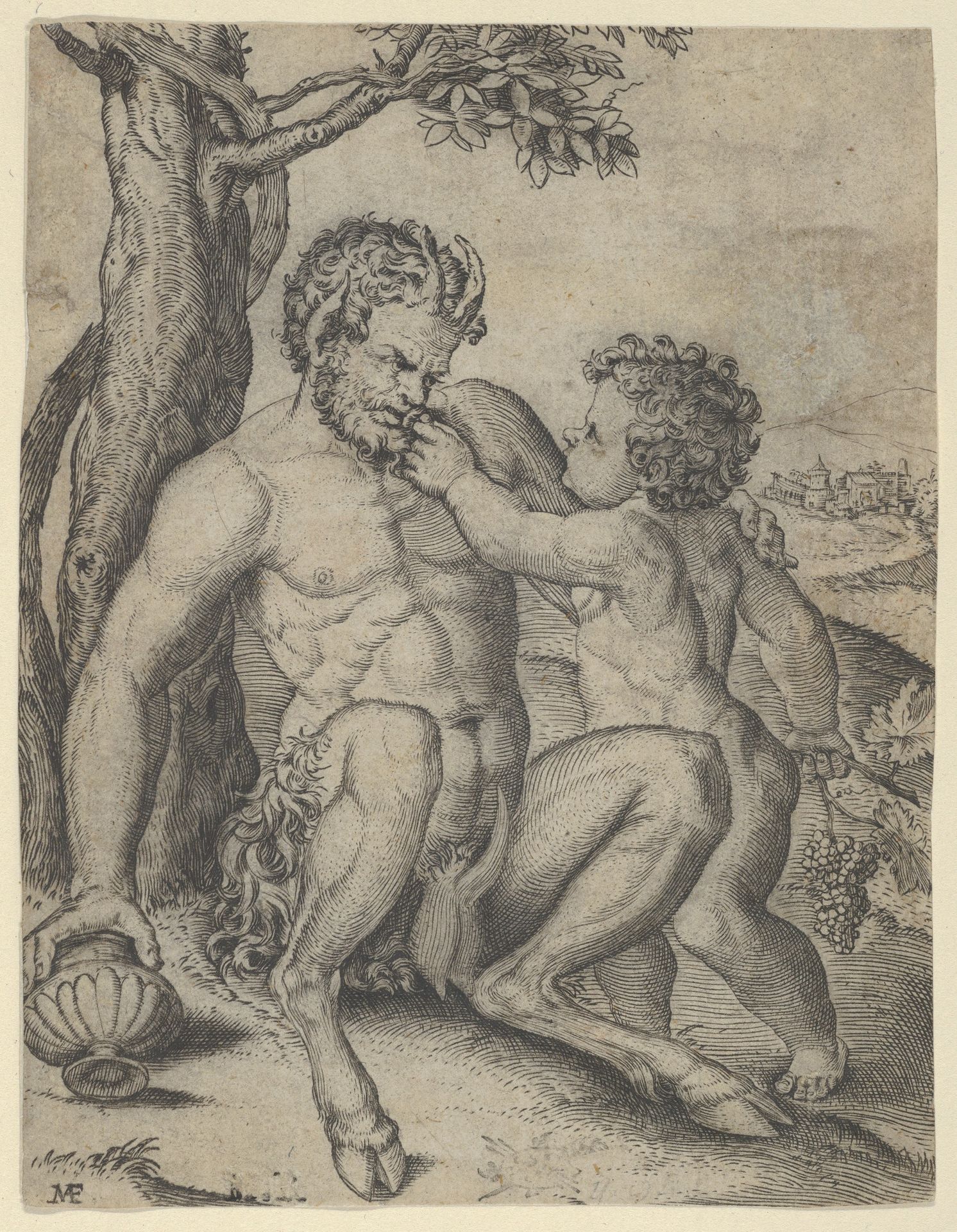
Satyr and Child

Marcantonio Raimondi
1475 - 1534
The Metropolitan Museum of Art
Metropolitan Museum of Art, New York, NYListen to curator's interpretation
Curatorial notes
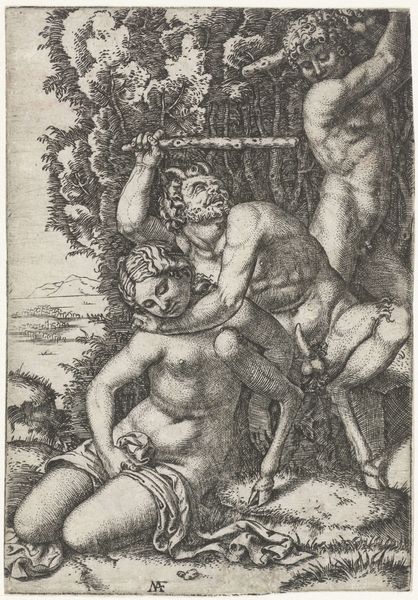
Marcantonio Raimondi’s engraving presents a satyr, a symbol of untamed nature, alongside a child, evoking themes of innocence and corruption. The satyr, with his goat-like features, embodies the primal instincts and unrestrained desires that the ancient Greeks associated with the wild. The child offers the satyr grapes, a symbol often linked to Bacchus, the god of wine, ecstasy, and theatre. This simple offering speaks volumes, echoing motifs found in classical art, where the presentation of gifts to deities was commonplace. Yet, the dynamic shifts—the pure, uncorrupted child engaging with a figure of base instinct. Consider how such imagery resurfaces through the ages, transformed yet retaining a primal link to our collective memory. The child is both innocent and knowing, engaging the satyr as a dark mirror. Such pairings serve as potent symbols of human nature, continuously cycling through art, reflecting our complex relationship with our primal selves.