About this artwork
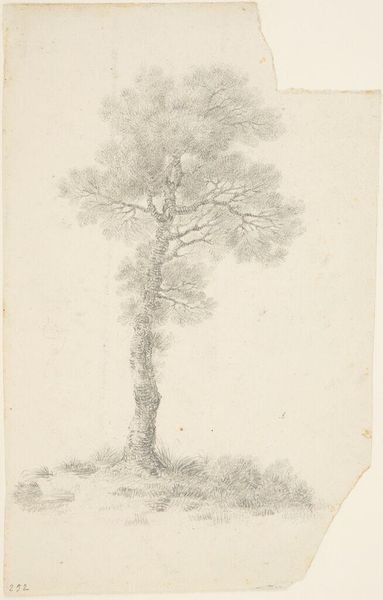
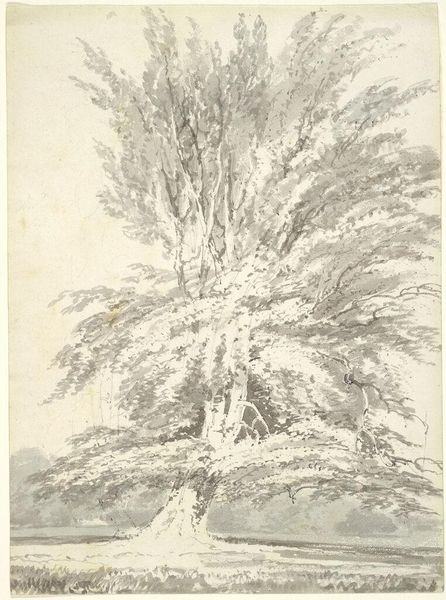
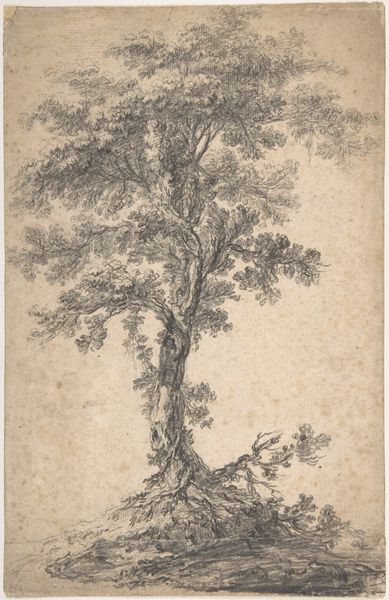
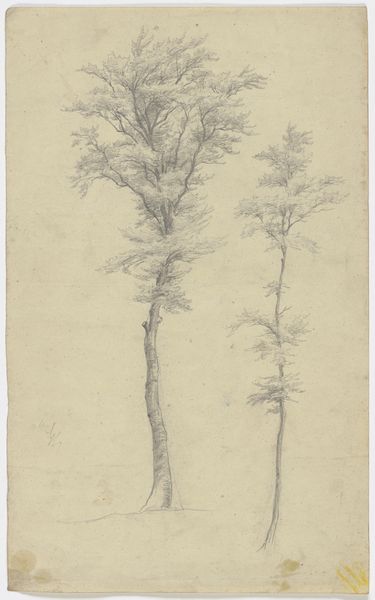
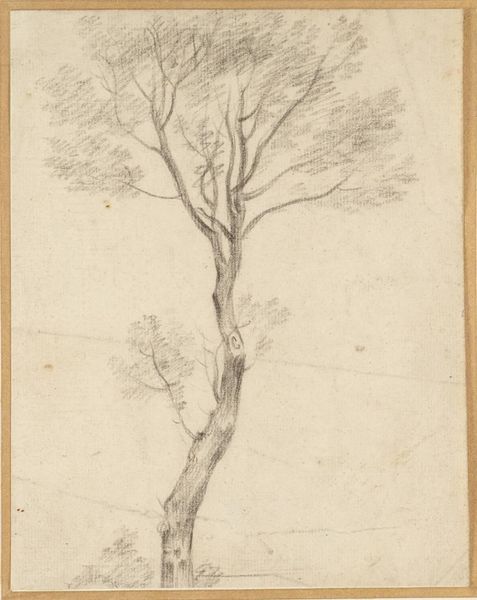
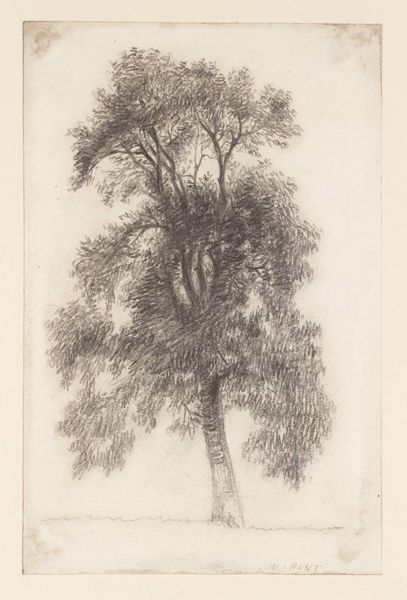
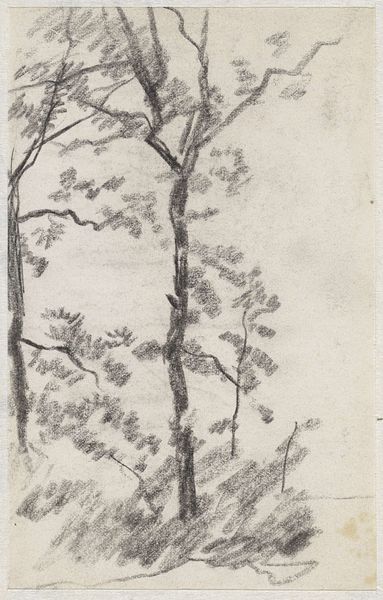
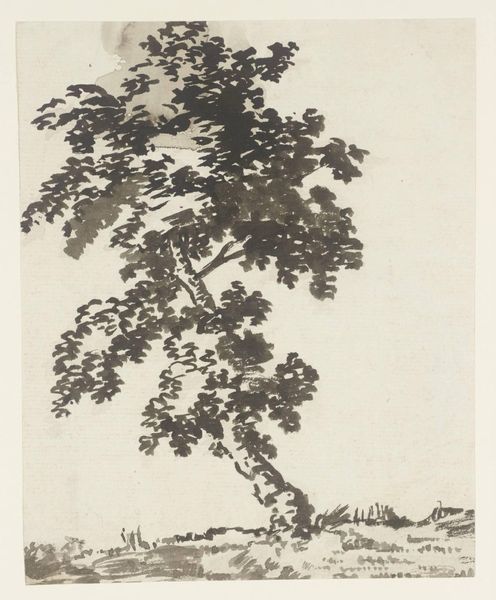
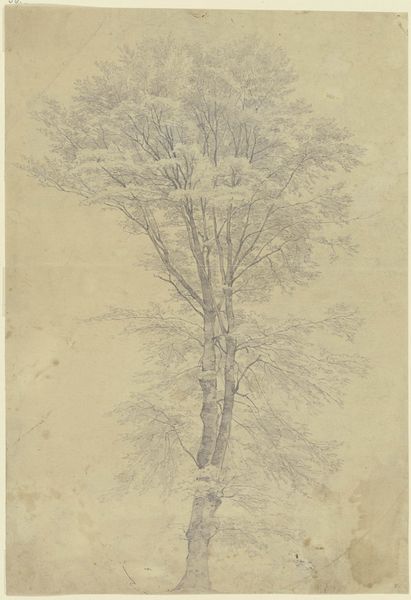
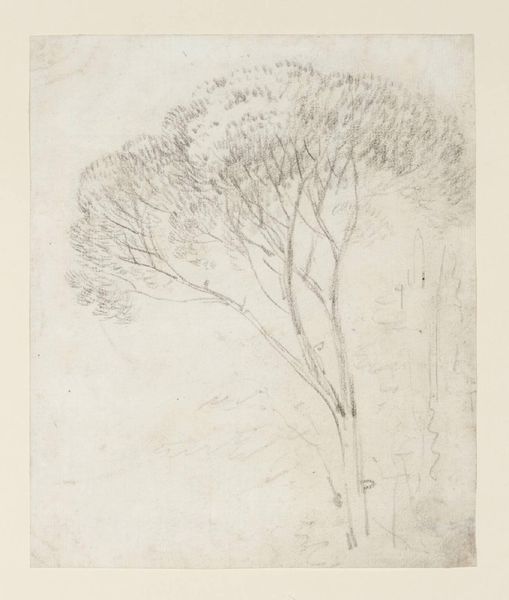
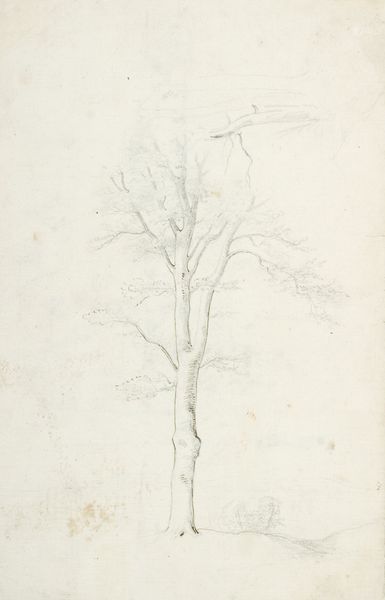
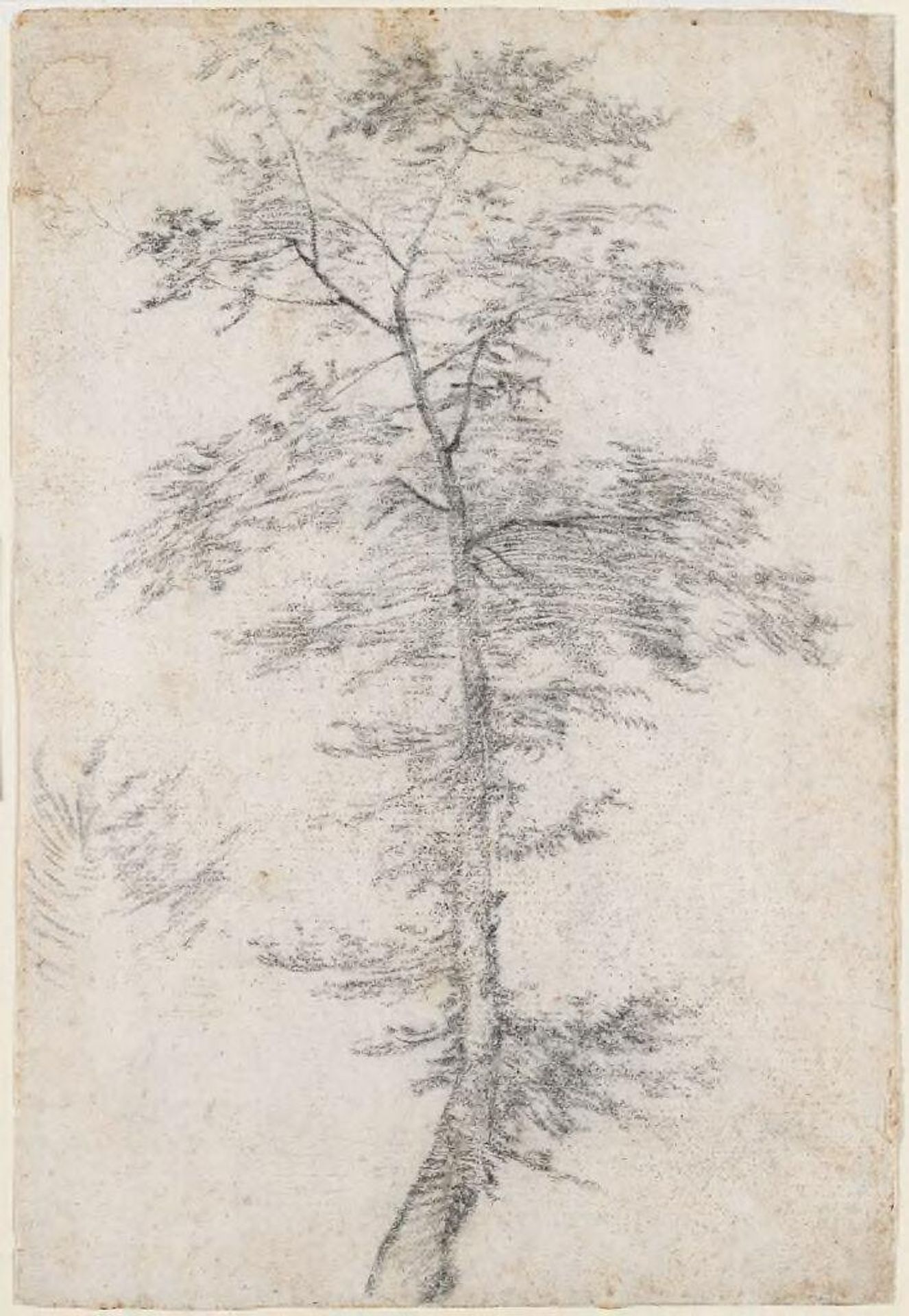
Curator: Fra Bartolommeo's "Study of a Tree," now at the Harvard Art Museums, offers us a glimpse into the Renaissance artist's observational skills. Its dimensions are approximately 40 by 27 centimeters. Editor: The first thing that strikes me is the immediacy, the raw quality of the graphite on the paper. You can almost feel the artist's hand moving across the surface. Curator: Indeed. The linear quality defines the contours, while the varied pressure suggests depth and volume. Notice how the tree's form occupies the majority of the pictorial space, dominating the composition. Editor: And consider the economics of art production then. Paper was precious. This wasn't just a casual sketch; it was likely a study for a larger commission or, perhaps, a treasured piece in itself. Curator: Perhaps. It demonstrates a keen interest in nature, rendered with precision and sensitivity. The artist creates an idealized arboreal form. Editor: It's quite compelling to think about the environmental conditions, too. The landscape around the monastery certainly shaped Bartolommeo’s vision. Curator: I agree. It is a testament to Bartolommeo's mastery, and a powerful example of Renaissance draftsmanship. Editor: Yes, there is an elegance in the economy of means. It makes you think about the process of its creation.
Study of a Tree 15th-16th century


Artwork details
- Dimensions
- 40.7 x 27.7 cm (16 x 10 7/8 in.)
- Location
- Harvard Art Museums
- Copyright
- CC0 1.0
Comments
No comments
About this artwork
Curator: Fra Bartolommeo's "Study of a Tree," now at the Harvard Art Museums, offers us a glimpse into the Renaissance artist's observational skills. Its dimensions are approximately 40 by 27 centimeters. Editor: The first thing that strikes me is the immediacy, the raw quality of the graphite on the paper. You can almost feel the artist's hand moving across the surface. Curator: Indeed. The linear quality defines the contours, while the varied pressure suggests depth and volume. Notice how the tree's form occupies the majority of the pictorial space, dominating the composition. Editor: And consider the economics of art production then. Paper was precious. This wasn't just a casual sketch; it was likely a study for a larger commission or, perhaps, a treasured piece in itself. Curator: Perhaps. It demonstrates a keen interest in nature, rendered with precision and sensitivity. The artist creates an idealized arboreal form. Editor: It's quite compelling to think about the environmental conditions, too. The landscape around the monastery certainly shaped Bartolommeo’s vision. Curator: I agree. It is a testament to Bartolommeo's mastery, and a powerful example of Renaissance draftsmanship. Editor: Yes, there is an elegance in the economy of means. It makes you think about the process of its creation.
Comments
No comments