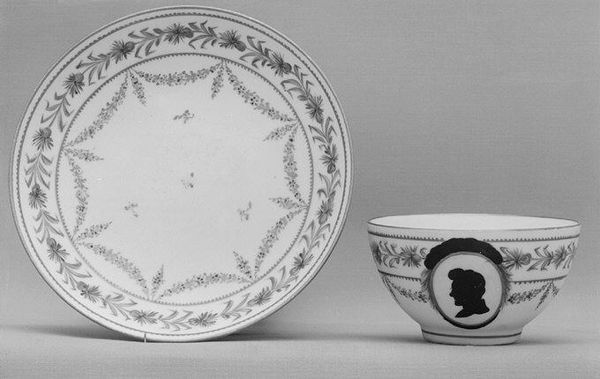
1833 - 1844
Cup and Saucer


Listen to curator's interpretation
Curatorial notes
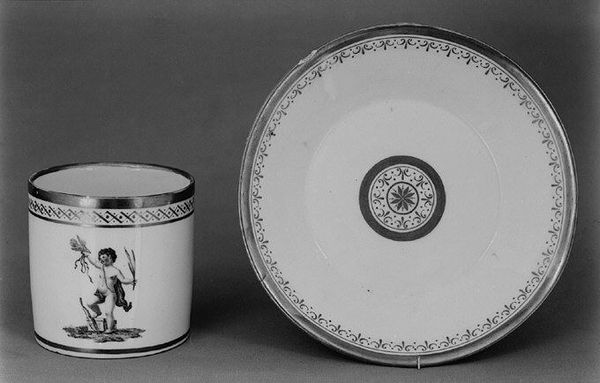
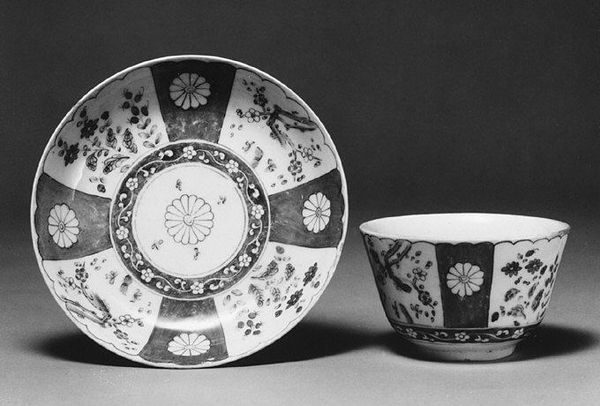
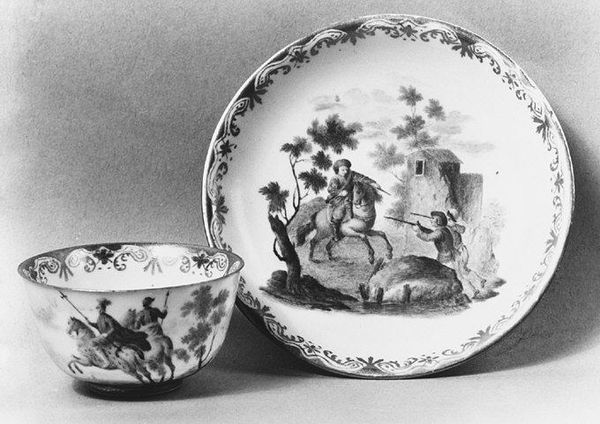
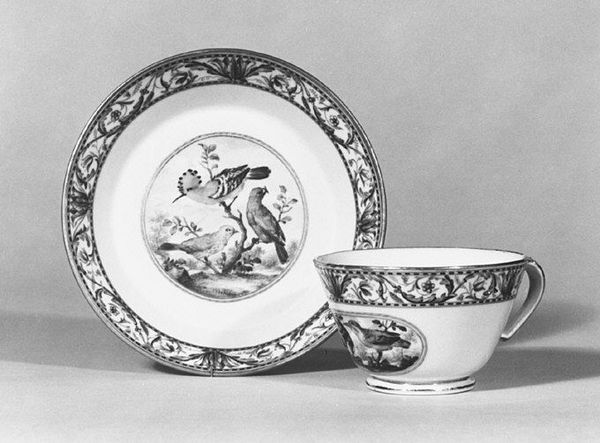
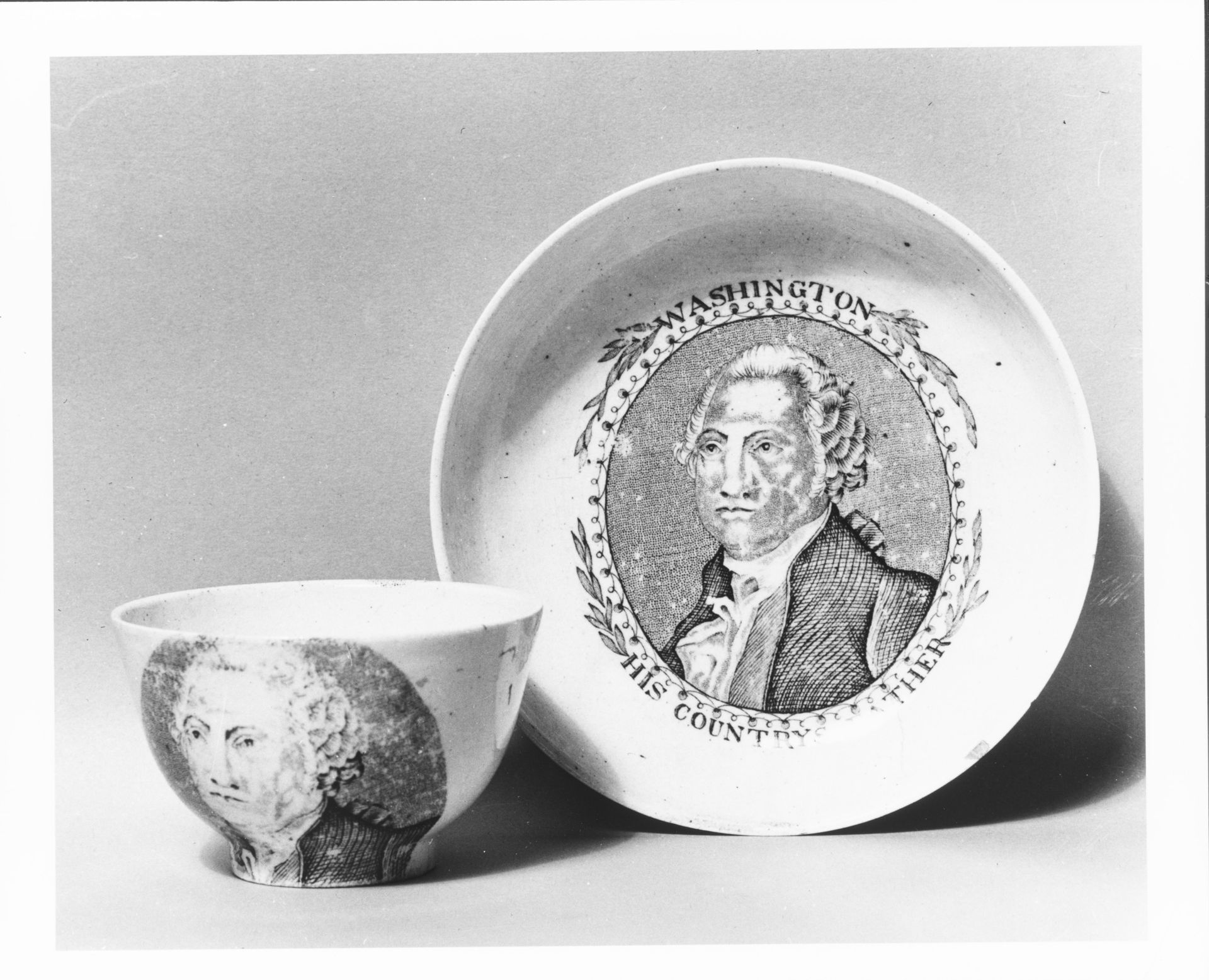
Editor: Here we have a "Cup and Saucer," made sometime between 1833 and 1844 by Ralph Hall & Son. It’s a simple ceramic piece, decorated with what appears to be a portrait of George Washington in monochrome. What do you see in a seemingly ordinary, mass-produced item bearing the image of such an important historical figure? Curator: This piece, though functional, speaks volumes about the power of iconography and its role in shaping public memory. The industrial revolution made such ceramics more accessible, meaning that images of historical figures like Washington could be disseminated widely. Why do you think Washington, in particular, was chosen for this mass-produced item? Editor: Perhaps it was meant to instill a sense of patriotism or national identity? Almost like everyday propaganda. Curator: Exactly. Consider the socio-political context of the 1830s and 40s in America. It was a time of both intense nationalism and fierce political divisions. Images of Washington served as unifying symbols, deployed to transcend these divisions, to promote an ideal vision of national unity and civic virtue. This simple cup and saucer become tools of social cohesion. What does that suggest about the role of art outside the museum space? Editor: It implies that art in everyday objects could wield significant cultural power, shaping public opinion and reinforcing dominant narratives. Curator: Precisely. These images weren't passively consumed; they were part of daily rituals. Sipping tea from a cup bearing Washington's image subtly reinforced specific ideologies. It forces us to consider how the "public" is constructed and engaged. Editor: This makes me realize how even ordinary items can be powerful historical artifacts. I never thought about the politics of a teacup before. Curator: And that’s exactly what analyzing art through a historical lens allows us to do – to decode the hidden meanings embedded in the everyday.