1813
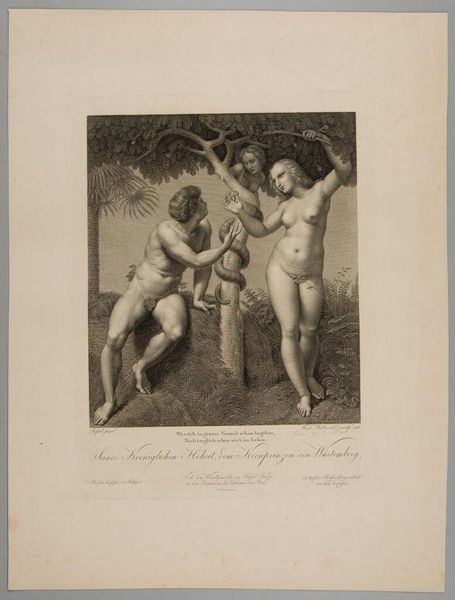
Adam en Eva

Johann Friedrich Wilhelm Müller
1782 - 1816Location
RijksmuseumListen to curator's interpretation
Curatorial notes
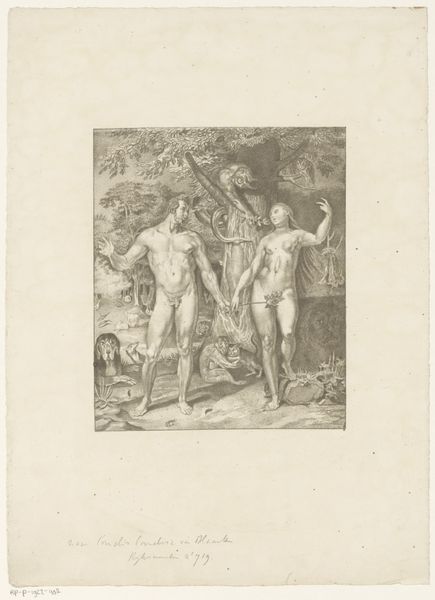
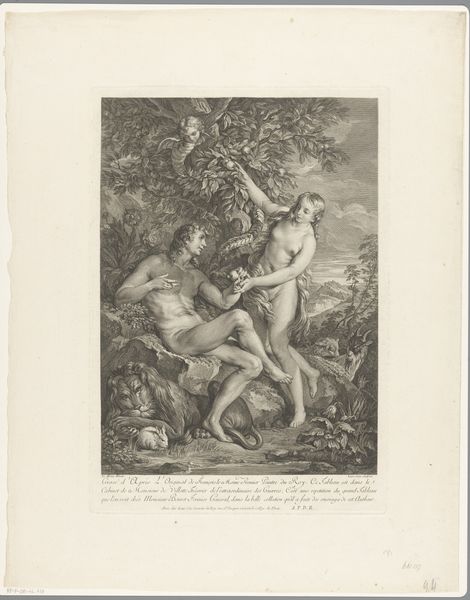
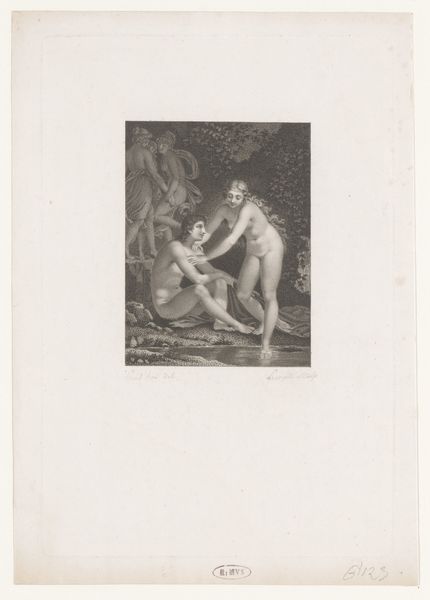
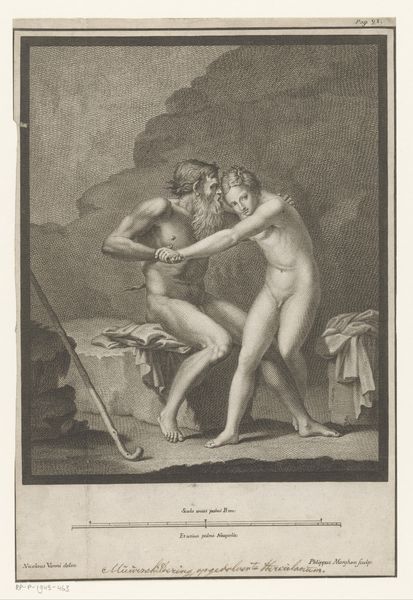
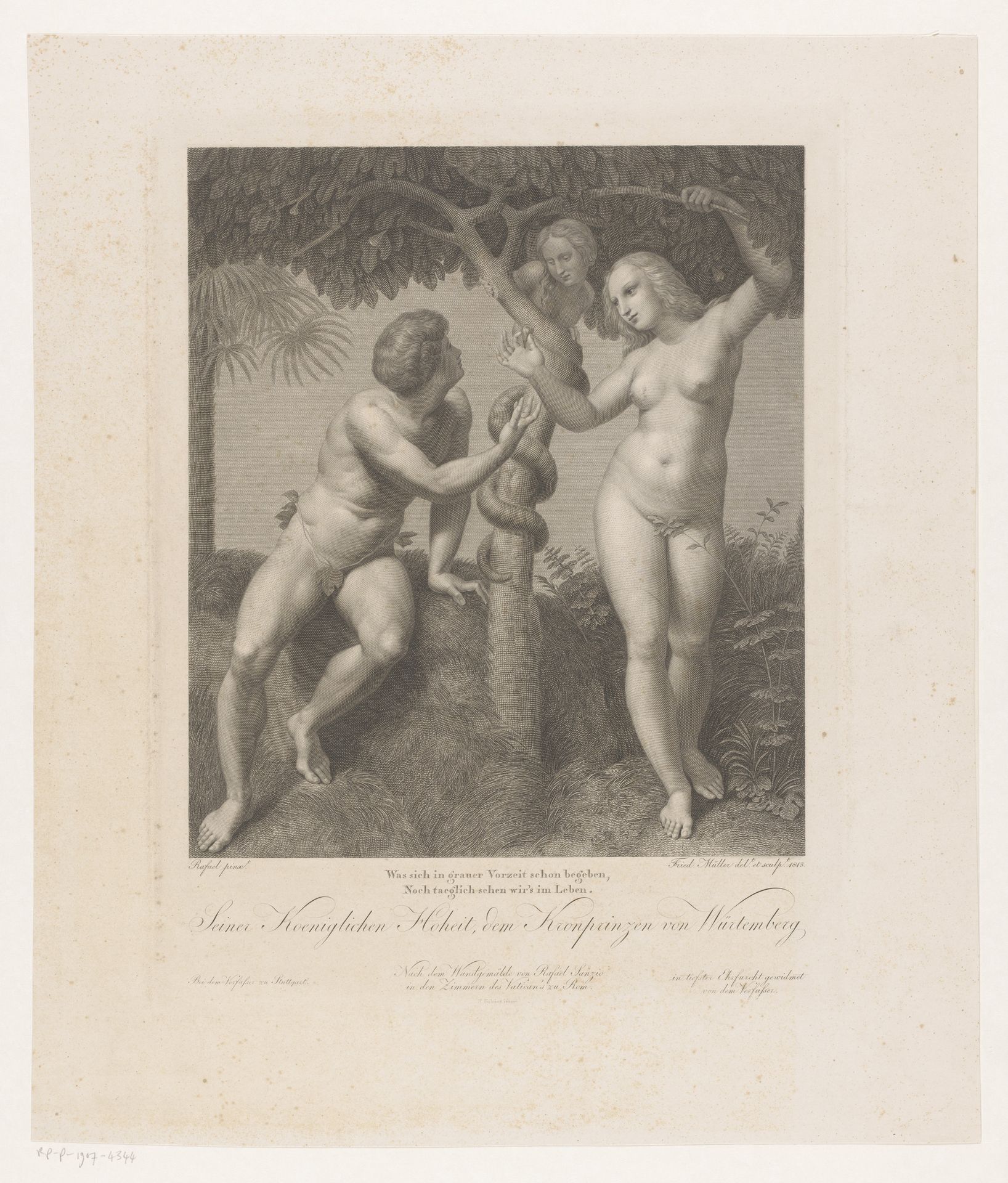
Johann Friedrich Wilhelm Müller etched "Adam and Eve" here to commemorate the biblical creation narrative. The dominant symbols – the nude figures of Adam and Eve, the serpent, and the Tree of Knowledge – represent innocence, temptation, and the loss of paradise. Consider the serpent, a motif that slithers through history. In ancient Near Eastern cultures, it was a symbol of life and healing, like the caduceus. Yet, here, it embodies deceit, a corruption of its earlier life-affirming associations. This transformation speaks volumes about humanity's shifting relationship with nature and the rise of moral consciousness. The apple, not explicitly mentioned in the Bible, has become synonymous with forbidden knowledge. It provokes deep-seated anxieties about transgression and the inevitable fall from grace. The expressions on Adam and Eve's faces are windows into the complex emotions, mirroring our own struggles with desire and its consequences. The cyclical journey of these symbols demonstrates how cultural memory shapes and reshapes our understanding of the world.