About this artwork
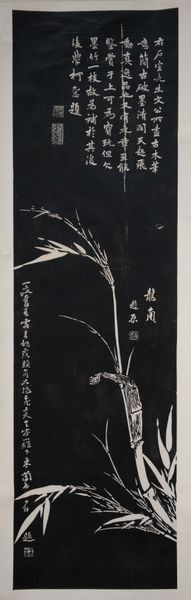
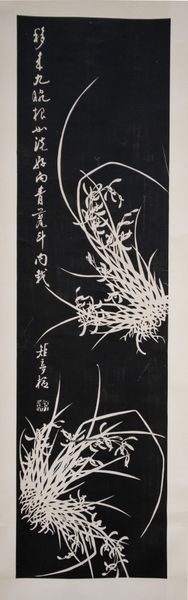
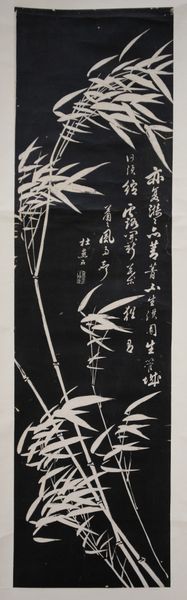
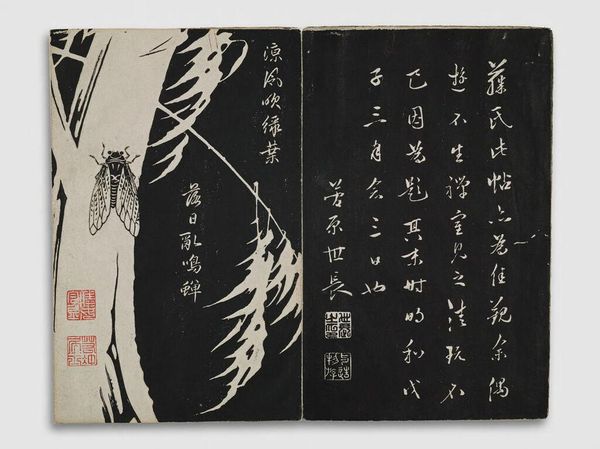
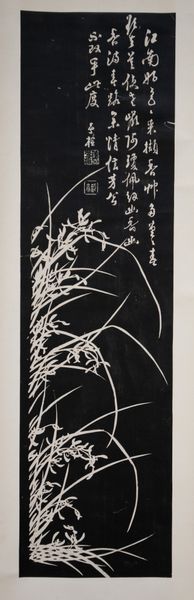
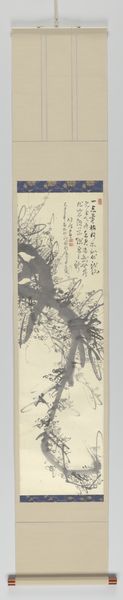
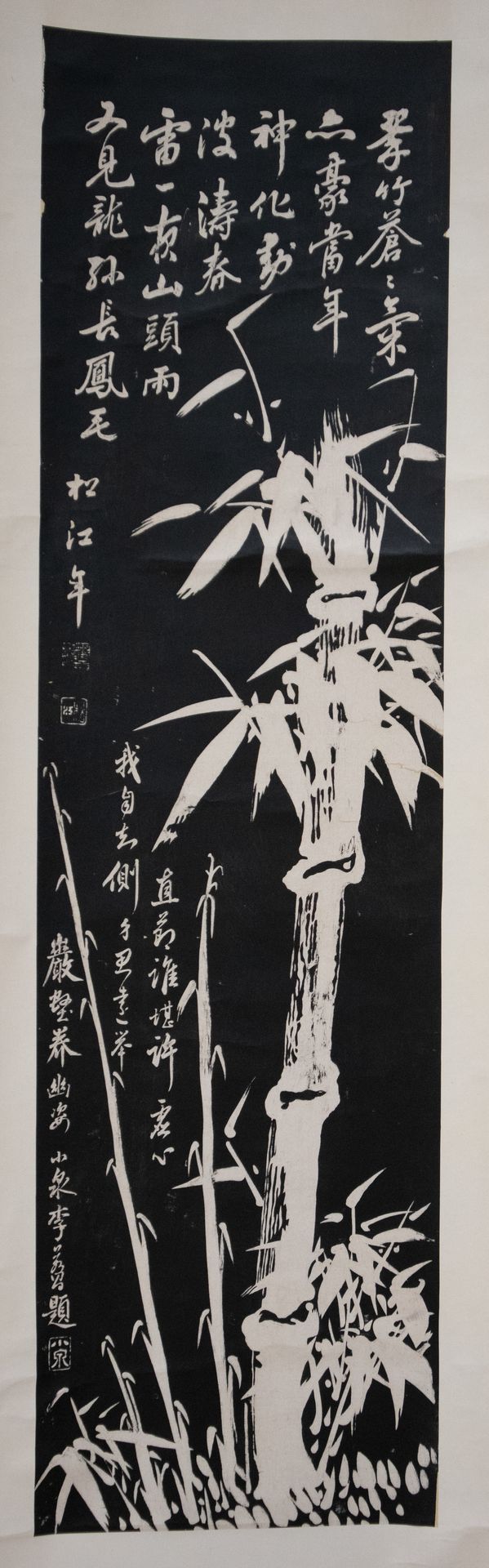
Kuang Xu made this scroll painting of bamboo with ink on paper, but the date is unknown. I love how the whole image is built up from simple brushstrokes, really economical, and that's how the movement gets captured. You can see the whole process right there on the surface. There's a real physicality in the way the dark ink bleeds into the paper. I'm drawn to how the artist uses the negative space to define the leaves and stalks, giving them a luminous quality against the darkness. Look at the way the individual leaves are rendered with just a few flicks of the wrist, it creates a sense of rhythm and growth. It reminds me of Franz Kline's bold brushstrokes, although Kuang Xu's work has a quietness to it. It's all about suggestion rather than explicit representation, inviting us to contemplate the essence of the bamboo, not just its appearance.
Bamboo 1922


Artwork details
- Medium
- drawing, print, ink
- Dimensions
- Image: 43 1/2 x 11 7/8 in. (110.5 x 30.2 cm) Overall with mounting: 68 1/2 x 16 1/2 in. (174 x 41.9 cm) Overall with knobs: 68 1/2 x 20 in. (174 x 50.8 cm)
- Location
- Metropolitan Museum of Art, New York, NY
- Copyright
- Public Domain
Tags
drawing
ink painting
asian-art
ink
geometric
abstraction
line
abstract art
Comments
No comments
About this artwork
Kuang Xu made this scroll painting of bamboo with ink on paper, but the date is unknown. I love how the whole image is built up from simple brushstrokes, really economical, and that's how the movement gets captured. You can see the whole process right there on the surface. There's a real physicality in the way the dark ink bleeds into the paper. I'm drawn to how the artist uses the negative space to define the leaves and stalks, giving them a luminous quality against the darkness. Look at the way the individual leaves are rendered with just a few flicks of the wrist, it creates a sense of rhythm and growth. It reminds me of Franz Kline's bold brushstrokes, although Kuang Xu's work has a quietness to it. It's all about suggestion rather than explicit representation, inviting us to contemplate the essence of the bamboo, not just its appearance.
Comments
No comments