1920 - 1972
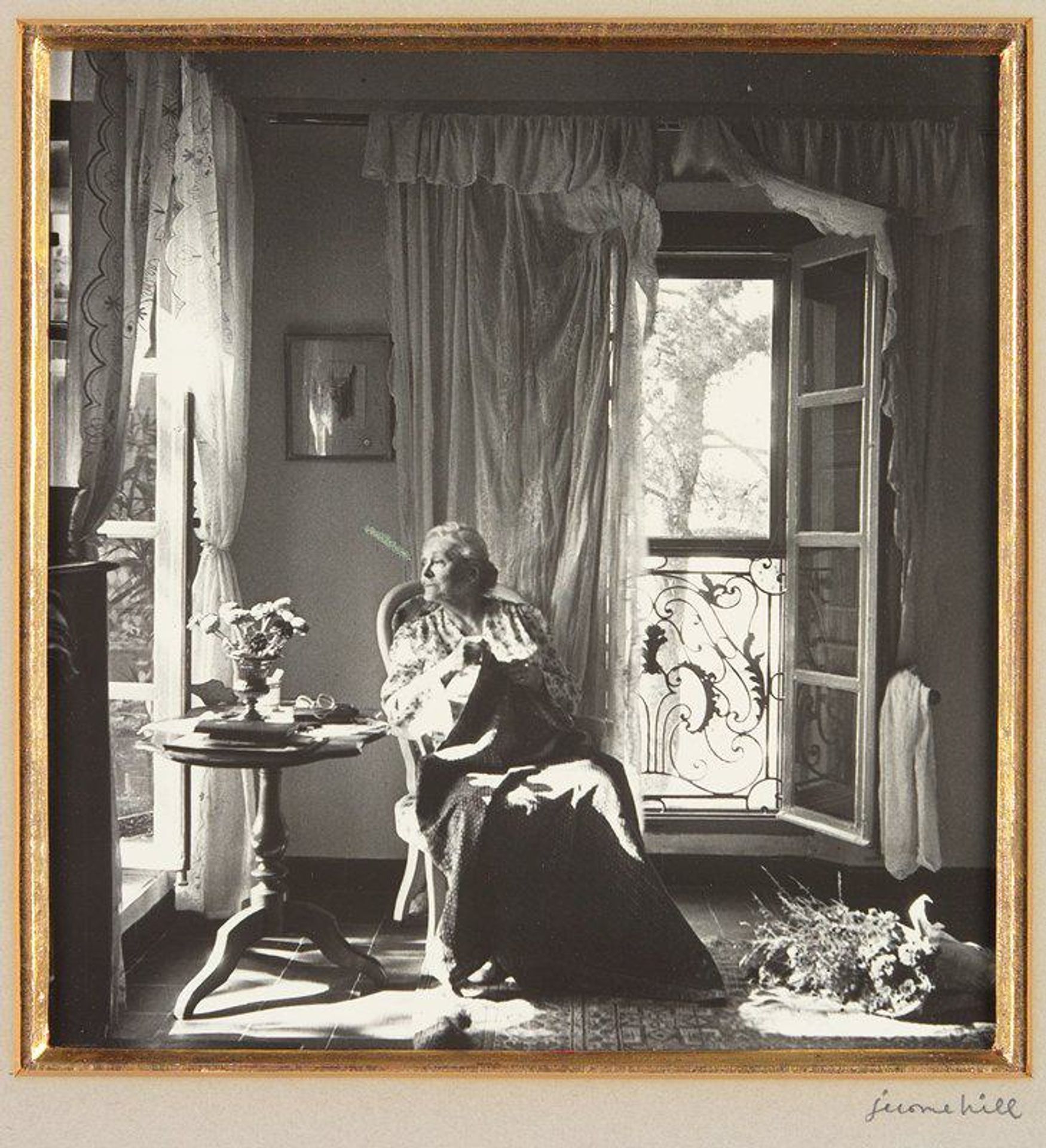
Maud Hill


Listen to curator's interpretation
Curatorial notes
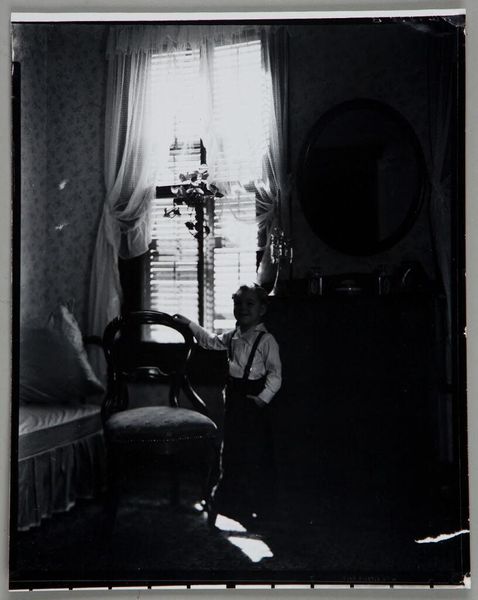
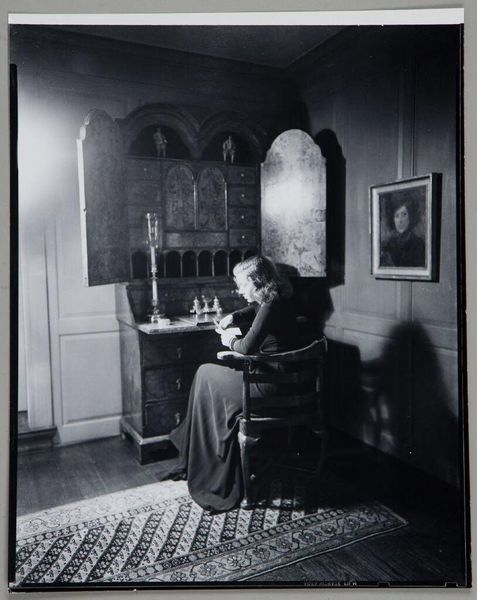
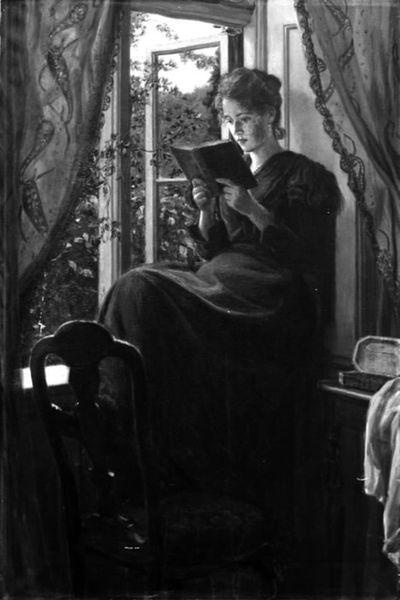
Editor: Here we have J. Jerome Hill’s gelatin-silver print, "Maud Hill," dating between 1920 and 1972. It's a very intimate portrait, I feel a sense of quiet observation. What draws your attention when you look at this work? Curator: I see this piece as a commentary on the prescribed roles of women and aging during the period. Trapped, in a sense, between domesticity symbolized by the curtains and needlepoint, and the beckoning freedom of nature, visible through the window. It subtly critiques the limited sphere afforded to women of a certain class and age. What do you make of the window's positioning in relation to her gaze? Editor: That's fascinating! I hadn't thought of it as a critique, more as just a quiet moment. The window, I suppose, does frame her longing – almost like a stage. Do you think Hill intended this commentary or is it something we project onto the image now? Curator: Intent is always a slippery slope. However, we can look at the visual language - the light, the composition - as suggestive. The framing of Maud by the window *implies* a social critique, reflecting broader feminist conversations that have been ongoing. Do you feel this changes your initial perception of the image? Editor: It definitely adds another layer. Seeing her enclosed like that, yet with a window... it shifts the tone. It's not just peaceful observation; it's a quiet resistance, maybe? Curator: Precisely. By juxtaposing intimacy with the hint of external possibilities, Hill's photograph prompts us to consider the silent struggles within seemingly ordinary lives. Editor: I see the work so differently now! I’ll remember to look for those unspoken stories within the everyday when looking at portraits moving forward.