acrylic-paint, gestural-painting
#
abstract-expressionism
#
abstract expressionism
#
acrylic-paint
#
gestural-painting
#
acrylic on canvas
#
abstraction
#
abstract art
#
gutai
Copyright: Jiro Yoshihara,Fair Use
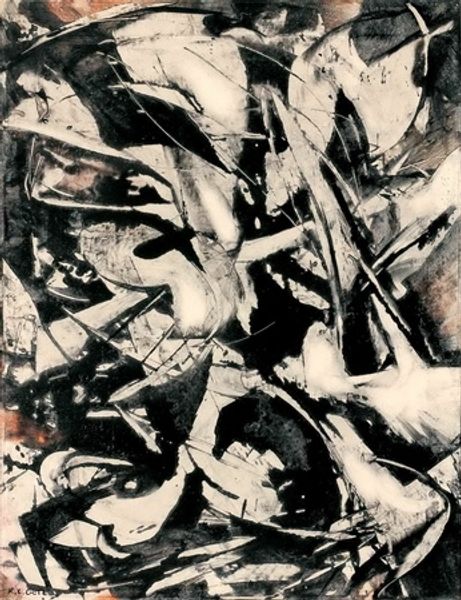
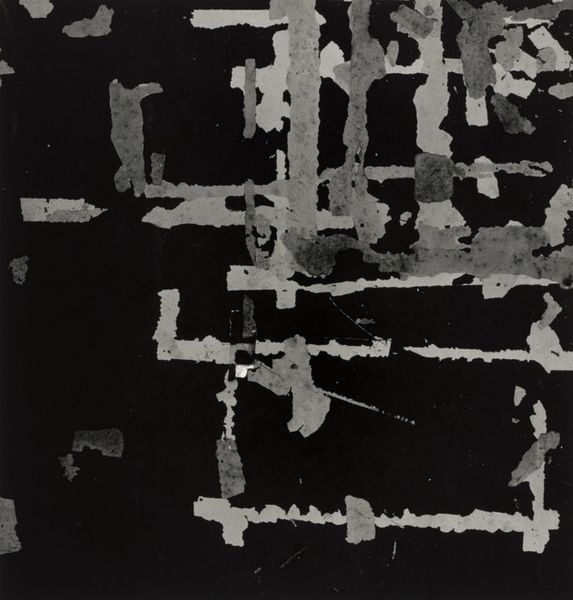
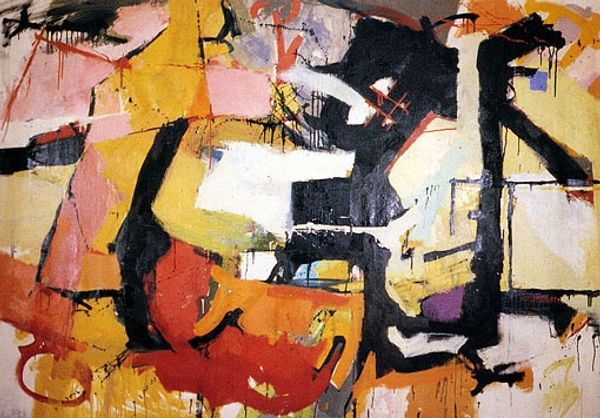
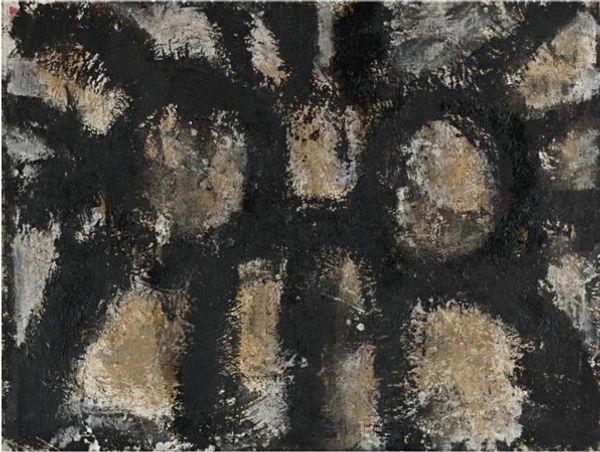
Curator: Here we have an Untitled work, executed in acrylic paint, by Jiro Yoshihara. The artwork immediately strikes you, doesn't it? A rather striking and turbulent play between light and darkness. Editor: It feels like a visual representation of chaos, yet there's an undeniable energy that draws you in. The stark contrast between the black background and the white strokes evokes a sense of conflict or perhaps creation from void. Curator: The bold, gestural strokes certainly dominate. Note how Yoshihara uses the properties inherent to acrylic: the almost graphic immediacy from the opaque paint is critical. I'd observe how each form contrasts in its edges and values against the ground. It suggests an almost spontaneous performance. Editor: It brings to mind the Gutai group, which Yoshihara led. One considers, perhaps, its members advocating the fusion of art and life through performance. Considering the post-war climate, was this abstract expression a departure, an artistic rebellion of some kind in Japanese art at the time? Curator: Undoubtedly. Yoshihara championed radical individualism within Gutai. These impulsive, sweeping marks carry the weight of socio-political and art historical context, representing an important pivot from traditional representation in that time. Editor: Thinking about abstraction as a response to figuration then helps in positioning this particular image in a wider history of mid-century contestations. What are the narratives behind the bold gestures visible here? Were they intended as revolutionary? Curator: He liberated form from recognizable iconography, yes. Observe how, despite their abstraction, each mark possesses a certain clarity, a distinctive energy and position that refuses to recede into pure texture. It demands a specific reading despite the fact that there isn’t an immediately perceivable representational origin to be found. Editor: It appears that Yoshihara encouraged experimentation among the Gutai group members. In doing so, it appears they embraced freedom in their art practices during this post-war period, and I now appreciate a sense of individual and collective emancipation. Curator: Indeed, a painting speaking in a formal, yet deeply felt, visual language of renewal and expression. The structural and emotional components really combine, here. Editor: Well, seeing it in that light enriches my understanding significantly.
Comments
No comments
Be the first to comment and join the conversation on the ultimate creative platform.
 Collect
 React
React Comment
More like this