painting, oil-paint
#
baroque
#
dutch-golden-age
#
painting
#
oil-paint
#
landscape
#
river
#
charcoal drawing
#
figuration
#
oil painting
#
cityscape
#
genre-painting
Dimensions: support height 75.5 cm, support width 113 cm
Copyright: Rijks Museum: Open Domain
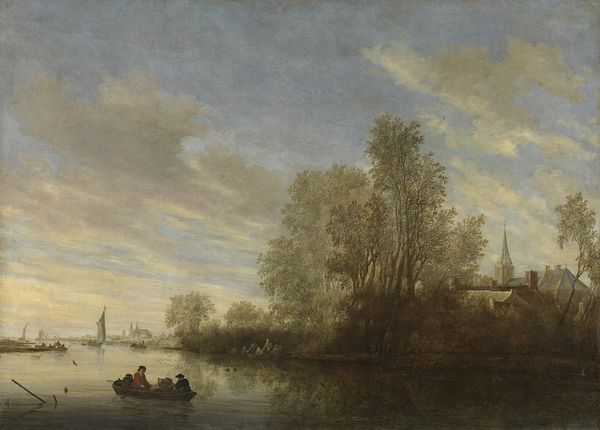
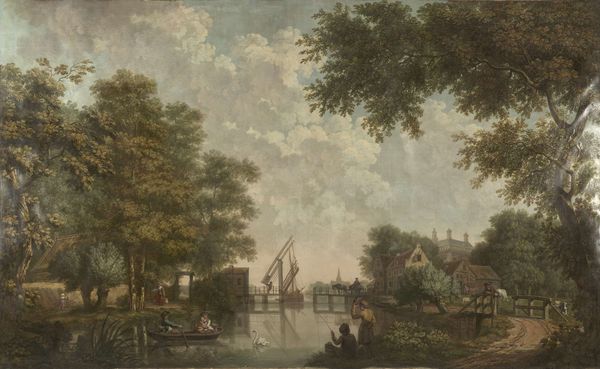
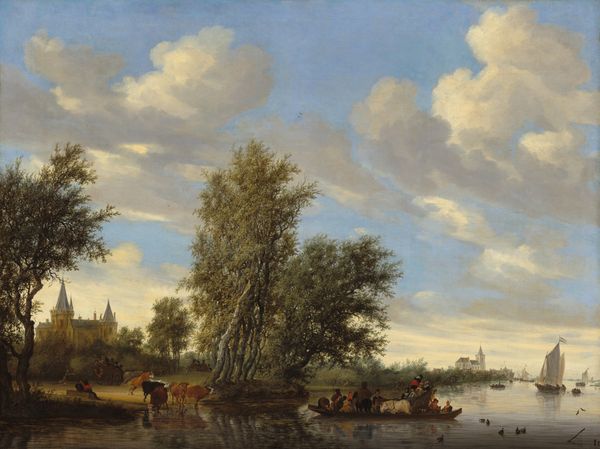
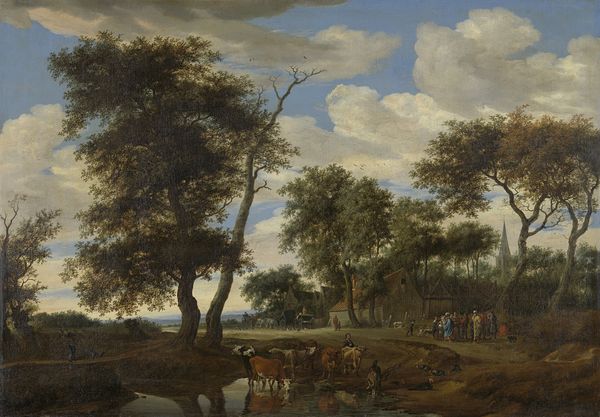
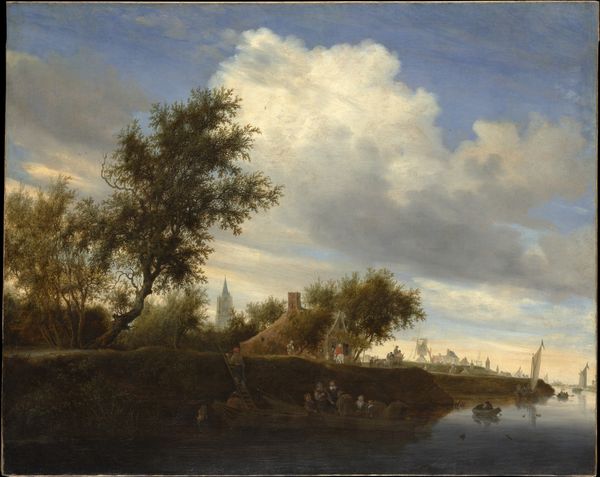
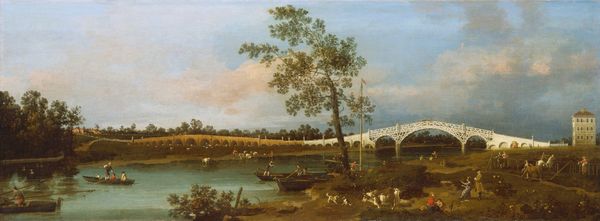
Editor: So, this is Esaias van de Velde's "The Cattle Ferry" from 1622, painted in oil on panel, and hanging here at the Rijksmuseum. It’s… well, it feels very everyday. There’s just a lot of normal, agricultural life happening. What do you see when you look at it? Curator: I see a carefully constructed image, consciously playing with Dutch identity. The scene seems peaceful, a slice of everyday life, but it's crucial to remember the Netherlands at this time was a relatively new republic, defining itself against Spanish rule. This image, with its emphasis on commerce and agriculture, subtly promotes Dutch industriousness and independence. Notice the positioning of the windmill and church spire—how do they structure the scene? Editor: They definitely anchor it. The windmill speaks to innovation, and the church... stability, maybe? So you’re saying it's less a casual snapshot and more a statement about Dutch values? Curator: Precisely. Landscapes during the Dutch Golden Age were rarely just landscapes. They served a civic function, projecting an image of prosperity and national pride. Consider the burgeoning art market at the time. Who was buying these images, and what message were they meant to convey about their place in the world? And what kind of politics are in the scene displayed? Editor: Right, wealthy merchants showing off their Dutch-ness. So even this simple ferry scene plays into that? The ferry itself representing connection and trade? Curator: Exactly. And those cattle being ferried represent the source of much of the Netherlands wealth at this time. Van de Velde here is both reflecting and constructing the identity of a nation through this everyday imagery, appealing to the market needs, and therefore creating its own place in the politics of imagery in that particular point in time. Editor: I never thought a simple painting of a cattle ferry could be so loaded. That gives me a whole new perspective on how to read these landscapes. Curator: Indeed! Now, let's consider how the market dictates which versions of those landscapes persist…
Comments

rijksmuseum over 2 years ago
⋮
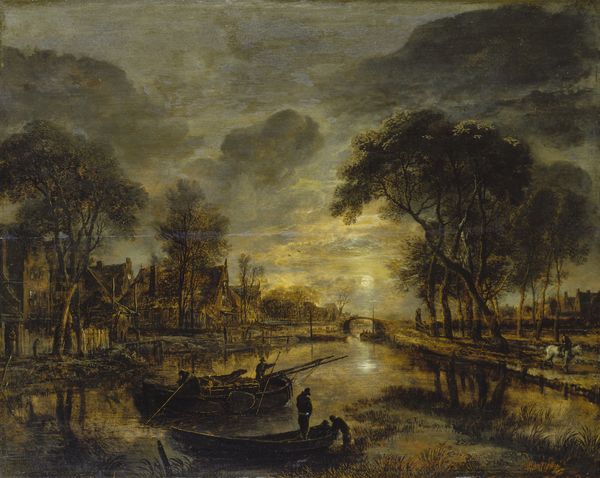
This painting is a milestone, for never before had a Dutch painter depicted his native flat, watery landscape in such a monumental format. Dusk is falling, and the light is beginning to fade. The glistening river winds its way into the distance, drawing the viewer along, too, past countless little figures.


Join the conversation
Join millions of artists and users on Artera today and experience the ultimate creative platform.
 Collect
More like this