About this artwork
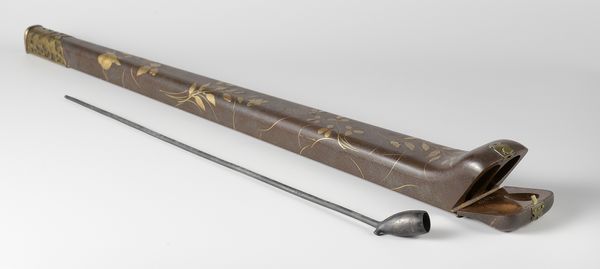
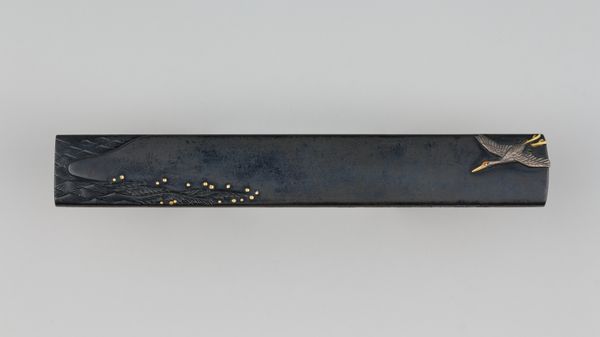
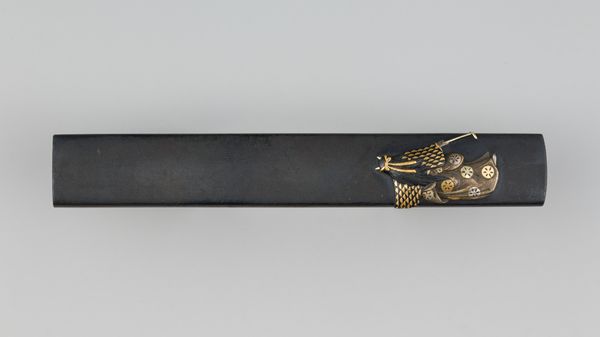
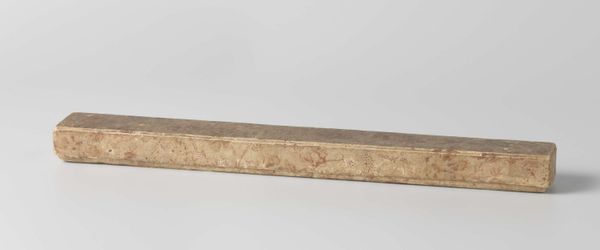
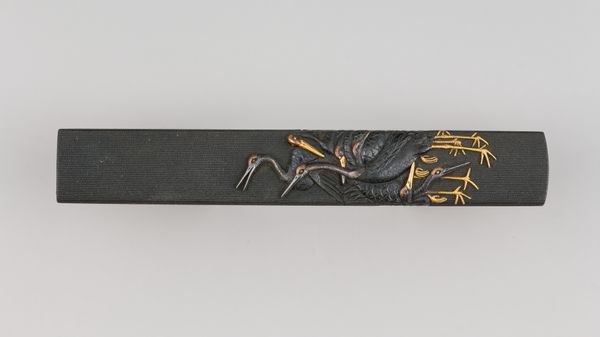
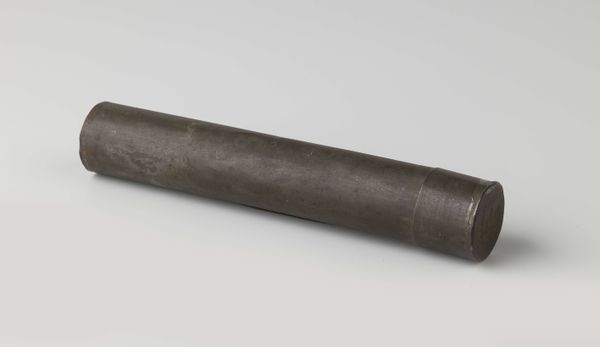
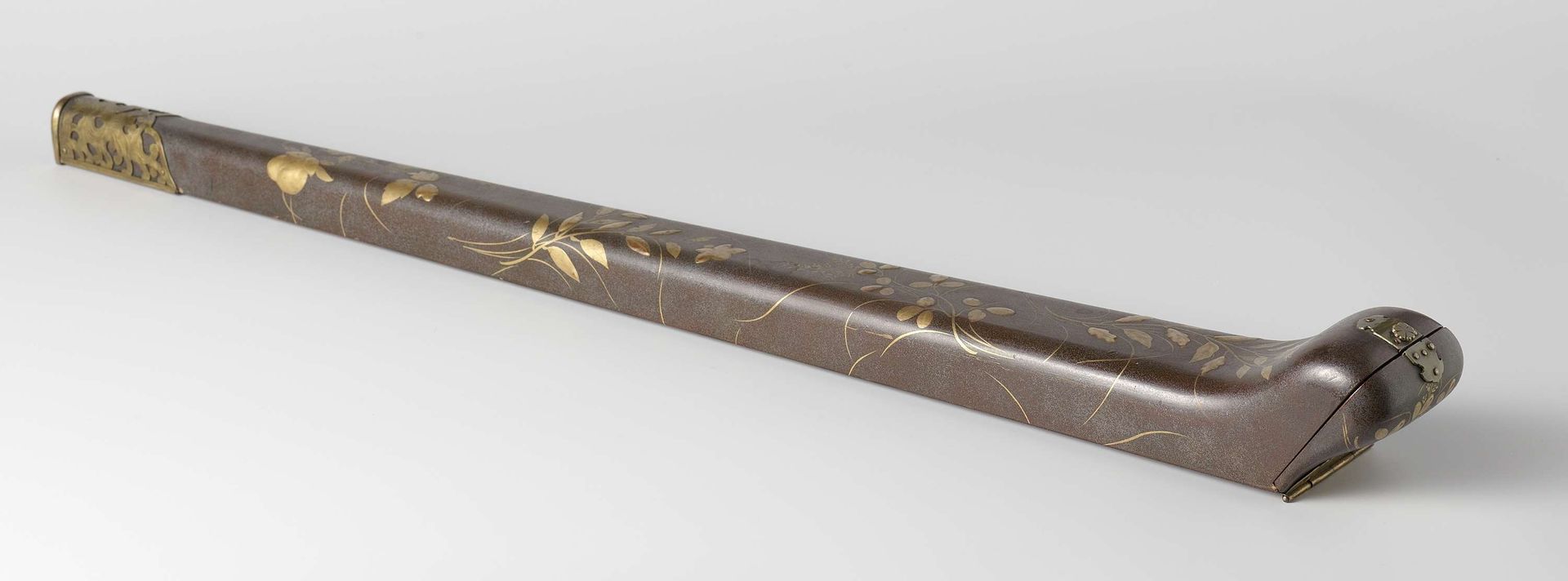
Editor: Here we have a Japanese pipe case, made sometime between 1700 and 1740. The craftsmanship seems quite detailed, the gentle floral decoration over what appears to be wood and stoneware are delicate. What strikes you most about this object? Curator: This isn’t merely a functional object; it’s a statement. Think about the social context. Who could afford such an intricately decorated case for their pipe? This would likely have been a member of the samurai class, or a wealthy merchant imitating them, signalling both wealth and adherence to a particular aesthetic. Editor: So, the object speaks to class and perhaps aspiration? The detail does seem excessive for simple utility. Curator: Precisely. Now, consider the materials. Wood and stoneware tell us something about the access to materials and technologies, like lacquerwork. Do you think the case imitates, in its craftsmanship, other contemporary art forms of the era? Editor: Perhaps. There’s a calmness in its simplicity, which connects with other decorative art from the period that I've studied. Are you saying that an object like this reflected an interest in both status and broader artistic trends? Curator: Exactly. Furthermore, its preservation in the Rijksmuseum highlights how taste has shifted. Objects once for daily use become objects of study, telling stories about different periods and social classes. Do you feel its placement in the museum alters our reading of its value? Editor: I suppose so. It removes it from the intimacy of its original setting, making it available for public consumption and historical inquiry, which really changes everything. Curator: Indeed, from a personal possession to a cultural artifact representing larger societal trends and shifts in aesthetic values. Food for thought! Editor: Definitely, thank you. I’ll certainly think about that as I go forward.

Artwork details
- Medium
- sculpture, wood
- Dimensions
- length 76.0 cm, width 7.5 cm, depth 7.2 cm
- Location
- Rijksmuseum
- Copyright
- Rijks Museum: Open Domain
Tags
Comments
Share your thoughts
About this artwork
Editor: Here we have a Japanese pipe case, made sometime between 1700 and 1740. The craftsmanship seems quite detailed, the gentle floral decoration over what appears to be wood and stoneware are delicate. What strikes you most about this object? Curator: This isn’t merely a functional object; it’s a statement. Think about the social context. Who could afford such an intricately decorated case for their pipe? This would likely have been a member of the samurai class, or a wealthy merchant imitating them, signalling both wealth and adherence to a particular aesthetic. Editor: So, the object speaks to class and perhaps aspiration? The detail does seem excessive for simple utility. Curator: Precisely. Now, consider the materials. Wood and stoneware tell us something about the access to materials and technologies, like lacquerwork. Do you think the case imitates, in its craftsmanship, other contemporary art forms of the era? Editor: Perhaps. There’s a calmness in its simplicity, which connects with other decorative art from the period that I've studied. Are you saying that an object like this reflected an interest in both status and broader artistic trends? Curator: Exactly. Furthermore, its preservation in the Rijksmuseum highlights how taste has shifted. Objects once for daily use become objects of study, telling stories about different periods and social classes. Do you feel its placement in the museum alters our reading of its value? Editor: I suppose so. It removes it from the intimacy of its original setting, making it available for public consumption and historical inquiry, which really changes everything. Curator: Indeed, from a personal possession to a cultural artifact representing larger societal trends and shifts in aesthetic values. Food for thought! Editor: Definitely, thank you. I’ll certainly think about that as I go forward.
Comments
Share your thoughts