c. 1850s
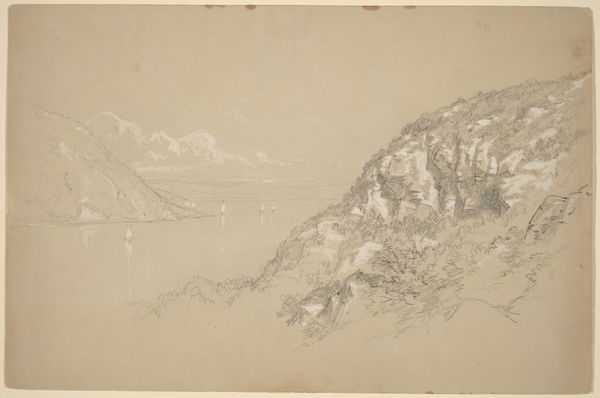
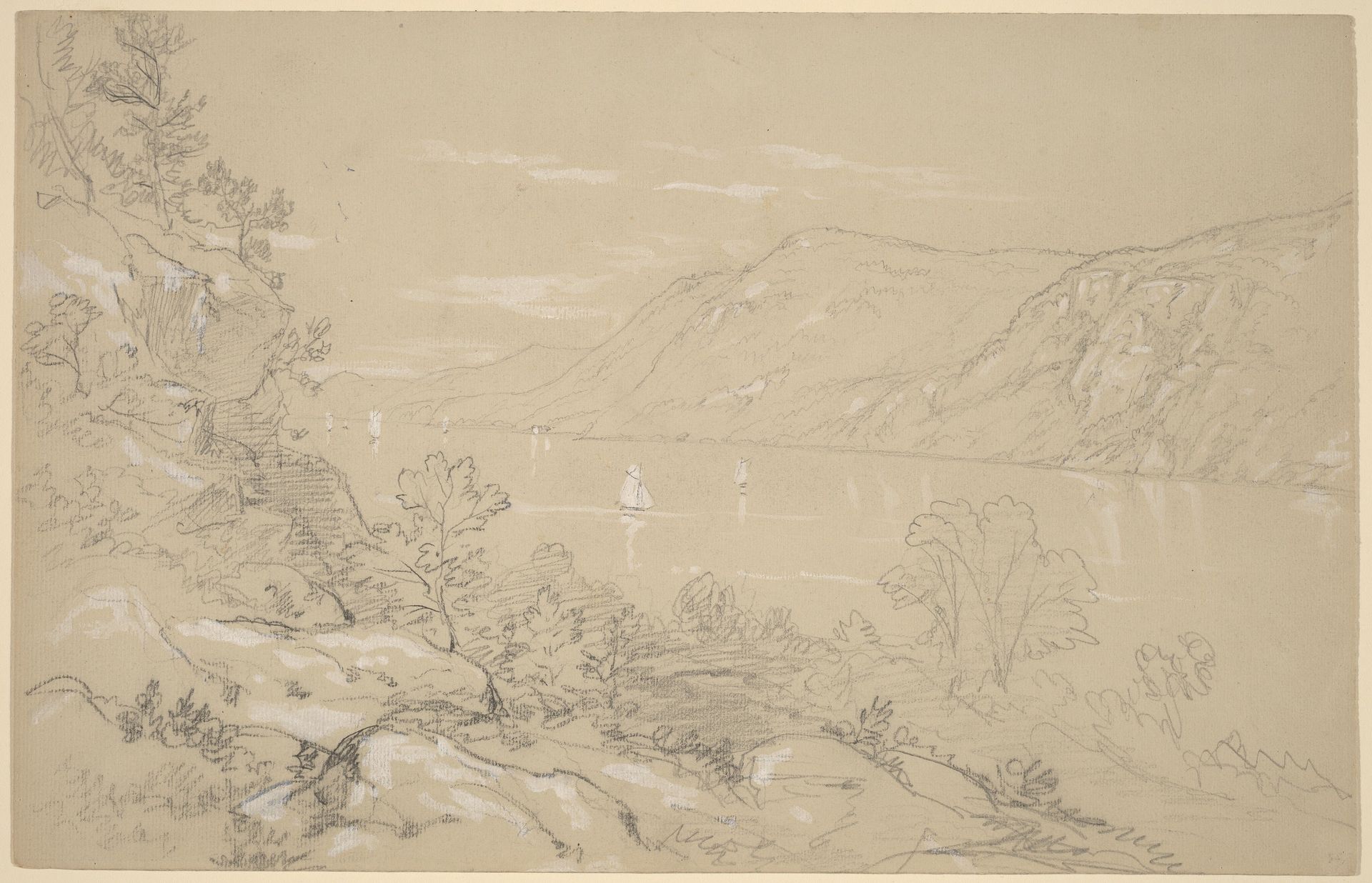
North from Storm King


Listen to curator's interpretation
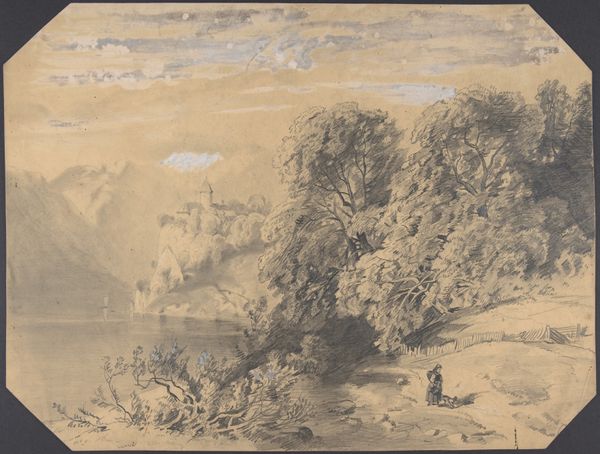
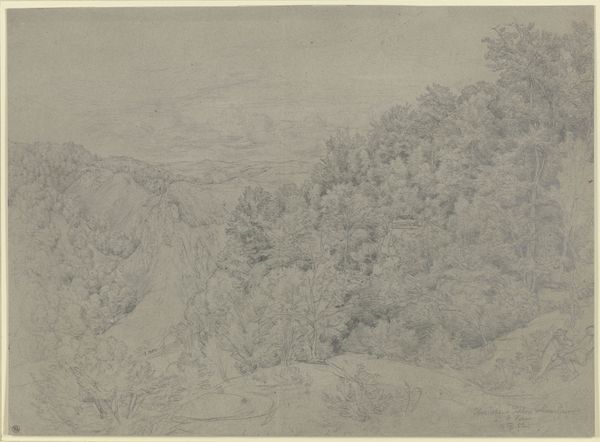
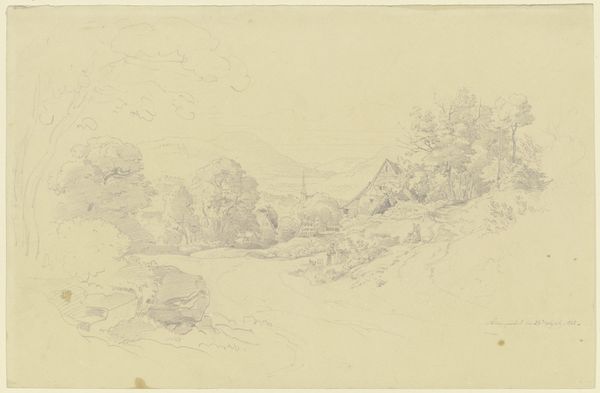
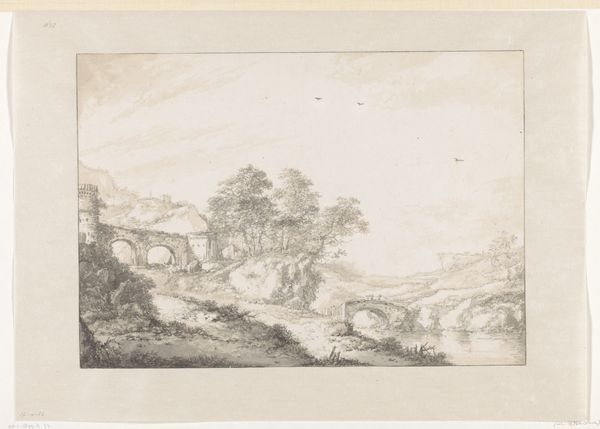
Curatorial notes
Editor: This drawing, "North from Storm King," by John William Casilear, from around the 1850s, uses pencil to depict a serene landscape. I’m struck by the stillness of the scene, but also a sense of underlying... yearning. What do you see in this piece, particularly considering its historical context? Curator: It’s interesting you pick up on that yearning. Think about the mid-19th century. The Hudson River School, of which Casilear was a part, often depicted nature as a kind of sublime, untouched Eden, but this was at a time of rapid industrialization and westward expansion in America. Did these images perhaps offer an escape from those realities, a visual retreat from societal changes? Editor: That's a good point. So, this romantic vision is almost a commentary on what's being lost. How does the imagery itself contribute to that sense? Curator: Look at the composition. The delicate rendering in pencil evokes a fragile beauty. It speaks to the vulnerability of nature amidst burgeoning development. Even the viewpoint, seemingly from an elevated position, offers a sort of possessive perspective. Who is given access to such a sublime, and ultimately, privatized view? And how might its reception affect our understanding of that era’s political and economic climate? Editor: So the very act of observing nature becomes entangled with issues of access and societal changes. Curator: Precisely. And how might the intended audience of this piece at the time contribute to this work's historic weight and social significance? Editor: Wow, I never would have thought a simple landscape could speak to so much more than just pretty scenery. Curator: Exactly! Art always reflects—and often shapes—the society it's made in. Editor: I’ll definitely look at landscapes differently now. It’s fascinating how the medium and the message intersect to convey such profound commentary.