1841
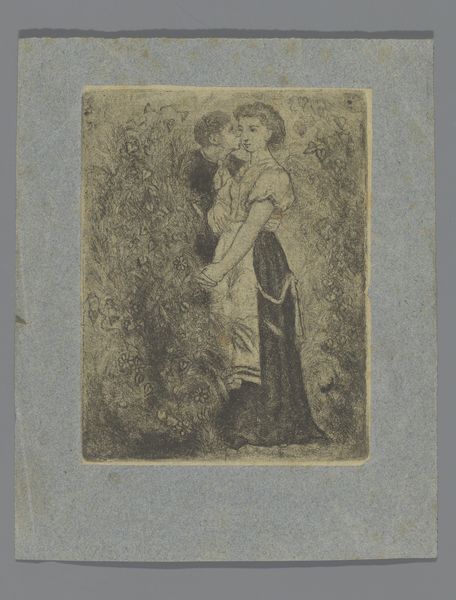
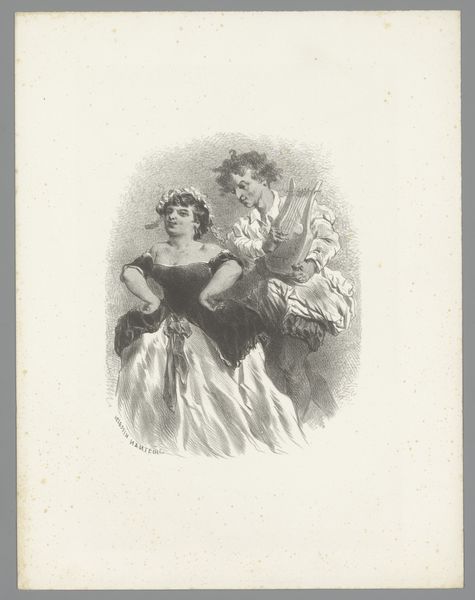
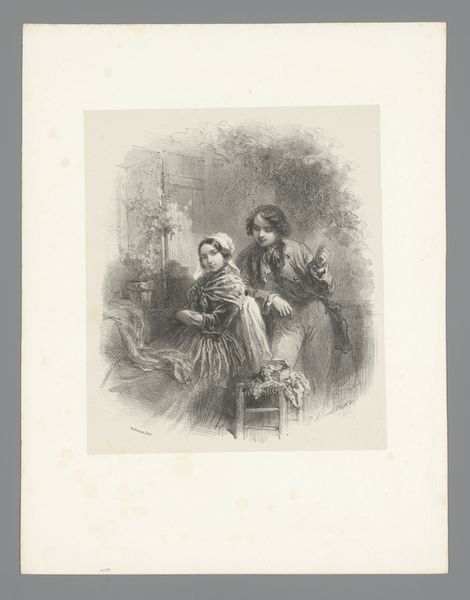
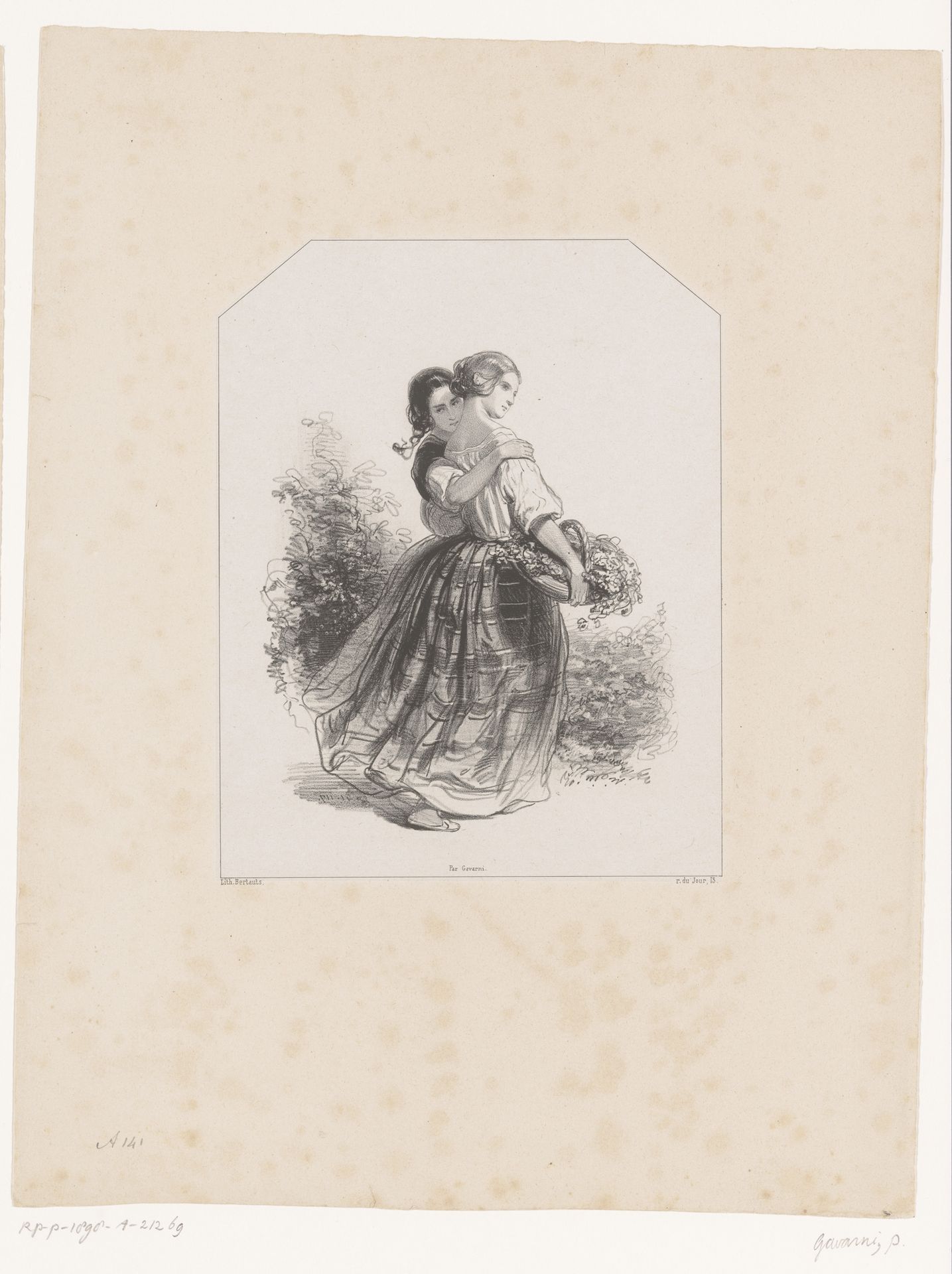
Twee meisjes met bloemenmand

Paul Gavarni
1804 - 1866Location
RijksmuseumListen to curator's interpretation
Curatorial notes
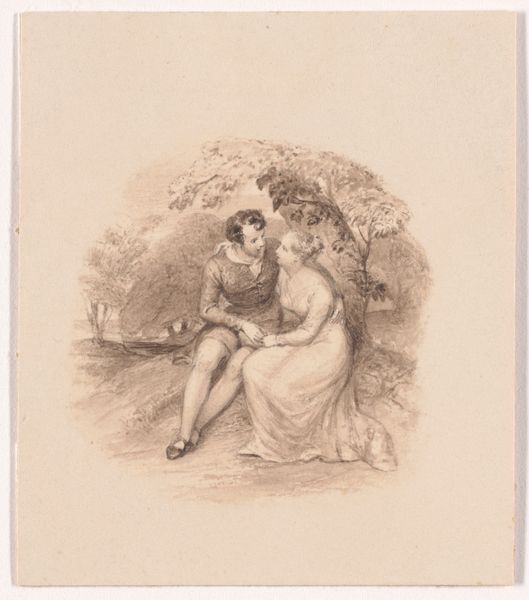
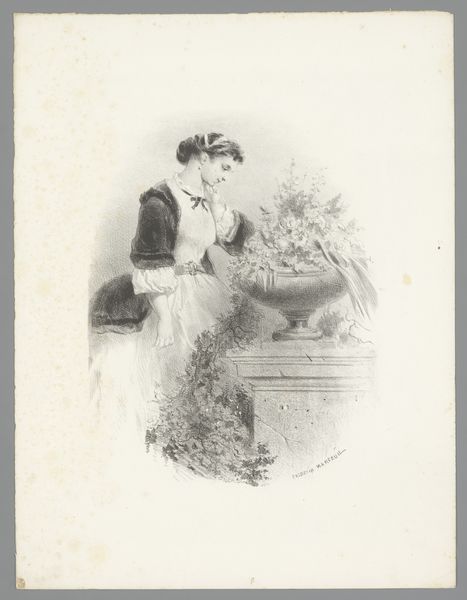
This print by Paul Gavarni captures two girls, one carrying a flower basket, their embrace echoing a timeless motif. The flowers here are more than mere decoration; they are symbols of youth, fragility, and the fleeting nature of beauty. Consider how such floral tributes appear in Botticelli’s “Primavera,” where flowers strewn across the scene speak of fertility and renewal. In ancient Roman art, floral garlands signified celebration and the transient nature of life, a sentiment echoed through the ages. Our subconscious recognizes these symbols, triggering a deep-seated awareness of life’s ephemeral beauty, tinged with melancholy. The embrace, laden with innocence, is a tableau of comfort. Gavarni masterfully uses this gesture to engage our emotions, evoking feelings of nostalgia and protection. The embrace, too, is cyclical; the motifs resurface, evolve, and take on new meanings in different historical contexts.