painting, plein-air, oil-paint
#
night
#
painting
#
plein-air
#
oil-paint
#
landscape
#
charcoal drawing
#
oil painting
#
ocean
#
romanticism
#
cityscape
#
watercolor
#
sea
Dimensions: 21.4 x 28 cm
Copyright: Public domain
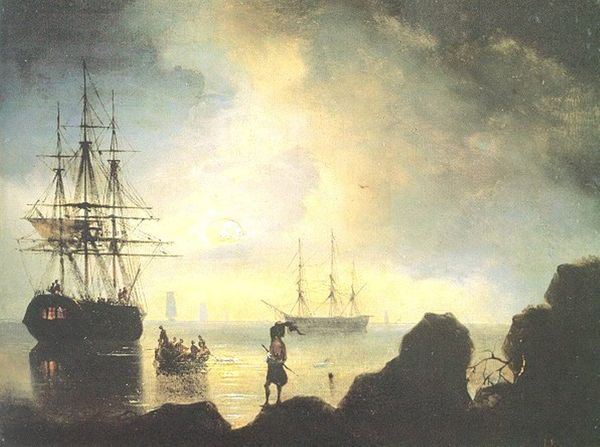
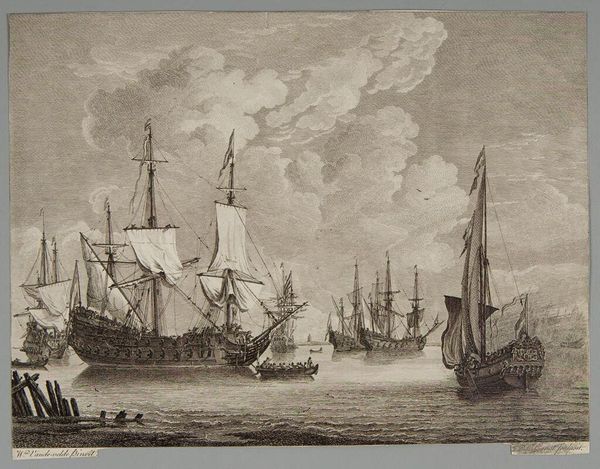
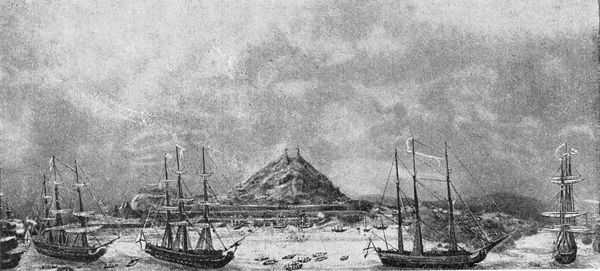
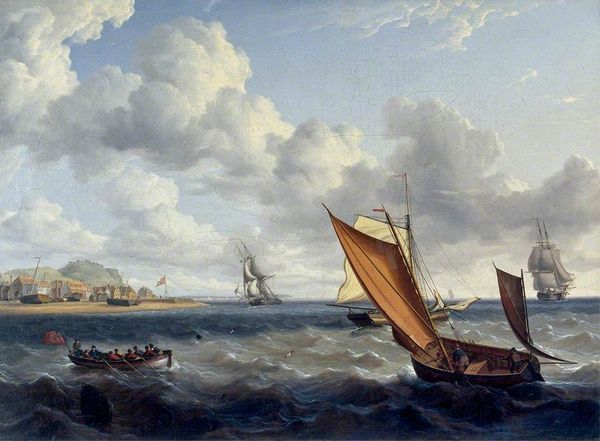
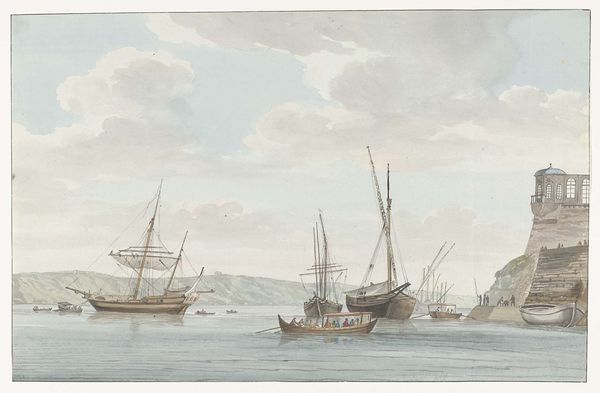
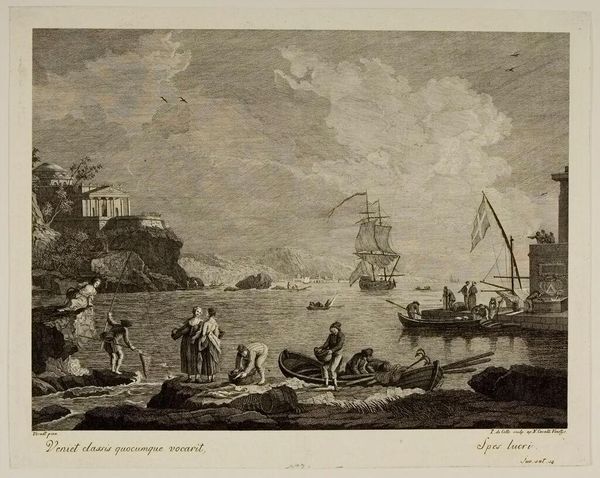
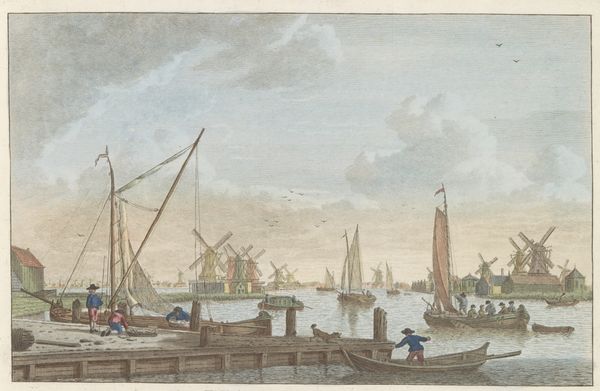
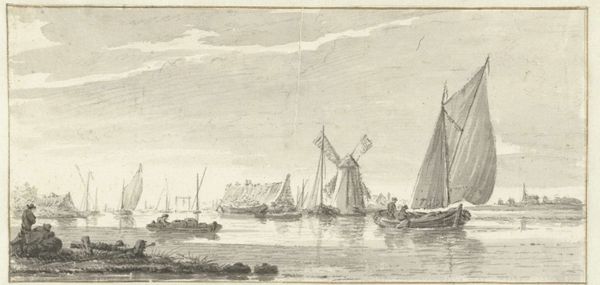
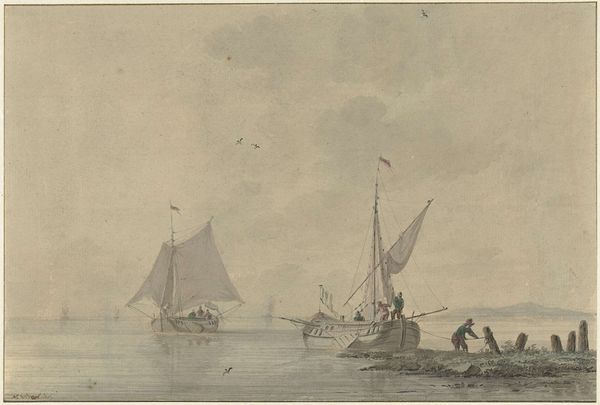
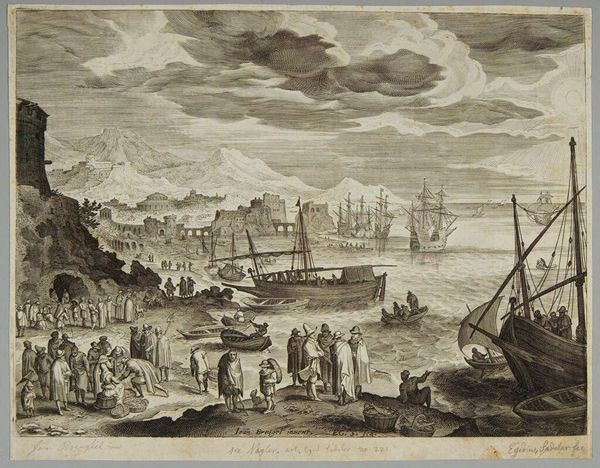
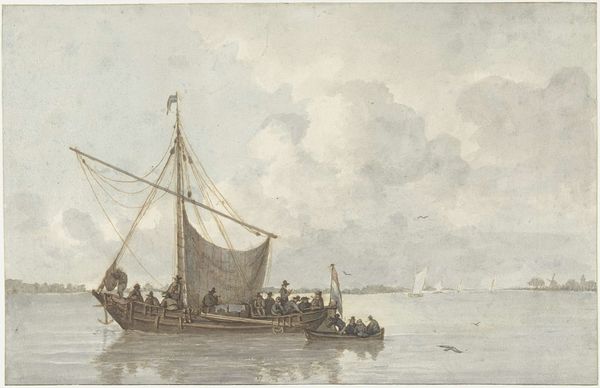
Curator: Let’s spend some time with “Seascape At Night,” an oil on canvas created in 1809 by Alexander Orlowski. Its acquisition was controversial; many in the art establishment found Orlowski's themes too populist. Editor: My first impression is of subdued, almost haunting beauty. It’s a tranquil yet somewhat eerie scene, this nocturnal seascape. The textures seem rich, almost palpable. You can almost smell the salt. Curator: The painting clearly aligns with Romanticism, a movement reacting against Enlightenment rationalism. Notice the emphasis on atmosphere, the power of nature, and even a certain sublime melancholy. These themes resonated strongly at the time, even amongst revolutionary fervour. Editor: What really grabs me is the rendering of the structure, almost collapsing. The use of oil on canvas gives those dark planks a physicality – a weightiness that speaks to me. Who built it, who maintains it and who is going to clean it now, I would love to know more. Curator: Orlowski worked 'plein-air,' as can be noticed, allowing for a real capture of the subtleties of night. He developed his career in times of socio-political upheaval. His paintings acted like visual news to a public still largely illiterate. He achieved international recognition and his approach of printmaking would democratize further image distribution in the decades to come. Editor: The contrast between the light of the sky and the solid mass of that wooden construction creates such visual drama. I appreciate that focus on material reality – you feel the rough texture, the age of the wood, maybe something left behind by craftsmen that were there. It gives a real insight on the day-to-day realities, doesn't it? Curator: Absolutely. This work highlights a fascination for landscape painting that started to define much of European art as a way of questioning modernity, urban spaces, and the growth of an international art market with London and Paris being crucial in shaping audiences taste at the time. Editor: Examining 'Seascape At Night' makes one reconsider what it meant to depict scenes from everyday working lives in times of social and industrial shifts. The materiality captures much more than simple visual appeal; it creates a deep social significance. Curator: Precisely. It challenges viewers to appreciate the value in the transient, reminding us of the shifting landscapes and societies in those times. Editor: I leave this viewing reevaluating how material speaks of craft, production and time... a fascinating glimpse of those working class conditions!
Comments
No comments
Be the first to comment and join the conversation on the ultimate creative platform.
 Collect
 React
React Comment
More like this