print, etching, engraving
allegory
etching
mannerism
nude
engraving
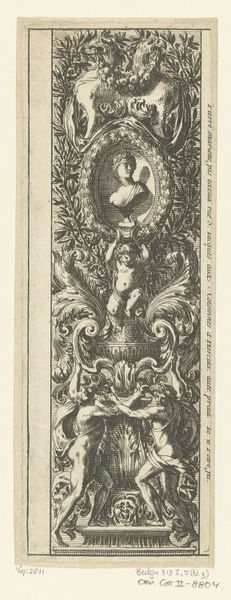
Dimensions: height 262 mm, width 77 mm
Copyright: Rijks Museum: Open Domain
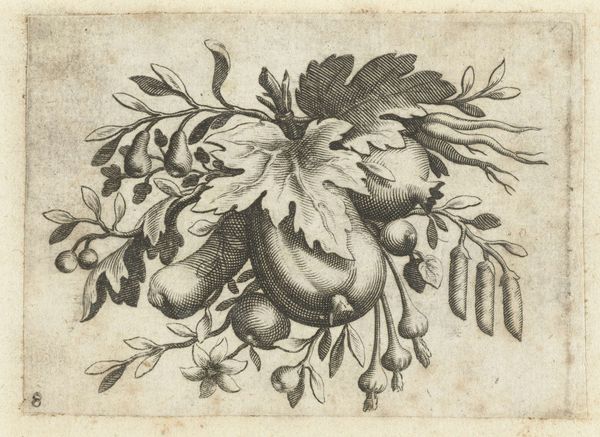
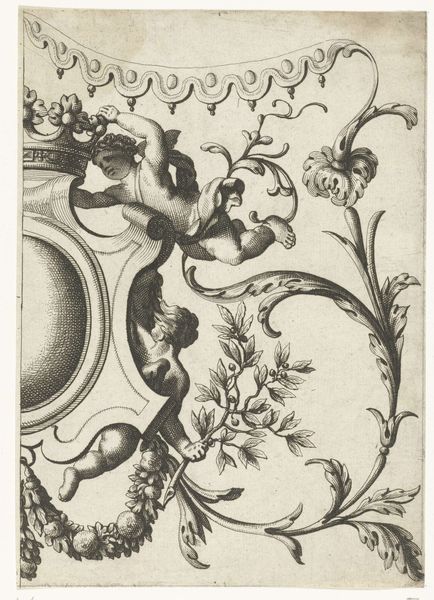
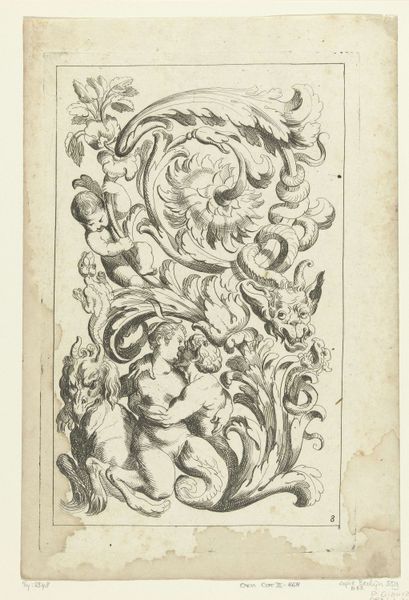
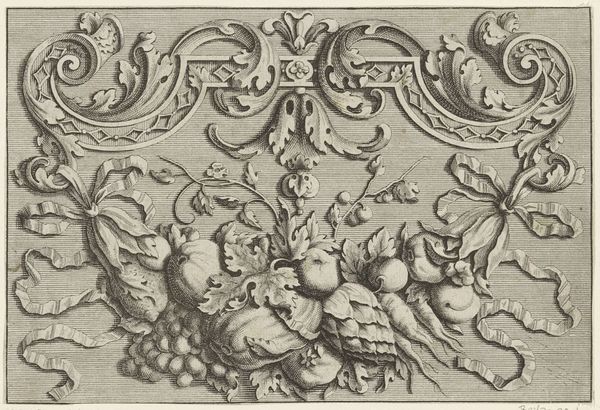
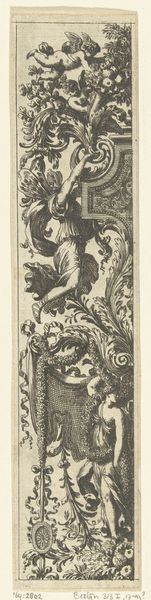
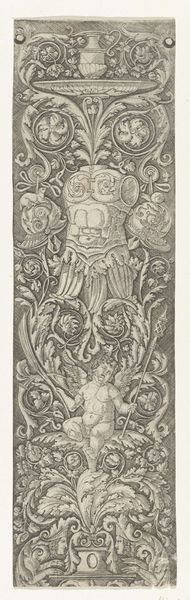
This is René Boyvin's "Festoen van vruchten," a print made sometime in the 16th century. During this period, the European Renaissance was in full swing, and artists often drew inspiration from classical antiquity. Here, we see a festoon—a decorative garland—composed of fruits and vegetables, topped by a reclining nude figure alongside a cupid. The sensuality of the nude is striking, yet it also reveals a complex interplay of desire, vulnerability, and power dynamics. Representations of the nude often served to perpetuate certain ideals of beauty and femininity, rooted in male artistic traditions. Boyvin's work can be interpreted as both celebrating and subverting these conventions. While the overt display of the nude might seem to reinforce traditional gender roles, it also challenges the viewer to reconsider their own gaze and the cultural narratives surrounding the body. How might our understanding of beauty, gender, and desire shift if we centered different perspectives and experiences?
Comments
No comments
Be the first to comment and join the conversation on the ultimate creative platform.
 React
React Comment