painting
#
portrait
#
painting
#
figuration
#
geometric
#
group-portraits
#
modernism
#
realism
Copyright: Will Barnet,Fair Use
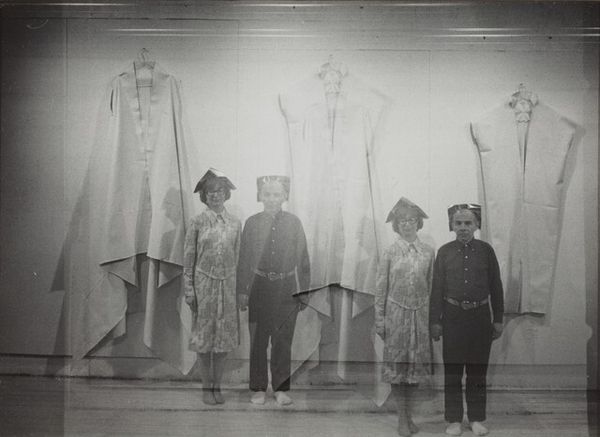
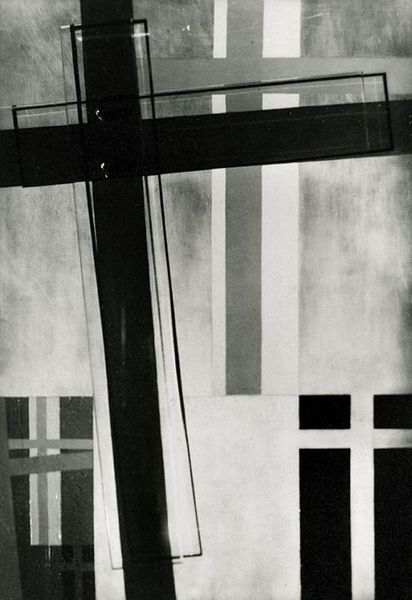
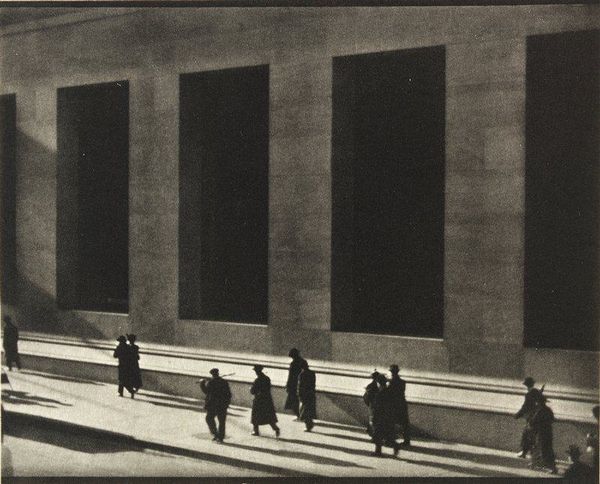
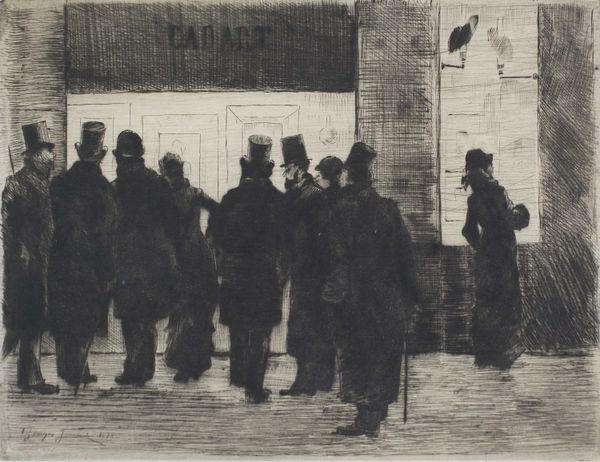
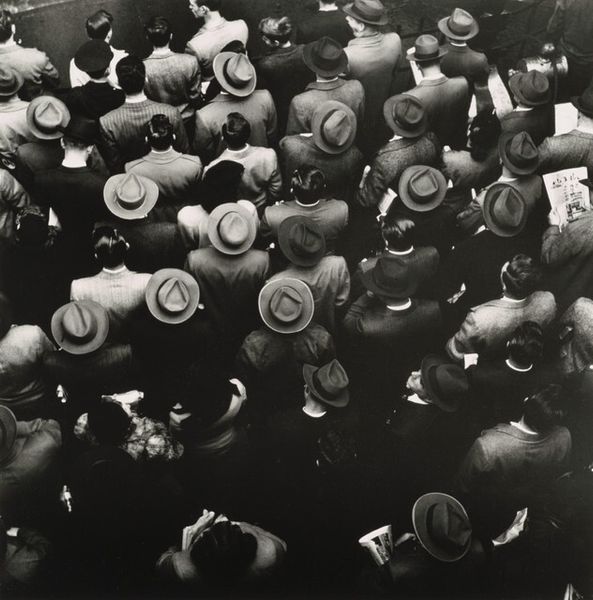
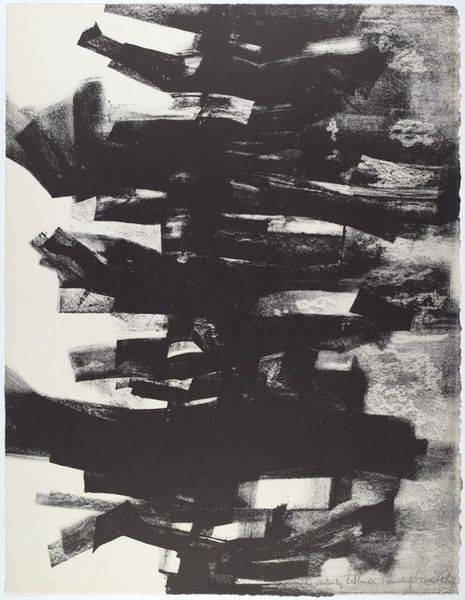
Curator: Looking at this artwork brings to mind a feeling of quiet observation and introspection. The minimalist style emphasizes geometry and simple lines. Editor: It does possess a sense of stark observation. Though, we lack details, let’s dive in. Here we have an unsigned painting – part of the exhibition collection - showing what seems to be a large group portrait by the American artist Will Barnet. We estimate this modern work to date from the mid-20th century, likely after World War II. The color scheme, or rather, the deliberate lack thereof, directs attention towards shape and mass, in lieu of decoration. Curator: Absolutely, and this lack of decorative impulse brings up the very real socio-economic concerns for many postwar artists who had to recycle, reduce, and reinvent with very little materials to work with. Did they see beauty in it, as art, or simply pragmatism as their core drive? Editor: Interesting point. Iconographically speaking, consider how a large group arranged in dark tones against a minimal background affects our perception. Group portraits have often been about celebrating community or shared identity, a shared narrative –but is this happening here? The grayscale, with this flat depiction of a crowd, leaves us with faceless silhouettes and their apparent conformity is more striking than anything. The symbolic implications of this design can reveal a focus on the human role during and after global conflicts. Curator: I concur, that a stark landscape underscores those points while it creates an unsettling balance through the use of flat planes to deliver a striking commentary about people as an aggregate, not individual stories or personas. Its material austerity emphasizes shared rather than individual stories, especially through art itself. Editor: Indeed, the emotional weight feels almost collective as we connect our own anxieties with shared social memories through that assembly of almost identically designed subjects. Curator: What an introspective journey for all of us, then. Editor: Precisely; there is depth there once you give into the emotional narrative of history as shared visual symbolism.
Comments
No comments
Be the first to comment and join the conversation on the ultimate creative platform.
 Collect
 React
React Comment
More like this