c. 13th century
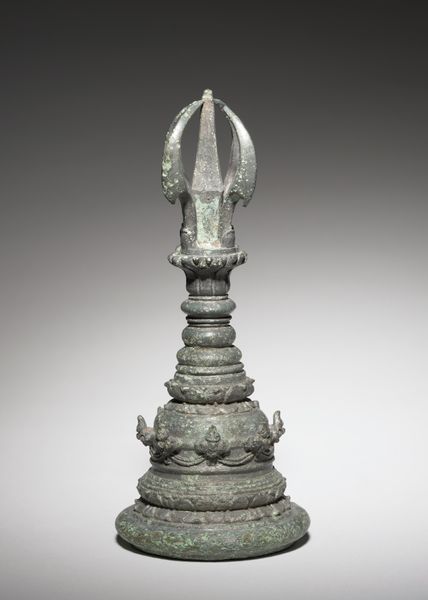
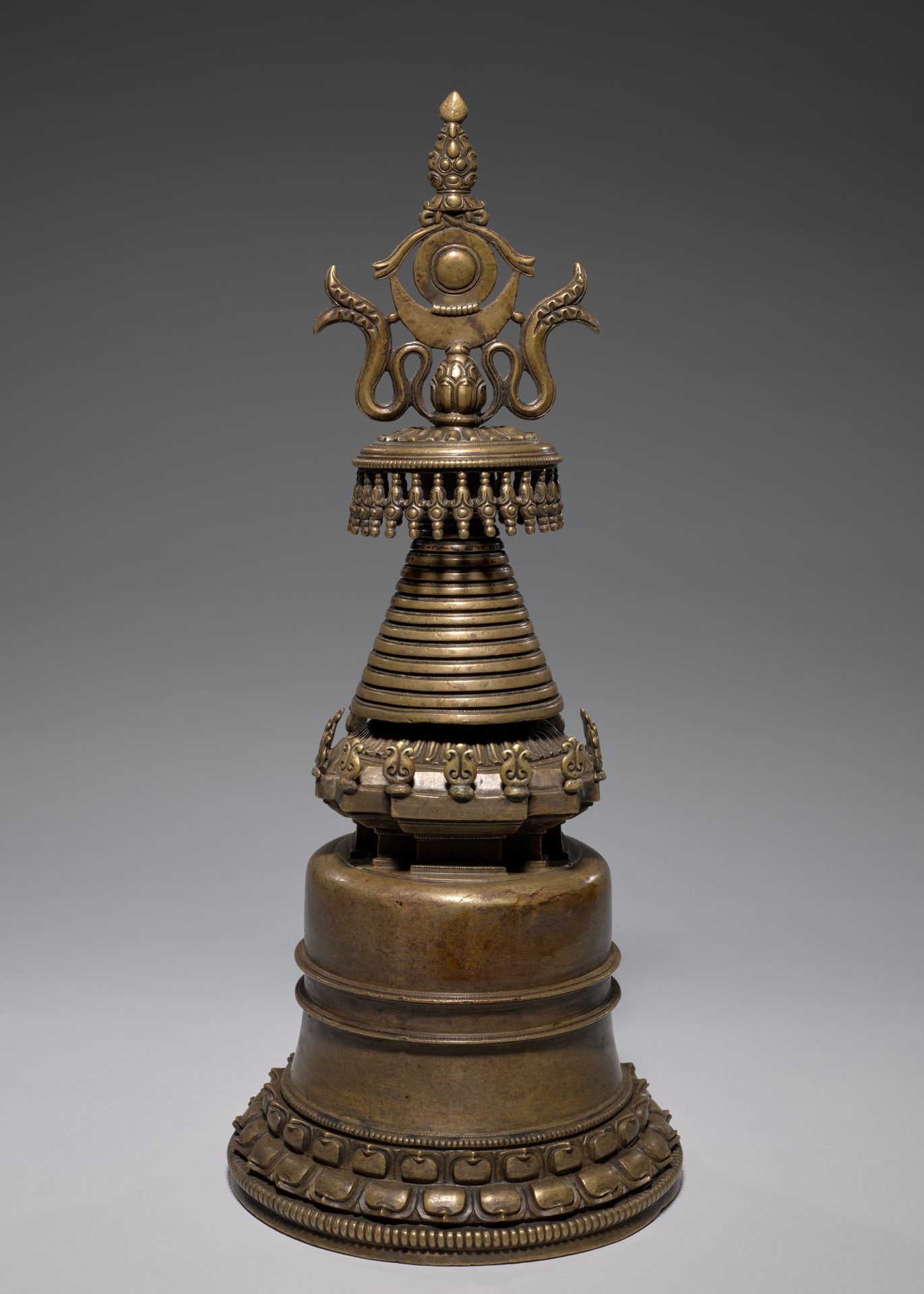
Chorten


Listen to curator's interpretation
Curatorial notes
Editor: This is a brass sculpture titled "Chorten," dating back to around the 13th century, currently housed in the Minneapolis Institute of Art. The tiered structure is so intricate. What catches your eye when you look at this piece? Curator: The immediate emphasis lies in its geometric relationships. Note the stark contrast between the solid base and the conical, ribbed body. The interplay between these distinct shapes creates a visual rhythm. Consider the circular form at the very top, how it echoes the curvature of the base, yet also counters it with its openness. Editor: It’s almost like a visual dialogue between the different shapes. What about the material? Does the use of brass contribute to the piece's overall impact? Curator: Undeniably. The metallic sheen enhances the interplay of light and shadow, accentuating the textures and patterns meticulously crafted onto the surface. Observe how the gradations in tone, from darker recesses to brighter highlights, create a sense of depth and volume. Brass also carries inherent symbolic weight. Editor: So, the medium itself plays a significant role in understanding the artwork beyond just its appearance? Curator: Precisely. It isn't simply a question of aesthetics but also material presence. This particular alloy brings forth an entire semiotic spectrum tied to value, longevity, and the alchemical. Are the object’s components harmoniously balanced and is the application of the principles to its formal design successful? I find that it is. Editor: I'm starting to appreciate how form and material work together. Curator: Indeed. Through careful consideration of the object’s parts, what they are and what they represent, you realize there’s an extraordinary complexity and power in what may initially have appeared a somewhat understated work. Editor: Absolutely. I’ll never look at a sculpture the same way!