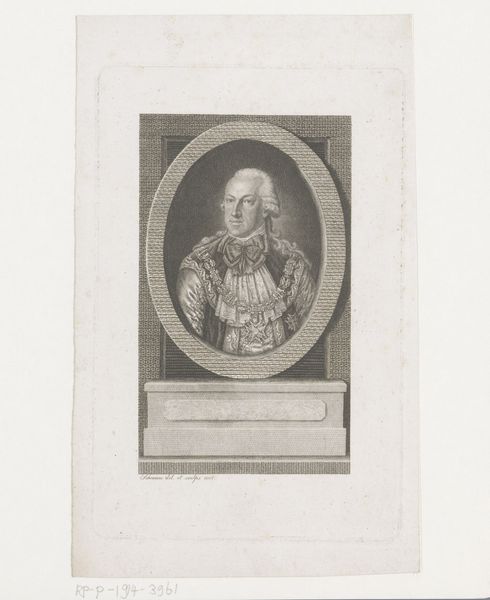
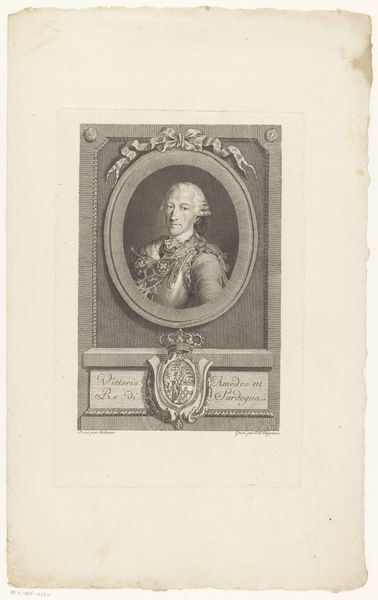
print, engraving
portrait
neoclacissism
old engraving style
19th century
history-painting
engraving
Dimensions: height 320 mm, width 224 mm
Copyright: Rijks Museum: Open Domain
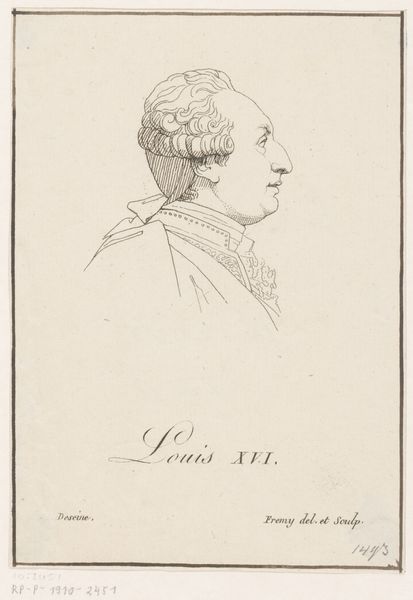
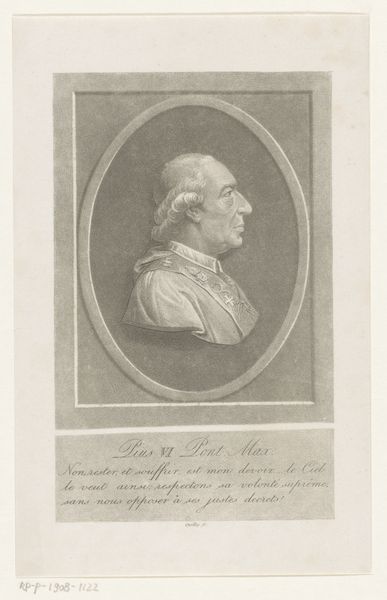
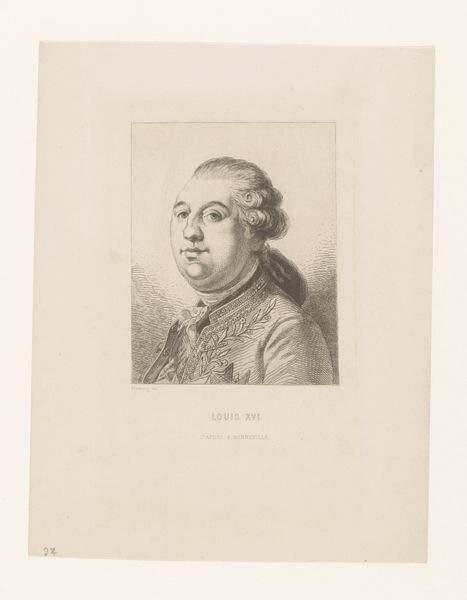
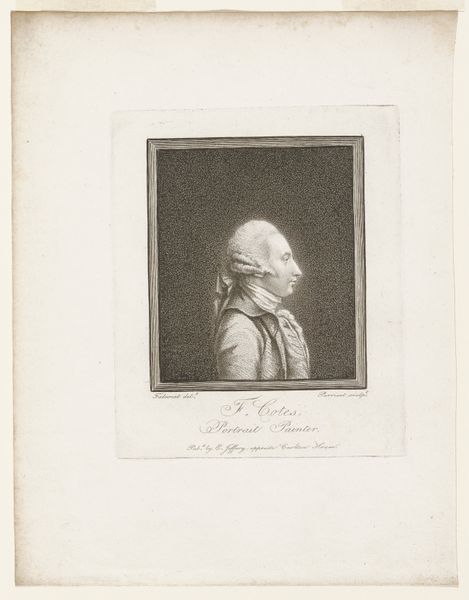
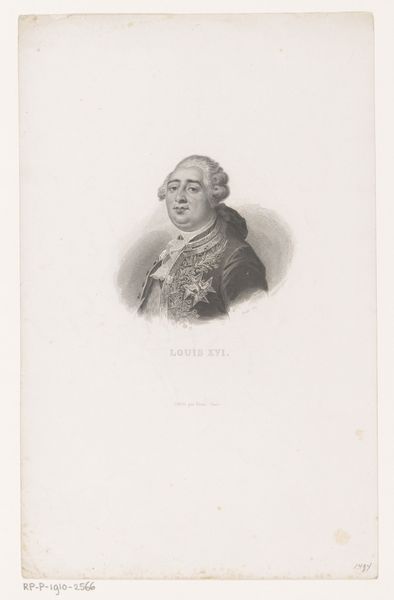
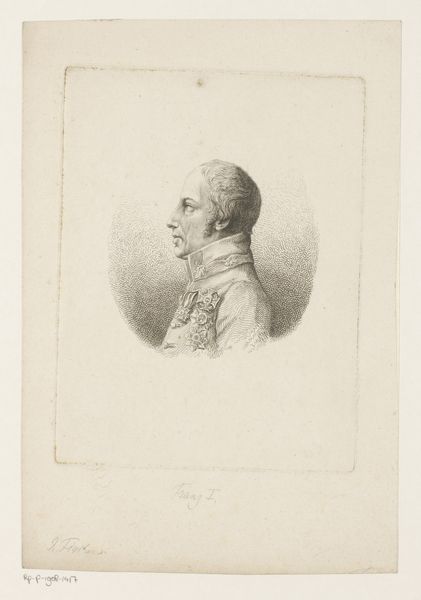
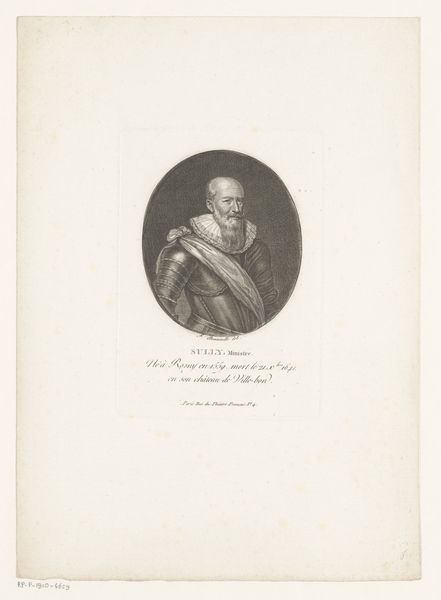
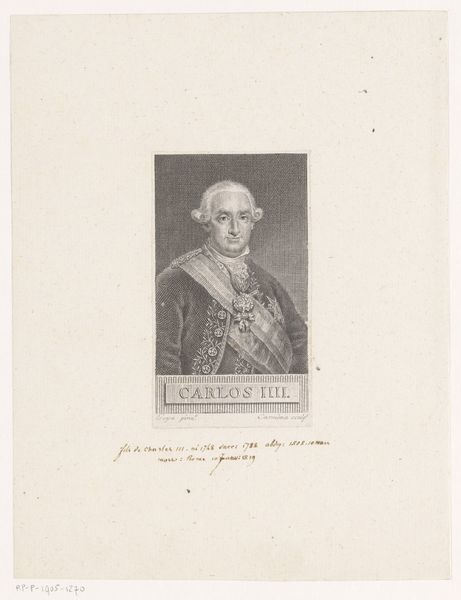
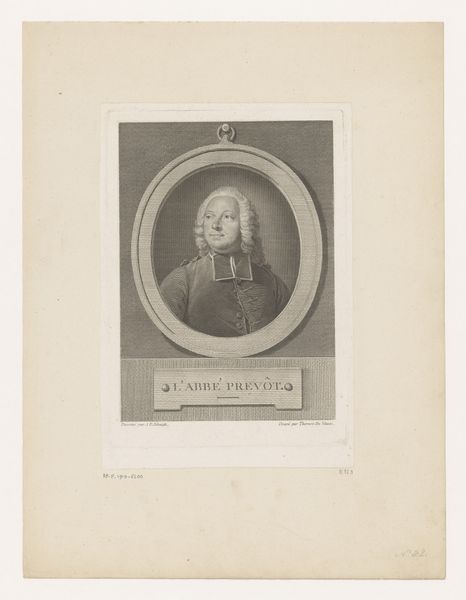
Curator: The mood of this print strikes me as decidedly...composed, wouldn’t you agree? The arrangement feels very formal. Editor: Indeed. What we have here is a Neoclassical portrait of King Louis XVIII, by François Aubertin, likely created sometime between 1783 and 1821. As an engraving, the lines are clean, precise. Curator: The sharp delineation creates an interesting contrast. Note the soft texture of the ermine-lined robe against the rigid geometry of the frame. It is a study in controlled textures. Editor: That stark contrast underscores the complex history of the French monarchy, particularly during the tumultuous late 18th and early 19th centuries. Curator: Observe, too, the rather shallow depth of field within the engraving itself. The king is brought forward, made present, against an almost void-like background. All focus converges on him. Editor: And yet, the lack of background detail contributes to the construction of royal authority by eschewing any distractions. It demands we confront the King and, by extension, the reinstated Bourbon monarchy post-Revolution. The imagery emphasizes legitimacy and power. Curator: Yes, consider the lines of the fleur-de-lis, repeated like visual mantras on the cloak. They create a beautiful cadence. Editor: Precisely, the symbols aren’t merely decorative. The artistic rendering of Louis XVIII becomes inseparable from the politics surrounding his reign, the very real attempt to restore a dynasty, and erase recent revolutionary history through visual language. Curator: So, while I appreciate the formal rigor and aesthetic control within the image... Editor: ...I recognize the overt deployment of symbols aimed at cementing power. Perhaps that uneasy friction makes it such a compelling image? Curator: Perhaps. Art, ultimately, can reveal even as it conceals. Editor: A vital record, always worth a deeper look.
Comments
No comments
Be the first to comment and join the conversation on the ultimate creative platform.
 React
React Comment