drawing, pencil
drawing
pencil sketch
landscape
river
pencil
realism
Copyright: Rijks Museum: Open Domain
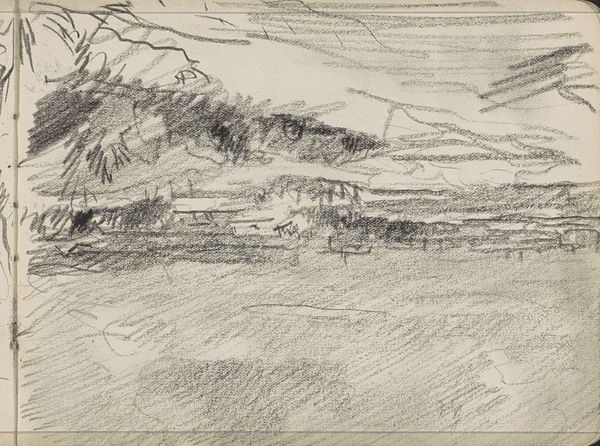
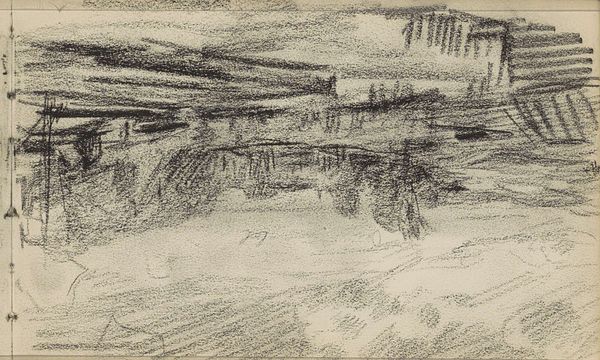
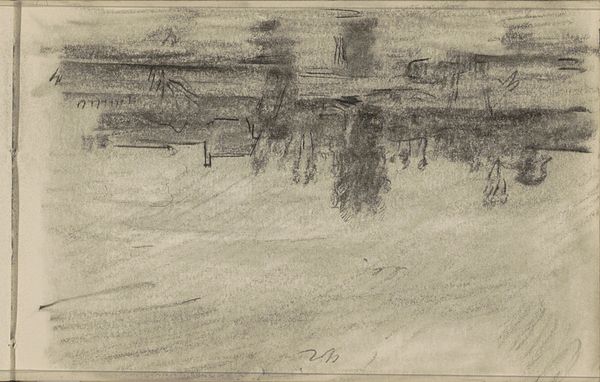
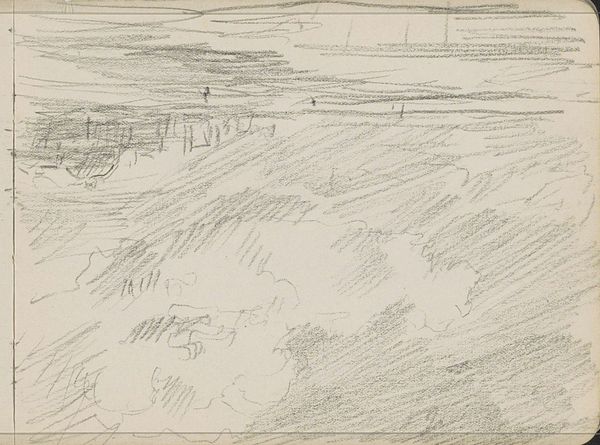
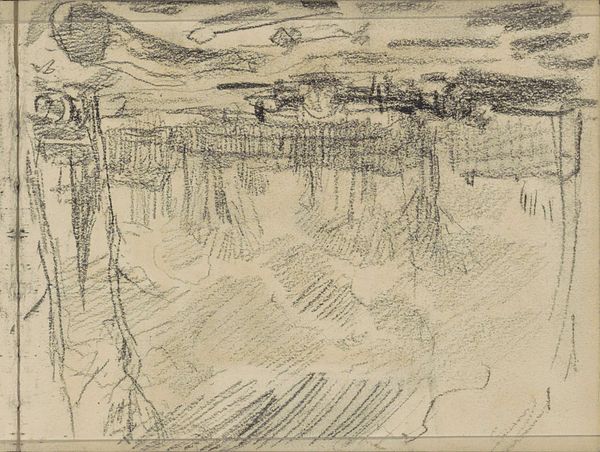
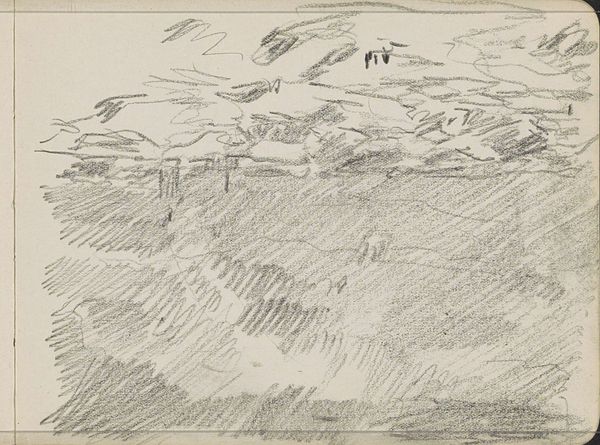
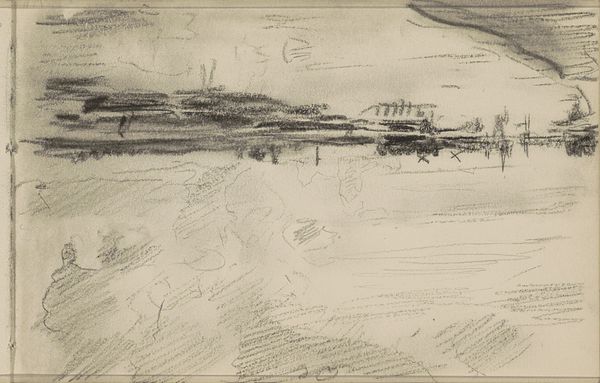
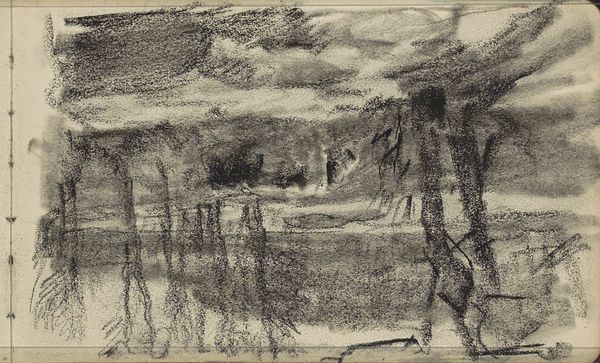
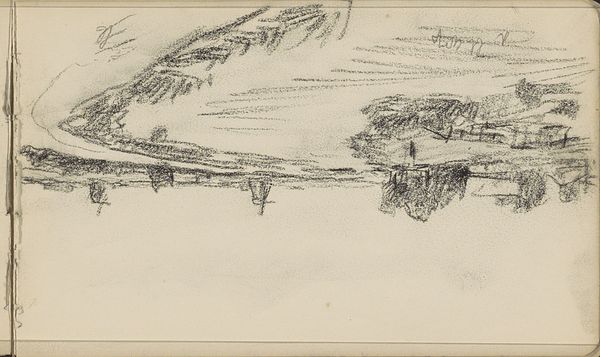
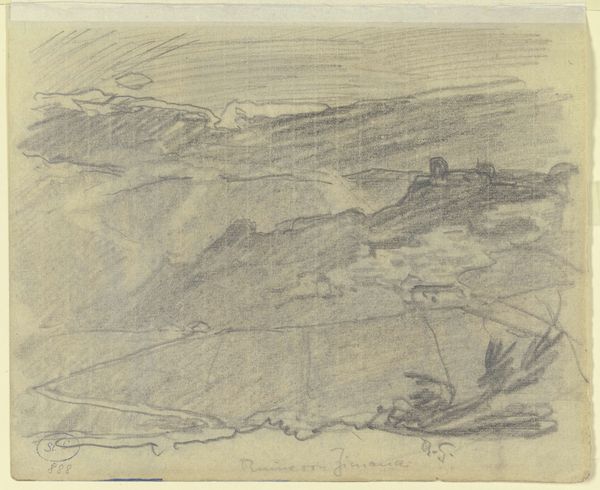
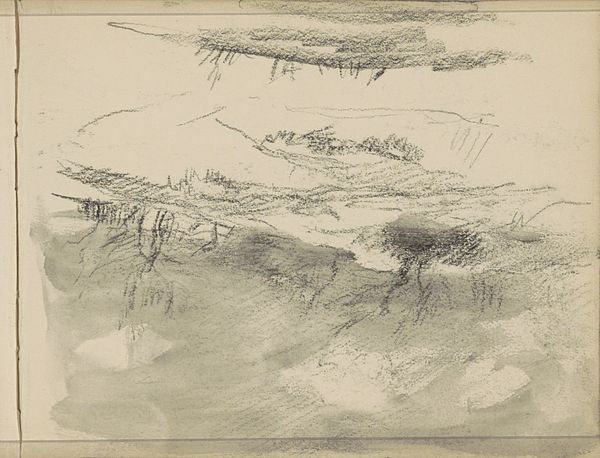
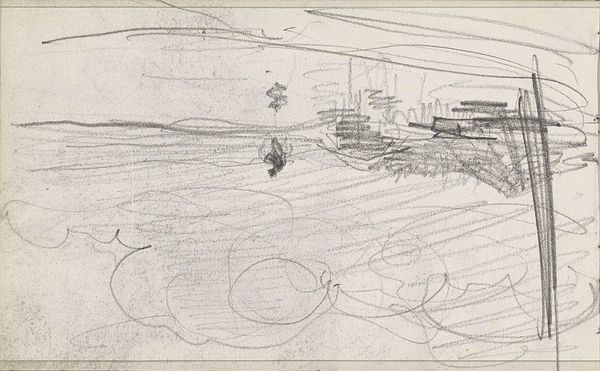
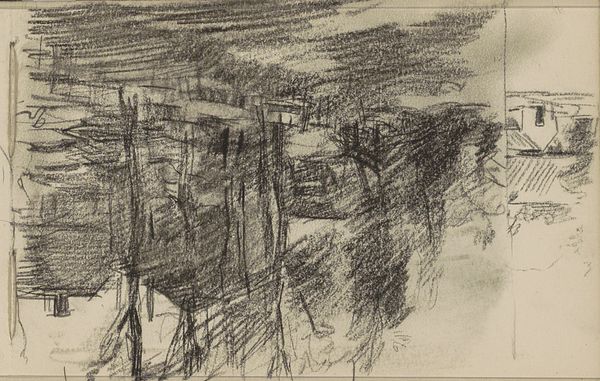
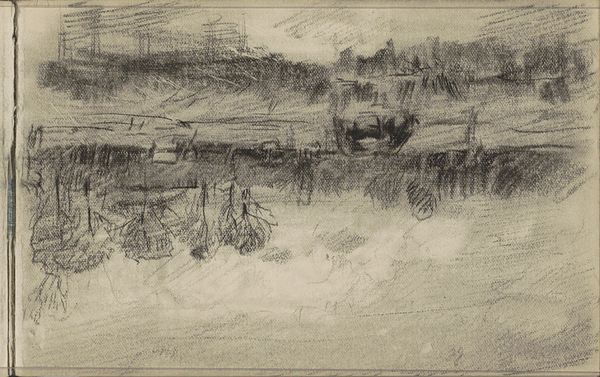
Editor: This is "River Landscape with Buildings," a pencil drawing created in 1909 by Johan Antonie de Jonge. It strikes me as a bit hazy, almost dreamlike. The soft pencil strokes give it a very ethereal quality. What do you see in this piece? Curator: I see a fascinating interplay of light and shadow, certainly. But more importantly, I am drawn to how de Jonge uses these visual elements to construct a specific narrative of place and memory. This image seems to tap into a collective yearning for an idealized past, a simpler time. Look at how the architecture merges with the natural landscape, nearly indistinguishable. Do you think that’s intentional? Editor: It does seem deliberate, yes. Like the buildings are growing organically from the landscape. It’s not a sharp, precise rendering, but rather an atmospheric impression. So, is the indistinctness part of that idealization you mentioned? Curator: Precisely. By blurring the lines between the built and natural worlds, the artist seems to be evoking a nostalgic vision. We have an emotional response rather than seeing an accurate rendering. It resonates because of the enduring human connection with landscape. Perhaps the river acts as a symbol for the constant passage of time, and we are only ever capable of fleeting glimpses of our origins. Editor: I see it now! The hazy quality isn’t a flaw, but a key to its meaning. Thank you! Curator: My pleasure! It is artworks like these, that use everyday symbolism, that offer deeper insights the more time we invest in deciphering their message.
Comments
No comments
Be the first to comment and join the conversation on the ultimate creative platform.
 React
React Comment