

1638 - 1643
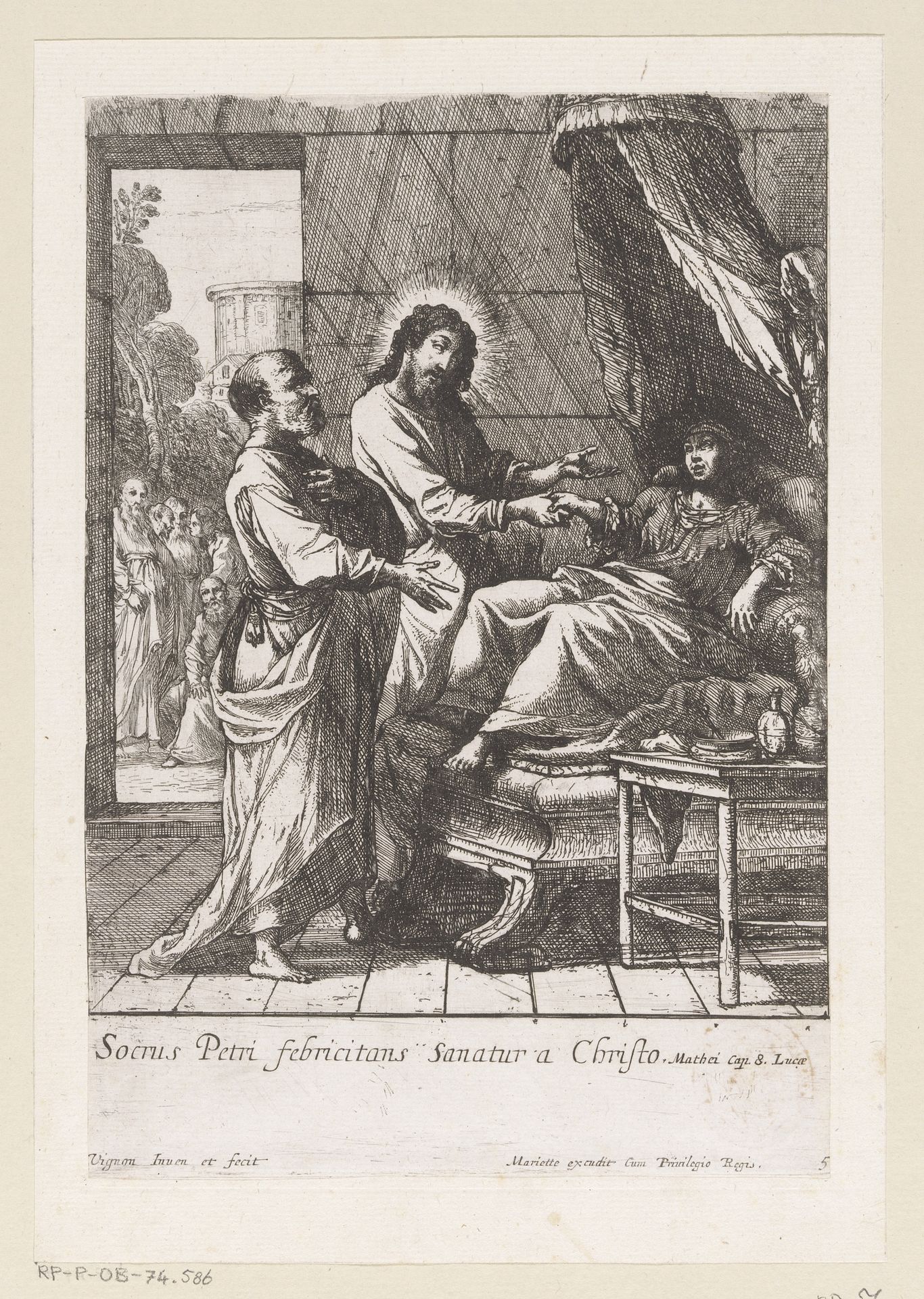
Genezing van de schoonmoeder van Petrus

Claude Vignon
1593 - 1670Location
RijksmuseumListen to curator's interpretation
Curatorial notes
Editor: Here we have Claude Vignon’s etching, "The Healing of Saint Peter’s Mother-in-Law," dating from 1638 to 1643. The busyness of the etched lines, combined with the figures clustered in such a small space, creates a palpable sense of drama. How do you read the symbolism at play here? Curator: Notice how Christ's hand barely makes contact with the Saint's Mother-in-law's hand: yet her halo is more pronounced, almost challenging us to consider where the true agency of healing rests. Consider, too, the cultural memory of touch and healing – the laying on of hands as a symbol of divine intervention. What is Vignon trying to say about faith? Editor: I see what you mean! It's like he's questioning the directness of divine intervention. But then, the shadowy figures clustered in the doorway also seem significant. Curator: Indeed. Those figures, witnessing the event, embody the cultural transmission of this story, how it's retold and re-experienced. It also creates this interesting parallel between public spectacle, witnessed testimony and quiet, domestic transformation. Almost like a stage play. Editor: I didn't catch that! Do you think the architecture in the background reinforces that idea of a theater set? Curator: The temple-like structure could definitely allude to a stage backdrop, reinforcing that this event is playing out on a grand, symbolic scale, intended for interpretation and reflection by the viewer but within the religious cultural and beliefs held by its viewers. What do you make of the empty medicine bottle there on the bedside table? Editor: Ah, that’s clever, showing that earthly remedies are replaced by divine intervention! Seeing that definitely shifted how I understand Vignon's cultural statement about God. Curator: Indeed! Now imagine viewing it through a lens of performance or ritual, each element adding layers of meaning across time. We carry and reinvent cultural understanding each time the print is viewed. Editor: Absolutely, thank you. I feel like I have a richer understanding of how symbols function across historical and personal experiences now.