print, photography
pictorialism
landscape
photography
cityscape
post-impressionism
realism
Dimensions: height 9 cm, width 14 cm
Copyright: Rijks Museum: Open Domain
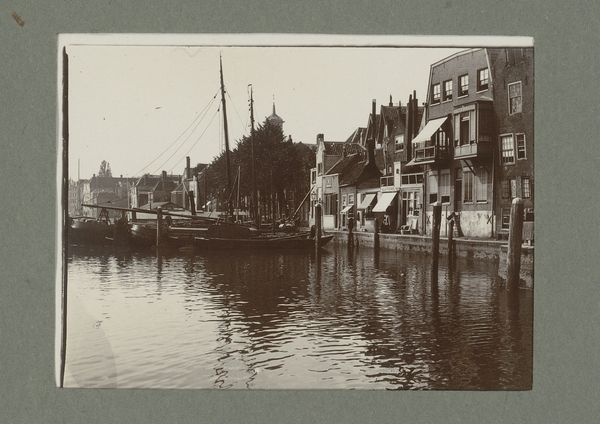
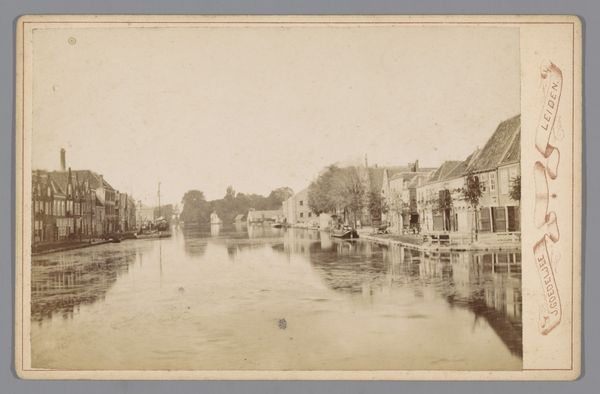
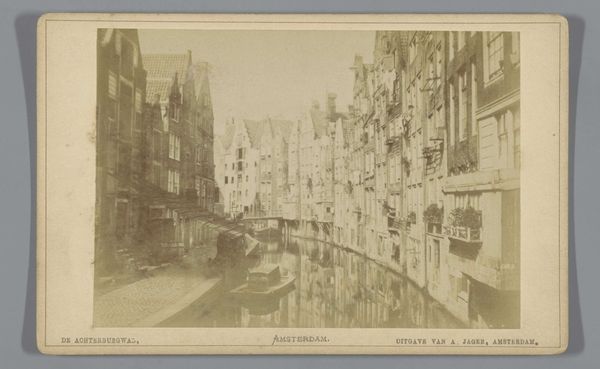
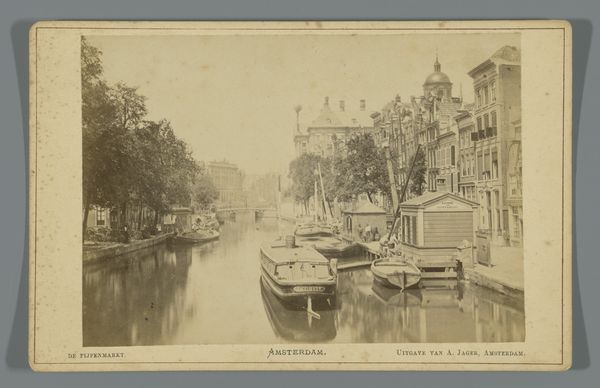
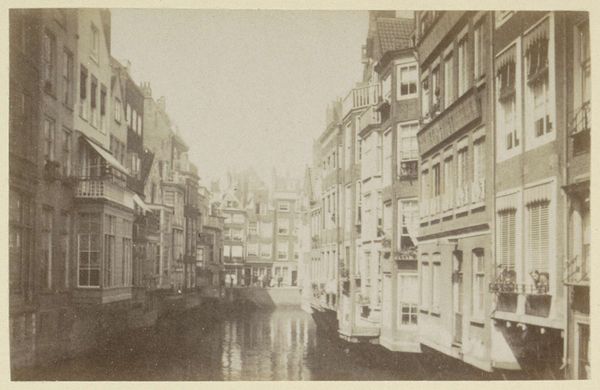
Editor: This print, "Watervloed in Zeeland" by Gebroeders van Straaten, captures the flooding of Vlissingen in 1906. The scene is stark; water fills the streets up to the storefronts. It's such a melancholy image of everyday life disrupted. What's your interpretation of it? Curator: It’s important to consider this photograph not just as documentation, but as a construction of a particular narrative. What choices did the photographer make in composing the scene? What’s included, and perhaps more importantly, what’s left out? Editor: Well, it feels objective. It seems like they just captured what was happening. Curator: That's an understandable reaction. But photographs, even seemingly "objective" ones, are always shaped by the photographer's perspective, and by the broader socio-political context in which they are made and consumed. Disasters often become spectacles. Did this image raise awareness about climate change, or simply satisfy a morbid curiosity in its contemporary viewers? Were the people impacted by the flood represented in decisions about its display? Editor: So you're saying it’s more about how the event was framed and consumed rather than the event itself? That makes me rethink the photograph completely. It does feel different now. Curator: Exactly. Images like this also helped construct a visual memory of national identity, especially through representations of shared experience and the narratives created about a particular community during moments of collective difficulty or crisis. The lack of people adds to this somewhat impersonal visual account. Editor: That is true! It really reframes the conversation about the photograph. Thank you for providing your expertise.
Comments
No comments
Be the first to comment and join the conversation on the ultimate creative platform.
 React
React Comment