About this artwork
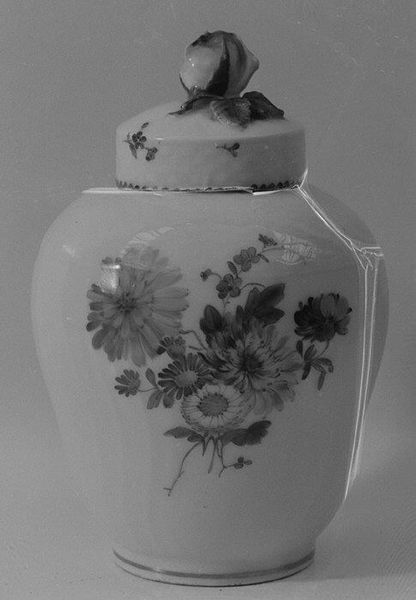
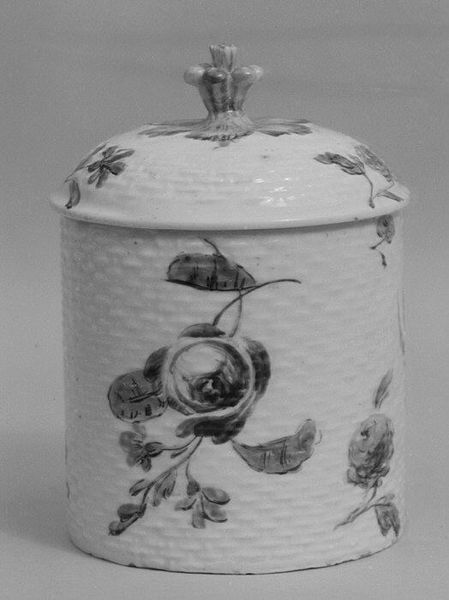
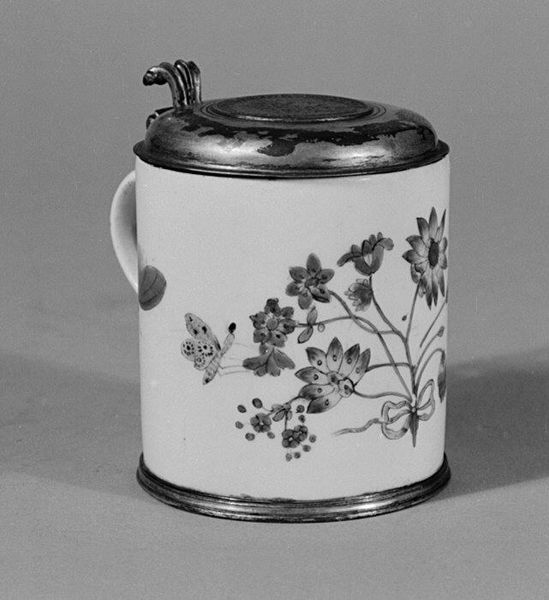
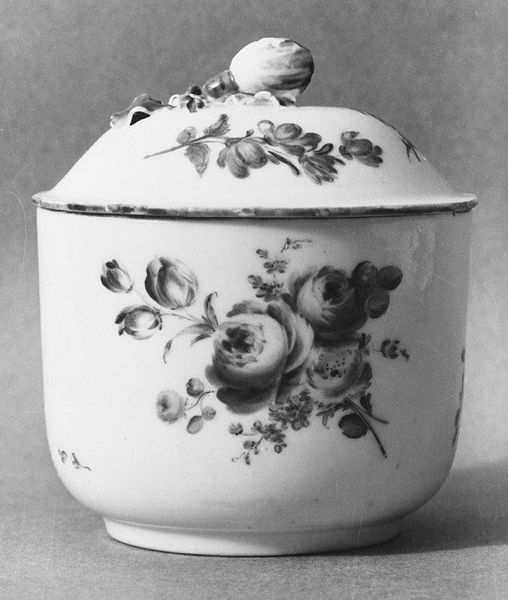
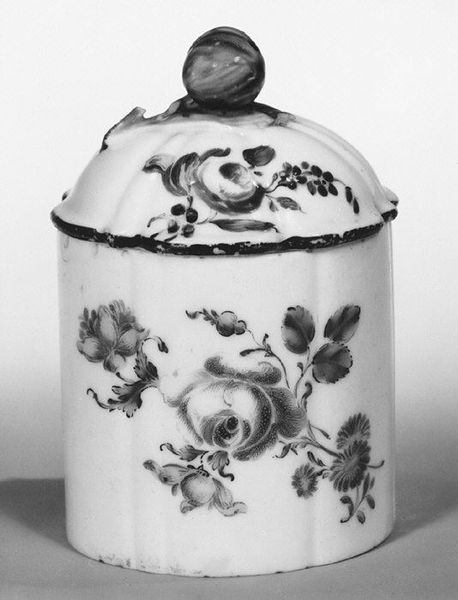
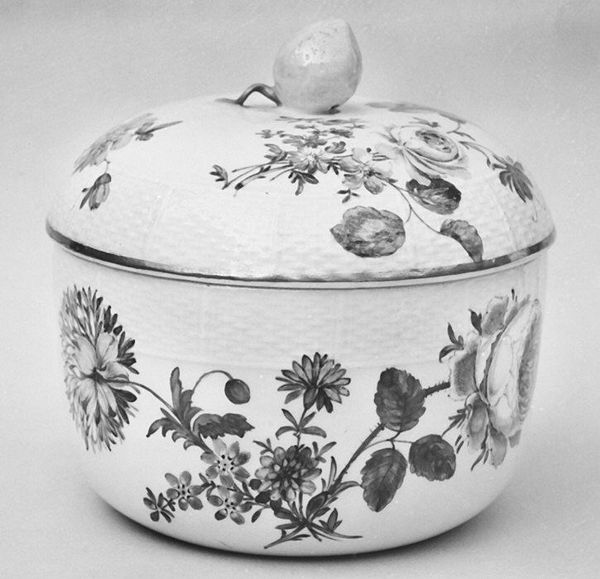
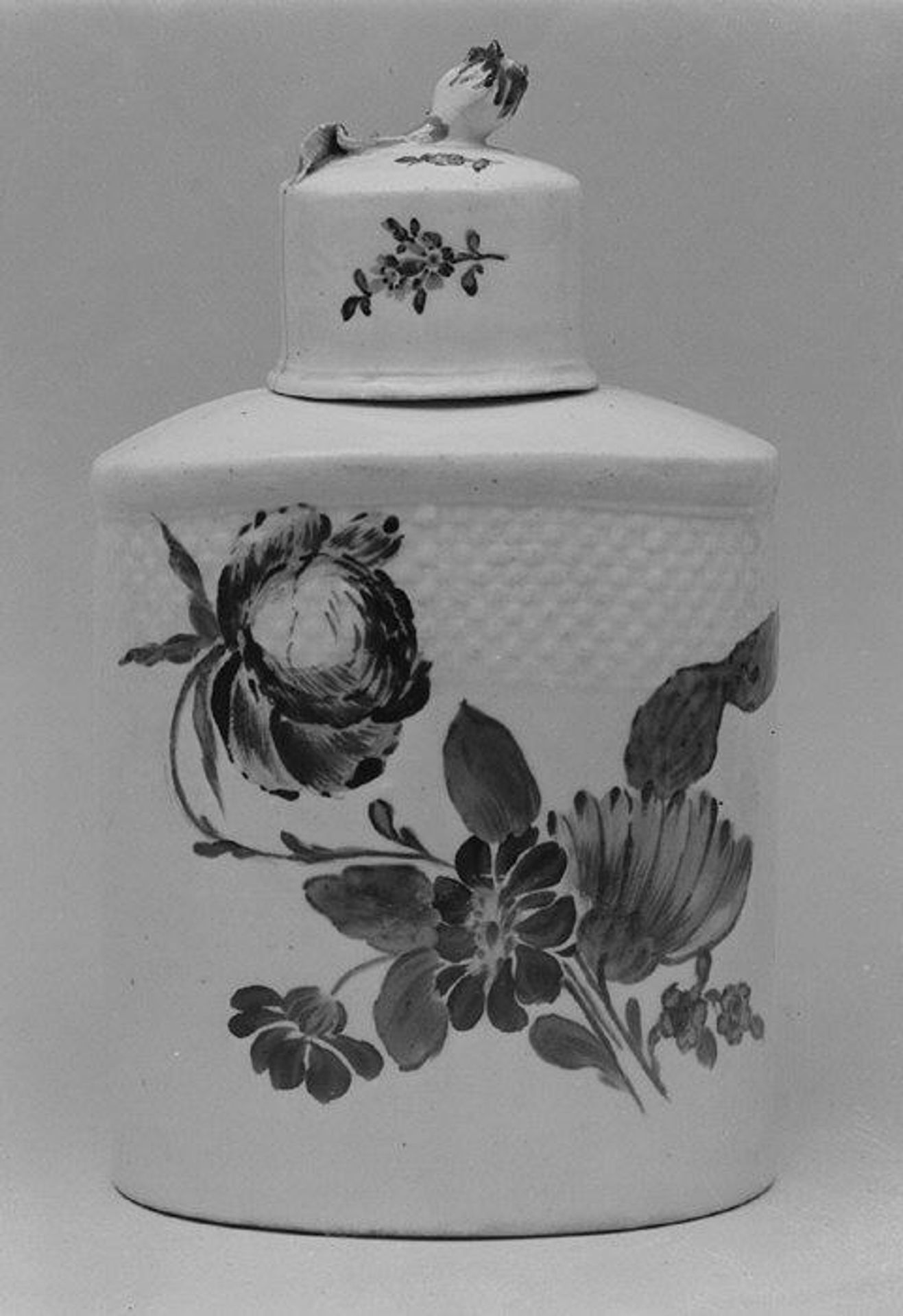
This porcelain caddy, created by the Limbach Porcelain Manufactory, presents a study in contrasts through its decoration and form. The eye is immediately drawn to the floral patterns painted in monochromatic tones against the stark white of the porcelain. Observe how the artist balances the rigidity of the caddy's cylindrical shape with the organic, flowing lines of the floral motifs. This juxtaposition destabilizes the conventional relationship between form and decoration, inviting us to consider how surface ornamentation can redefine an object's character. The artist uses dark hues to create depth within the floral arrangement, challenging the flatness often associated with applied decoration. Ultimately, the Limbach Porcelain Manufactory uses these visual elements to not only enhance the caddy's aesthetic appeal, but also to engage with broader artistic ideas about form, function, and decoration. This dynamic interplay ensures that the caddy functions as both a functional item and a site of aesthetic and intellectual engagement.
Caddy
1770 - 1780

Limbach Porcelain Manufactory
1762 - 1939
The Metropolitan Museum of Art
Metropolitan Museum of Art, New York, NYArtwork details
- Dimensions
- Height: 5 1/4 in. (13.3 cm)
- Location
- Metropolitan Museum of Art, New York, NY
- Copyright
- Public Domain
Comments
Be the first to share your thoughts about this work.
About this artwork
This porcelain caddy, created by the Limbach Porcelain Manufactory, presents a study in contrasts through its decoration and form. The eye is immediately drawn to the floral patterns painted in monochromatic tones against the stark white of the porcelain. Observe how the artist balances the rigidity of the caddy's cylindrical shape with the organic, flowing lines of the floral motifs. This juxtaposition destabilizes the conventional relationship between form and decoration, inviting us to consider how surface ornamentation can redefine an object's character. The artist uses dark hues to create depth within the floral arrangement, challenging the flatness often associated with applied decoration. Ultimately, the Limbach Porcelain Manufactory uses these visual elements to not only enhance the caddy's aesthetic appeal, but also to engage with broader artistic ideas about form, function, and decoration. This dynamic interplay ensures that the caddy functions as both a functional item and a site of aesthetic and intellectual engagement.
Comments
Be the first to share your thoughts about this work.