1802
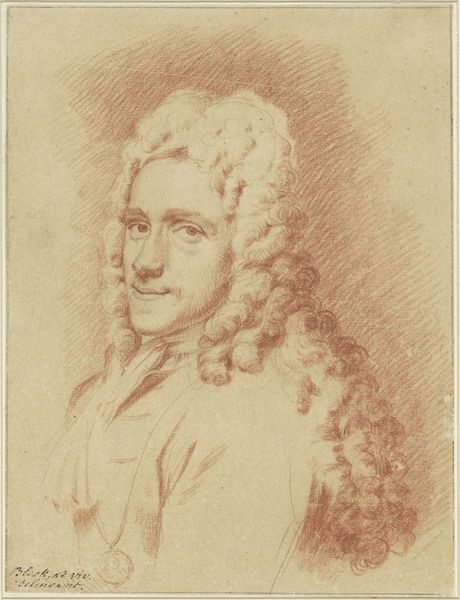
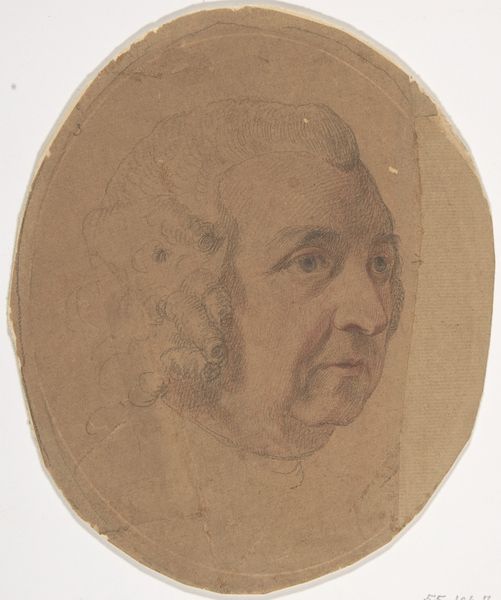
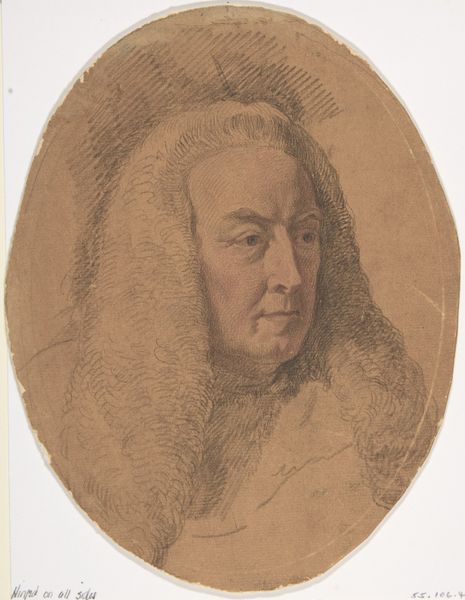
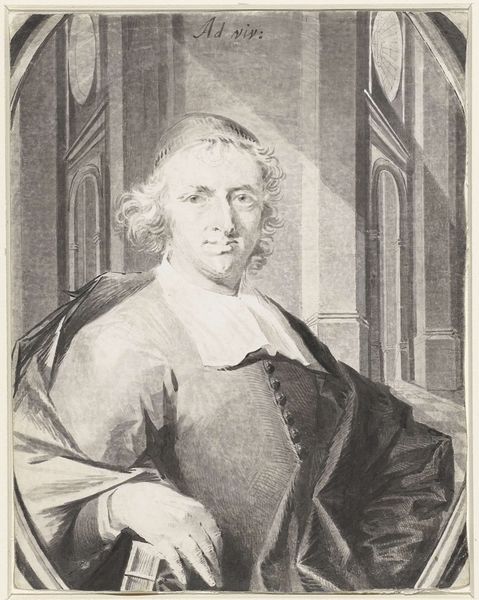
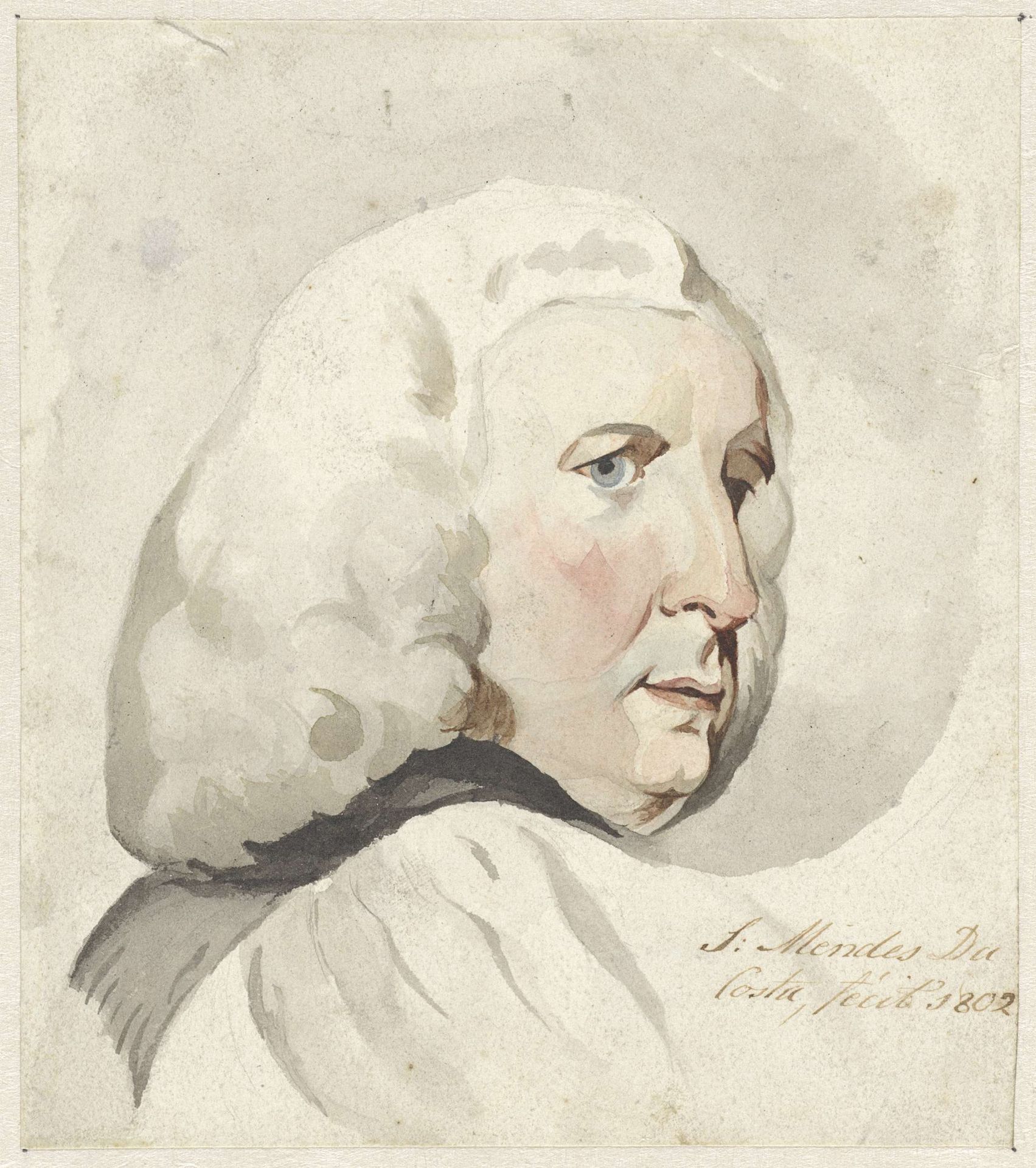
Hoofd van een man, naar rechts

Listen to curator's interpretation
Curatorial notes
This is Samuel Henri Mendes da Costa's study of a man's head in watercolor. The powdered wig is the most striking element; it's a symbol of authority and status, particularly during the 17th and 18th centuries. However, this is not the only symbol of power here. Consider how the seemingly straightforward portrait bears the weight of cultural memory. The wig itself, once a marker of the elite, echoes in different forms across history, from the elaborate hairstyles of ancient Egypt to the present-day judicial robes of court. Each iteration carries a sense of formality and established order. There's an emotional dimension, too, where the portrait can stir deep, subconscious feelings about hierarchy, power, and tradition. The sitter's gaze, though captured with delicate brushstrokes, holds an intensity that transcends time. It connects with similar expressions across centuries of portraiture, tapping into a collective understanding of human ambition. Observe how the symbol of the wig, shifts in meaning, and reappears in different guises. It is a testament to the powerful, cyclical, and ever-evolving nature of symbols across time.