

1847
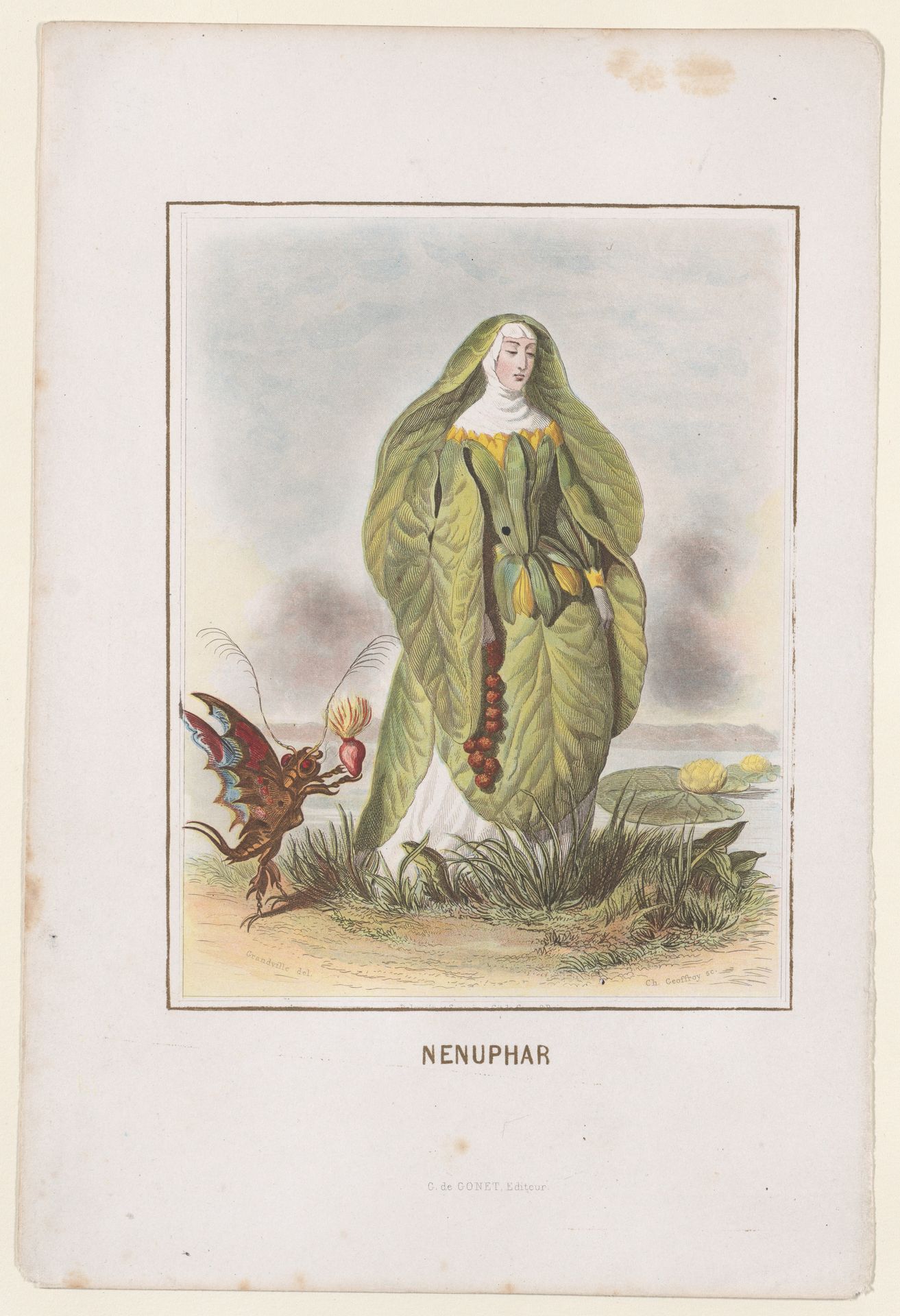
Nenuphar, from "Les Fleurs Animées"

Listen to curator's interpretation
Curatorial notes
This print, "Nenuphar" from "Les Fleurs Animées," was made by J.J. Grandville in the 19th century using lithography, a process that democratized image-making. A design is drawn on a stone or metal plate with a greasy substance, and then printed using oil-based inks. The result here is a fantastical take on the water lily. See how Grandville uses the natural forms of leaves to create a woman's dress? The water lily pads float on the water behind her; while the figure herself is lithographed, the scene around her is lightly washed with watercolor, a painterly touch. Lithography allowed for the relatively quick reproduction of images, making them accessible to a wider audience, and fuelling the rise of illustrated books and magazines. The amount of work involved in the production of each print would have been significant, involving skilled artisans and laborers. Considering the materials, making, and context, this print reflects the evolving relationship between art, craft, and industrial production in the 19th century, challenging our traditional distinctions between fine art and the applied arts.