About this artwork
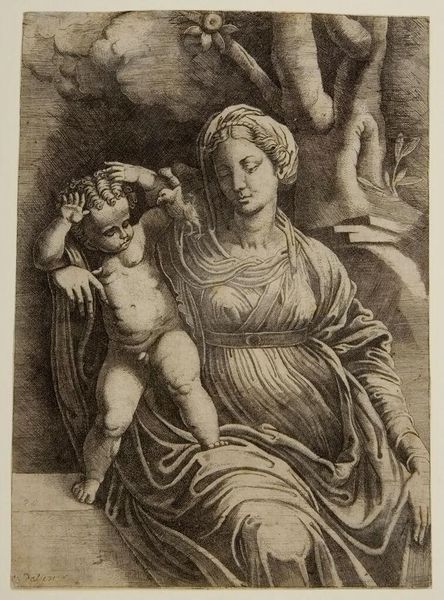
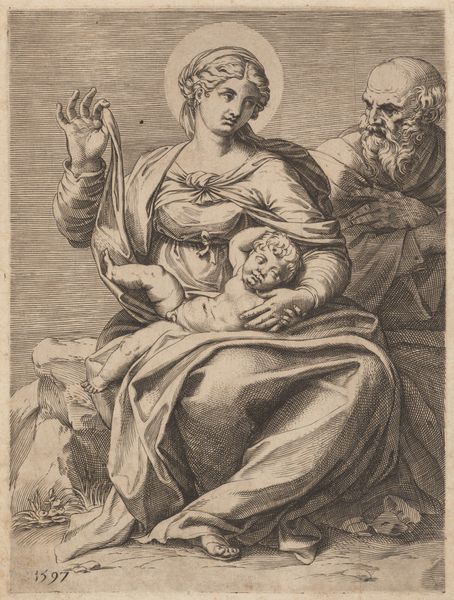
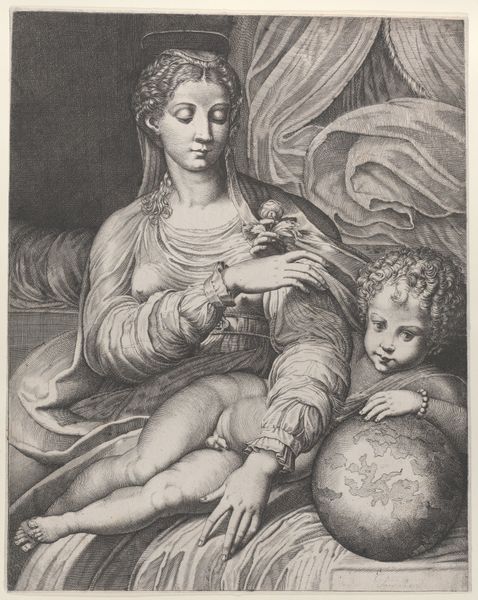
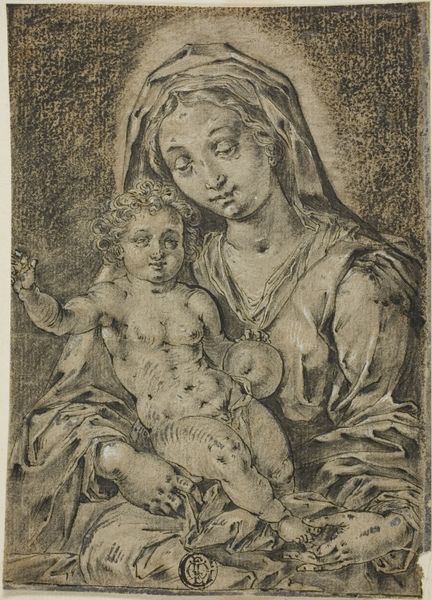
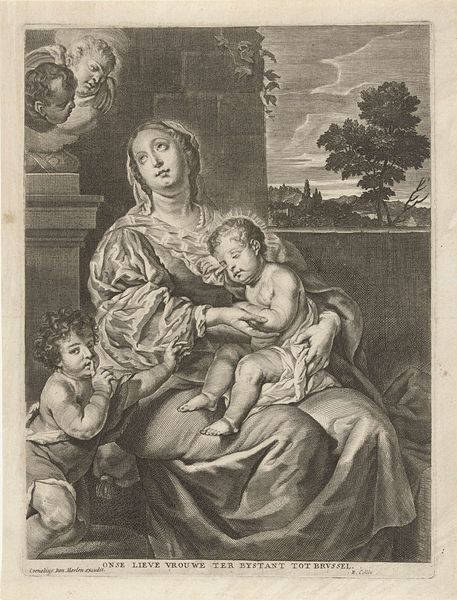
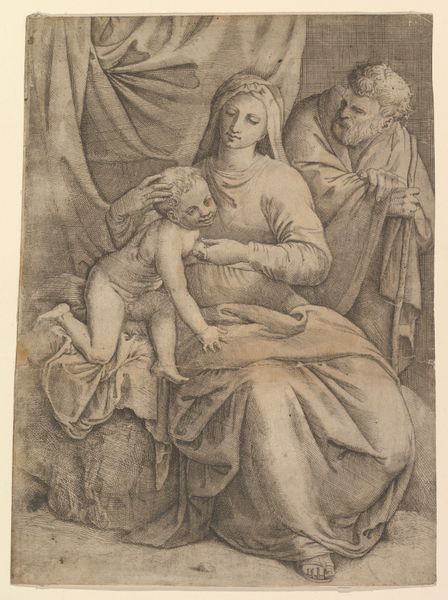
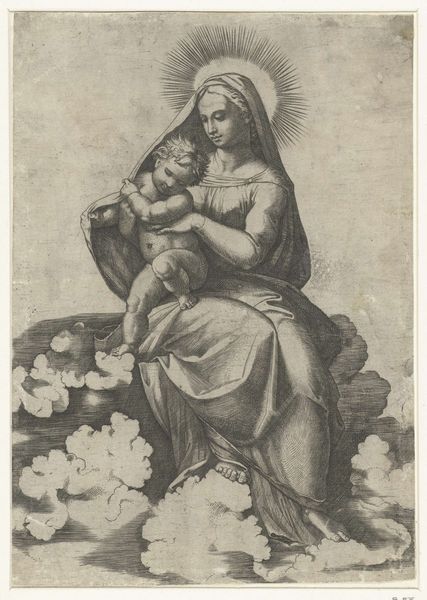
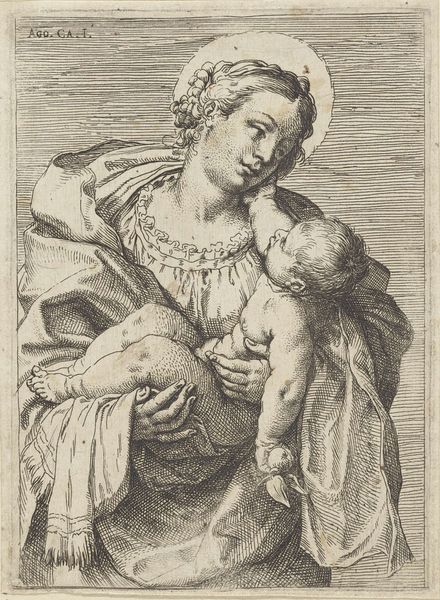
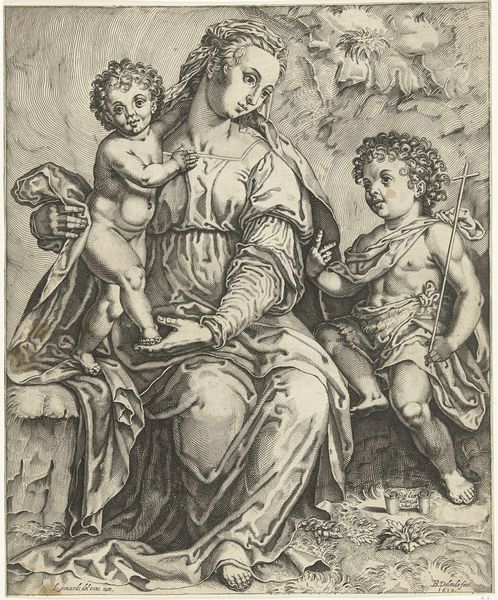
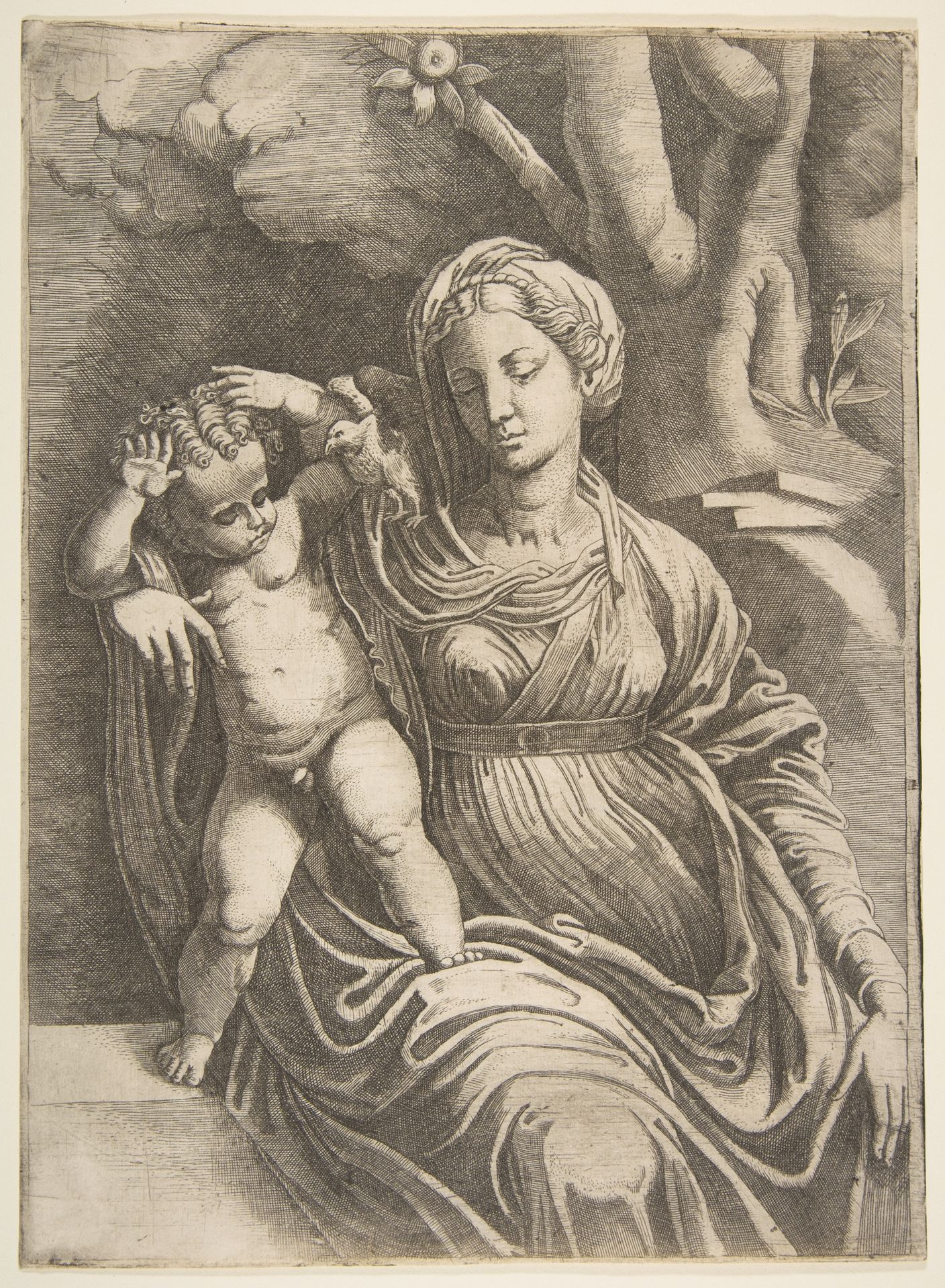
This engraving, made by Giulio Bonasone around 1510-1576, depicts the Virgin and Child seated beneath a tree. The Madonna's tender gaze and the infant Christ's playful interaction with a bird invite contemplation on themes of maternal love and divine innocence. Note the apple tree looming over the figures, echoing the story of original sin in the Garden of Eden. Yet, the presence of the Virgin and Child transforms this symbol from one of human failing to one of redemption. The Madonna, often referred to as the "New Eve," embodies a reversal of Eve's transgression through the birth of Christ. Consider the bird in Christ's hand, a recurring motif in Renaissance art symbolizing the soul. We see similar avian symbolism in ancient Greek depictions of Eros, the god of love, often portrayed with birds, embodying the soul's yearning for the divine. This image resonates with the complex interplay between classical and Christian symbolism, and the cyclical return of ancient motifs, laden with new significance, throughout art history. It serves as a potent symbol of salvation, love, and the eternal cycle of life, death, and rebirth.
Virgin and Child seated beneath a tree 1555 - 1565


Artwork details
- Medium
- drawing, print, etching
- Dimensions
- sheet: 11 7/16 x 8 3/8 in. (29.1 x 21.2 cm)
- Location
- Metropolitan Museum of Art, New York, NY
- Copyright
- Public Domain
Tags
portrait
tree
drawing
facial expression drawing
etching
landscape
figuration
11_renaissance
madonna
child
line
history-painting
italian-renaissance
Comments
No comments
About this artwork
This engraving, made by Giulio Bonasone around 1510-1576, depicts the Virgin and Child seated beneath a tree. The Madonna's tender gaze and the infant Christ's playful interaction with a bird invite contemplation on themes of maternal love and divine innocence. Note the apple tree looming over the figures, echoing the story of original sin in the Garden of Eden. Yet, the presence of the Virgin and Child transforms this symbol from one of human failing to one of redemption. The Madonna, often referred to as the "New Eve," embodies a reversal of Eve's transgression through the birth of Christ. Consider the bird in Christ's hand, a recurring motif in Renaissance art symbolizing the soul. We see similar avian symbolism in ancient Greek depictions of Eros, the god of love, often portrayed with birds, embodying the soul's yearning for the divine. This image resonates with the complex interplay between classical and Christian symbolism, and the cyclical return of ancient motifs, laden with new significance, throughout art history. It serves as a potent symbol of salvation, love, and the eternal cycle of life, death, and rebirth.
Comments
No comments