1871
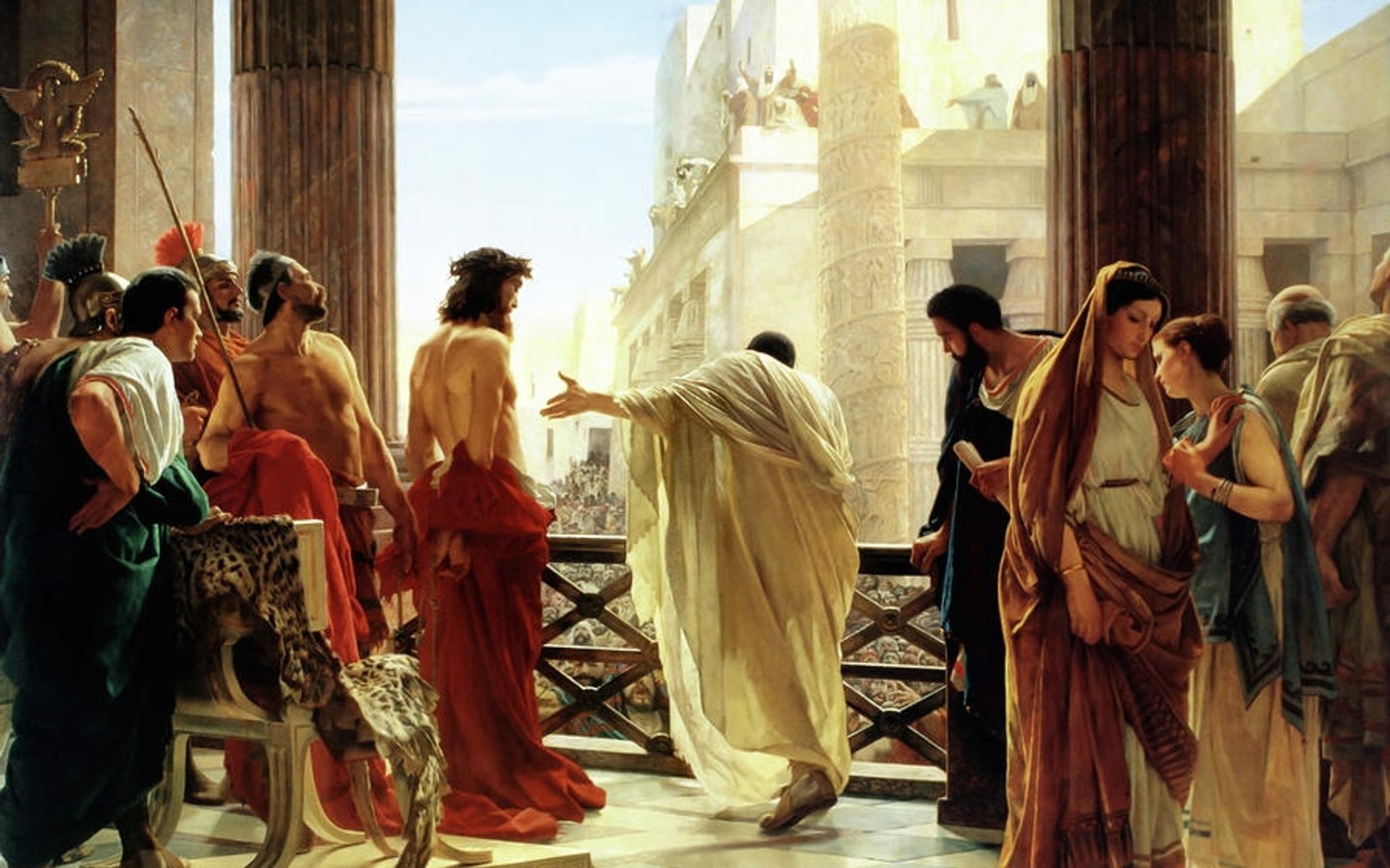
Ecce Homo

Antonio Ciseri
1821 - 1891Location
Palazzo Pitti, Florence, ItalyListen to curator's interpretation
Curatorial notes
Antonio Ciseri painted "Ecce Homo," which translates to "Behold the Man," in the 19th century, a time when religious art often served to reinforce moral and social norms. Ciseri presents a deeply human Christ. Stripped and crowned with thorns, he is displayed to the crowd by Pontius Pilate, inviting the viewers to confront questions of justice, power, and collective responsibility. The painting challenges viewers to consider their own roles in systems of oppression and redemption. What's striking is the emotional depth Ciseri brings to each figure, from the stoicism of Christ to the conflicted expressions of the onlookers. This piece invites introspection on the personal and societal implications of judgement and compassion. Through his art, Ciseri asks us to reflect on the profound connections between individual suffering and universal experiences of humanity.