painting, oil-paint
#
portrait
#
painting
#
oil-paint
#
genre-painting
#
academic-art
#
realism
Copyright: Public domain
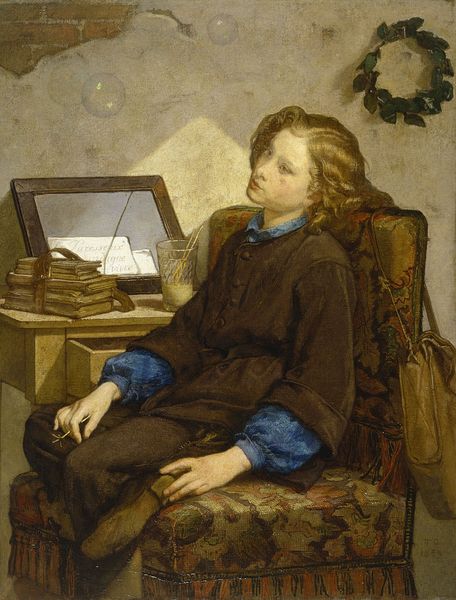
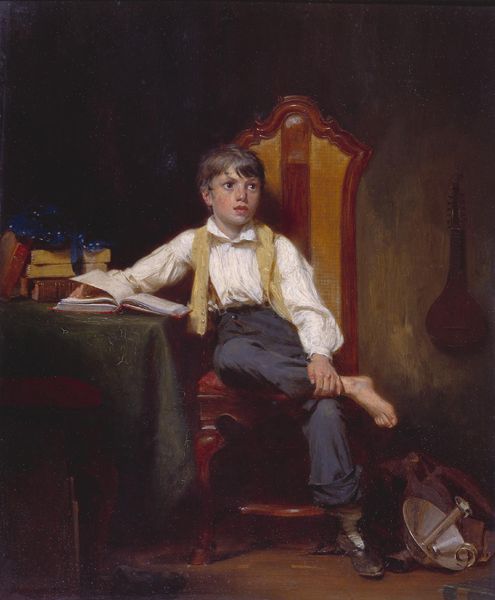
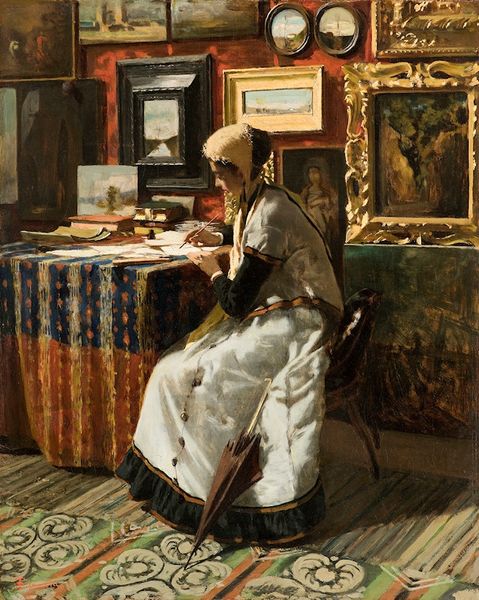
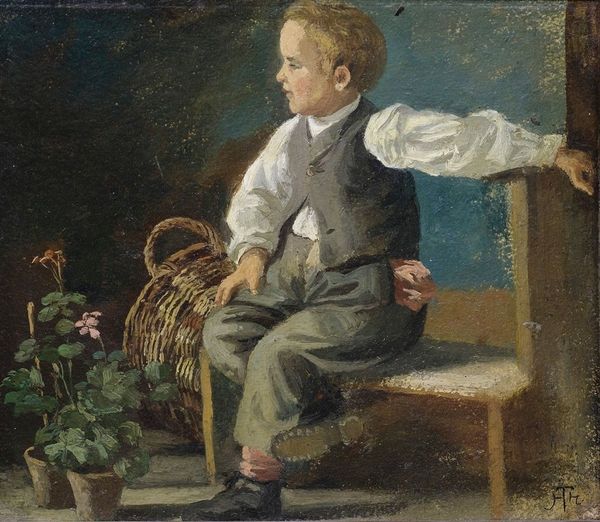
Thomas Couture created this painting, “Soap Bubbles,” with oil on canvas sometime in the mid-19th century. It's a seemingly simple scene, a young man pausing from his studies to idly blow bubbles. But why did Couture choose this subject? In 19th century France, the art world was dominated by the Academy des Beaux-Arts, which emphasized history painting with grand moral narratives. Couture, who had trained at the Academy, here seems to be critiquing those values. Instead of an uplifting theme, we see a youth distracted from his work by ephemeral pleasures, an allegory of the transience of life. Couture is playing with genre, bringing a low subject into the realm of serious painting. His work reflects the changing values of French society, where the old hierarchies were being questioned and artists began looking to modern life for new subjects. By studying artists, archival documents, and popular culture, we can come to understand how paintings like this one mirrored and shaped social change.
Comments
No comments
Be the first to comment and join the conversation on the ultimate creative platform.
 Collect
 React
React Comment
More like this