About this artwork
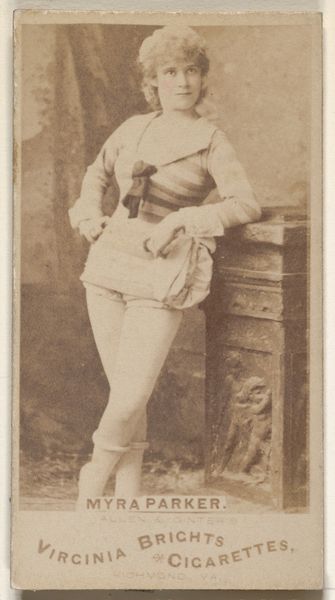
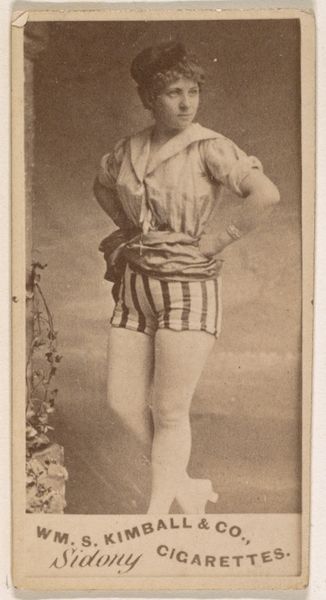
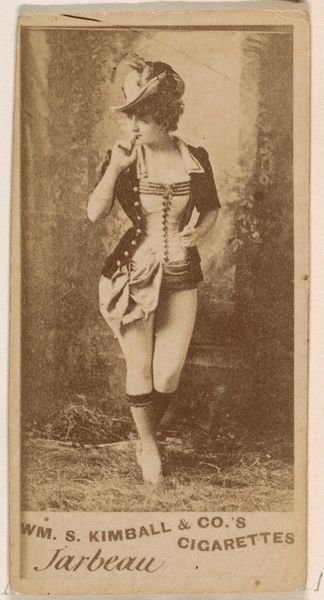
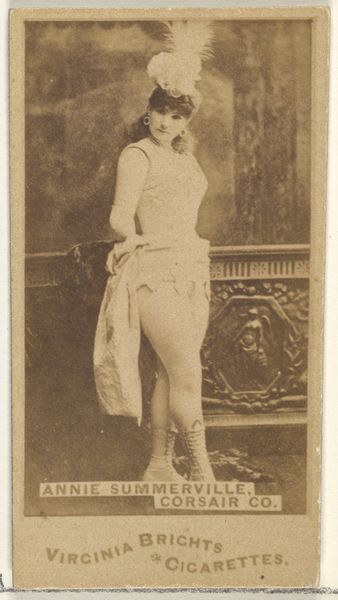
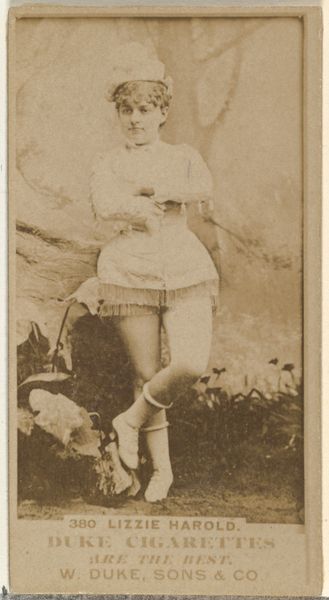
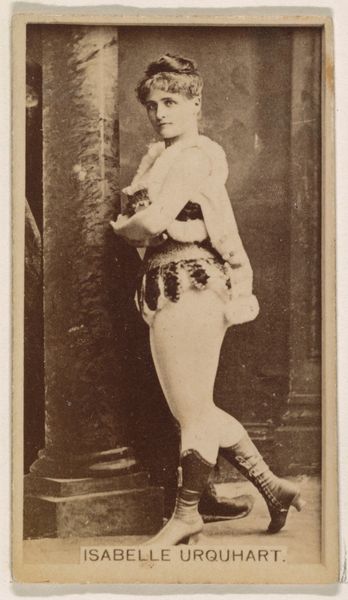
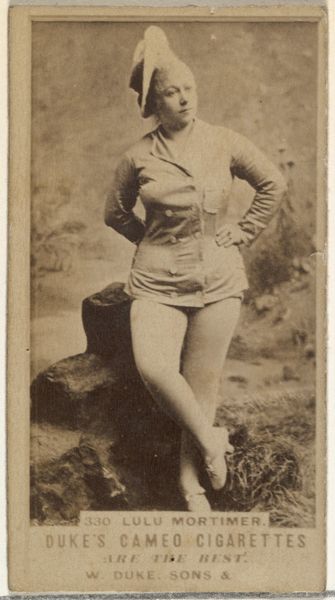
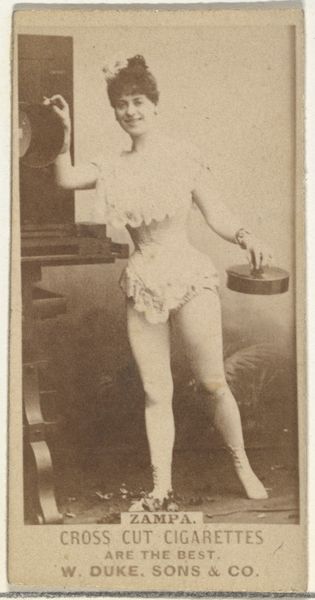
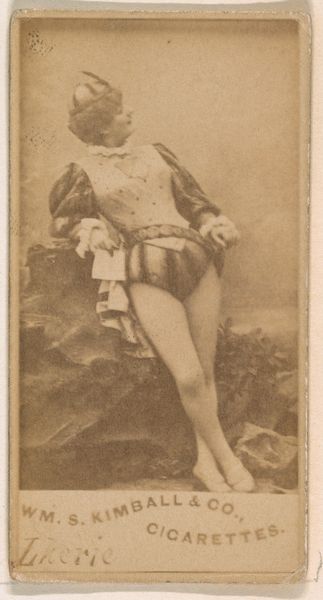
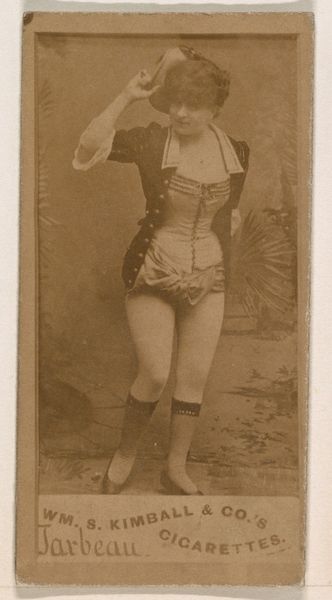
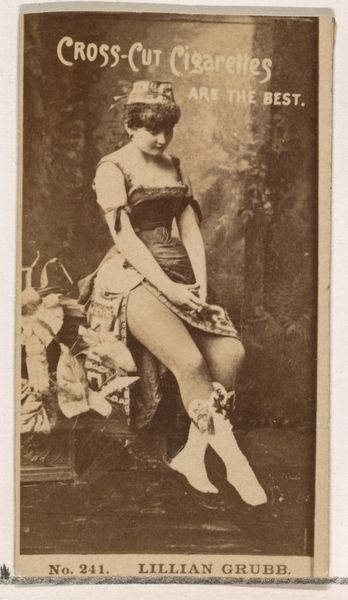
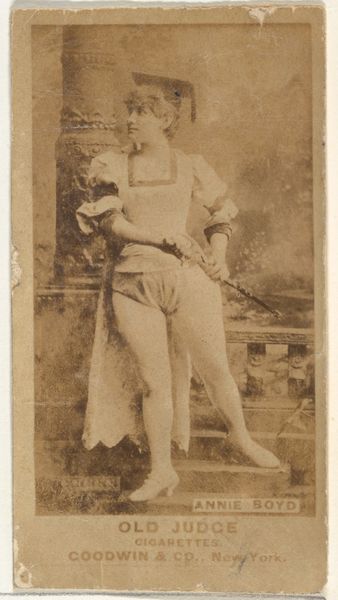
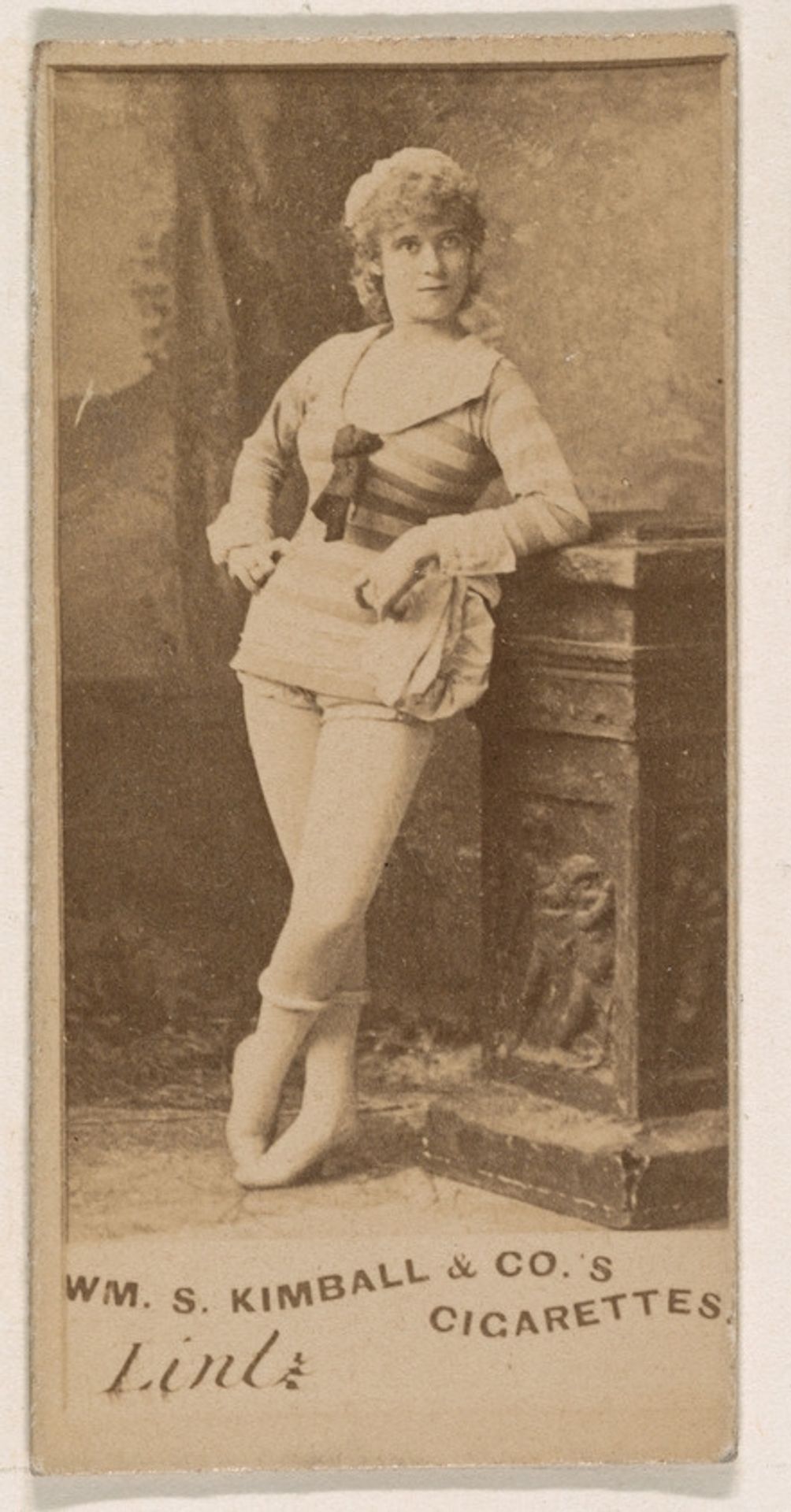
Editor: Here we have “Miss Lint, from the Actresses series (N203)”, dating back to 1889. It was created by Wm. S. Kimball & Co, and the medium is listed as a print. I’m immediately struck by the casual pose and almost mischievous look of the subject – there's something very contemporary about her. What do you see in this piece? Curator: It whispers tales of a bygone era, doesn't it? A sepia-toned echo of 19th-century celebrity. It's fascinating to see how even back then, companies like Kimball were using images of actresses to promote their products, in this case, cigarettes. Imagine someone carefully slipping this card out of a pack. Tell me, does the pose strike you as performative, or does it feel a tad subversive, a wink at the camera? Editor: I think there's a hint of both. Subversive in the sense that she's not overly formal or staged, but certainly aware of the viewer. The whole idea of an “actress series” seems to play with that tension between private persona and public image. Curator: Exactly! And those cigarette cards offered glimpses, like tiny windows into the lives of performers. Each card its own vignette! Almost like an early form of social media. You can just imagine people trading them like baseball cards! Now, if we focus on her gaze, does it pull you in, or is it distant? Editor: It definitely draws me in; there's a confidence, even a playfulness. I like how this little image feels both very much *of* its time and yet manages to communicate across the ages. Curator: And that's the enduring power of portraiture, isn't it? To capture not just a likeness, but a spirit that still flickers, like a lit match in a dark room. Thanks for pointing that out.
Miss Lint, from the Actresses series (N203) issued by Wm. S. Kimball & Co. 1889

William S. Kimball & Company
@williamskimballcompany
The Metropolitan Museum of Art
Metropolitan Museum of Art, New York, NYArtwork details
- Medium
- drawing, print, photography
- Dimensions
- Sheet: 2 5/8 × 1 3/8 in. (6.6 × 3.5 cm)
- Location
- Metropolitan Museum of Art, New York, NY
- Copyright
- Public Domain
Tags
portrait
drawing
photo restoration
figuration
photography
19th century
Comments
No comments
About this artwork
Editor: Here we have “Miss Lint, from the Actresses series (N203)”, dating back to 1889. It was created by Wm. S. Kimball & Co, and the medium is listed as a print. I’m immediately struck by the casual pose and almost mischievous look of the subject – there's something very contemporary about her. What do you see in this piece? Curator: It whispers tales of a bygone era, doesn't it? A sepia-toned echo of 19th-century celebrity. It's fascinating to see how even back then, companies like Kimball were using images of actresses to promote their products, in this case, cigarettes. Imagine someone carefully slipping this card out of a pack. Tell me, does the pose strike you as performative, or does it feel a tad subversive, a wink at the camera? Editor: I think there's a hint of both. Subversive in the sense that she's not overly formal or staged, but certainly aware of the viewer. The whole idea of an “actress series” seems to play with that tension between private persona and public image. Curator: Exactly! And those cigarette cards offered glimpses, like tiny windows into the lives of performers. Each card its own vignette! Almost like an early form of social media. You can just imagine people trading them like baseball cards! Now, if we focus on her gaze, does it pull you in, or is it distant? Editor: It definitely draws me in; there's a confidence, even a playfulness. I like how this little image feels both very much *of* its time and yet manages to communicate across the ages. Curator: And that's the enduring power of portraiture, isn't it? To capture not just a likeness, but a spirit that still flickers, like a lit match in a dark room. Thanks for pointing that out.
Comments
No comments