#
acrylic
#
charcoal drawing
#
possibly oil pastel
#
charcoal art
#
oil painting
#
neo expressionist
#
portrait head and shoulder
#
underpainting
#
charcoal
#
watercolor
Copyright: Public domain
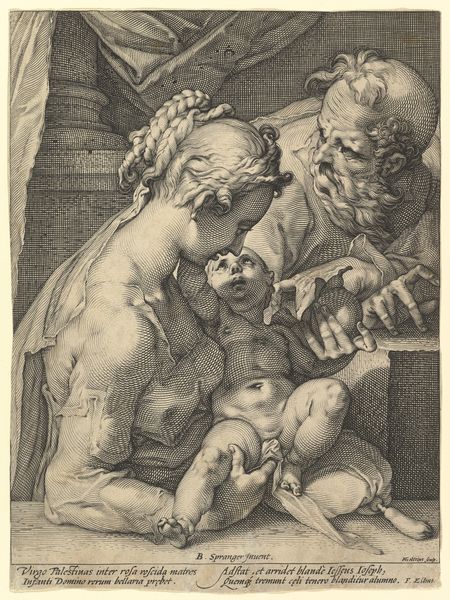
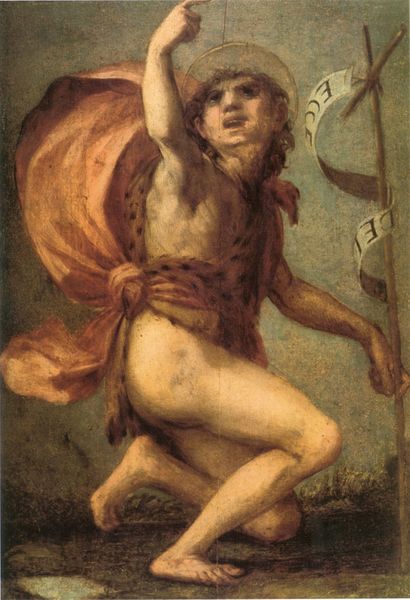
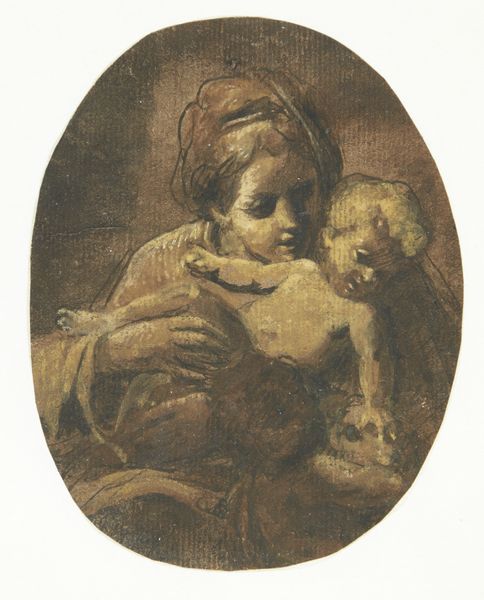
Editor: Here we have a detail of Domenico Beccafumi’s *Trinity Tryptych* from 1513. The oil paint seems to give the figures a soft, almost dreamlike quality. The cherubic figures seem to be emerging from the darkness. How would you interpret this work? Curator: I see in it a layered symbolism. The Trinity itself, of course, represents the union of Father, Son, and Holy Spirit. Notice how the child points outwards – a visual echo of divine action into the world, or perhaps an acknowledgement of us, the viewers? What emotions does it evoke in you? Editor: A sense of anticipation, maybe, with that pointing hand as though inviting the viewer into the narrative, but also darkness and some suffering with the obscure figures behind the cherubim. Curator: The shadows deepen the mystery. Look at the composition – the contrast between light and shadow directs our gaze towards that luminous child. Renaissance artists employed *chiaroscuro* to convey depth and emotion. Editor: That’s fascinating. The more I look, the more the light seems to emanate from the child rather than an external source, symbolic perhaps of inner divinity. Curator: Precisely! Visual cues subtly reinforce the spiritual weight, inviting a meditation on faith, revelation, and the enduring power of belief systems within culture. Does understanding these aspects change how you see the artwork? Editor: It does. I see not just a religious scene, but a symbolic representation of the divine and humanity's relationship to it, using familiar symbols to reveal something deeply profound. Curator: It reminds us that even details within artworks are portals into deeper cultural memories. Editor: Indeed! Thank you, I’ll definitely be considering the symbolic nature of images a lot more now.
Comments
No comments
Be the first to comment and join the conversation on the ultimate creative platform.
 Collect
 React
React Comment
More like this