c. 1528 - 1530
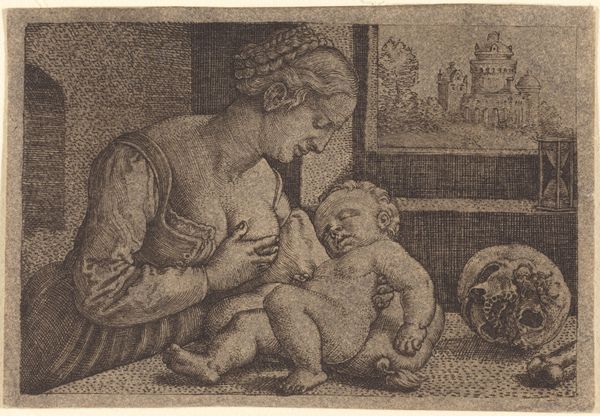
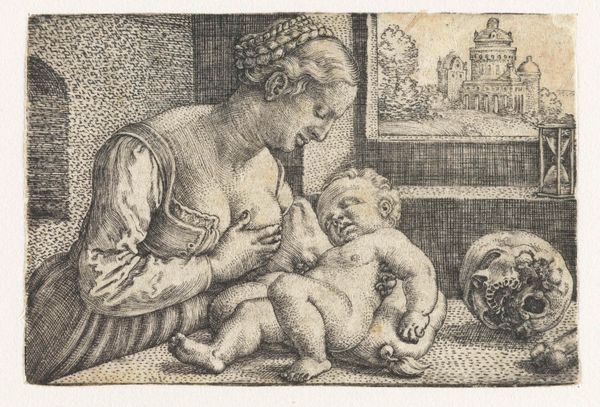
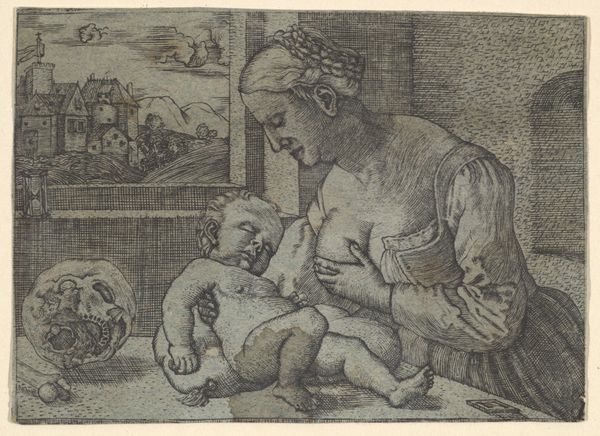
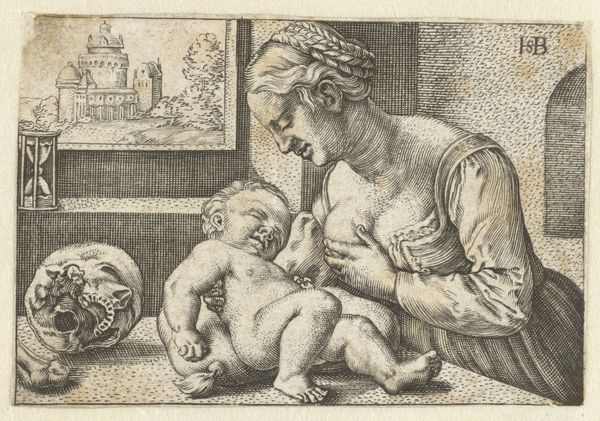
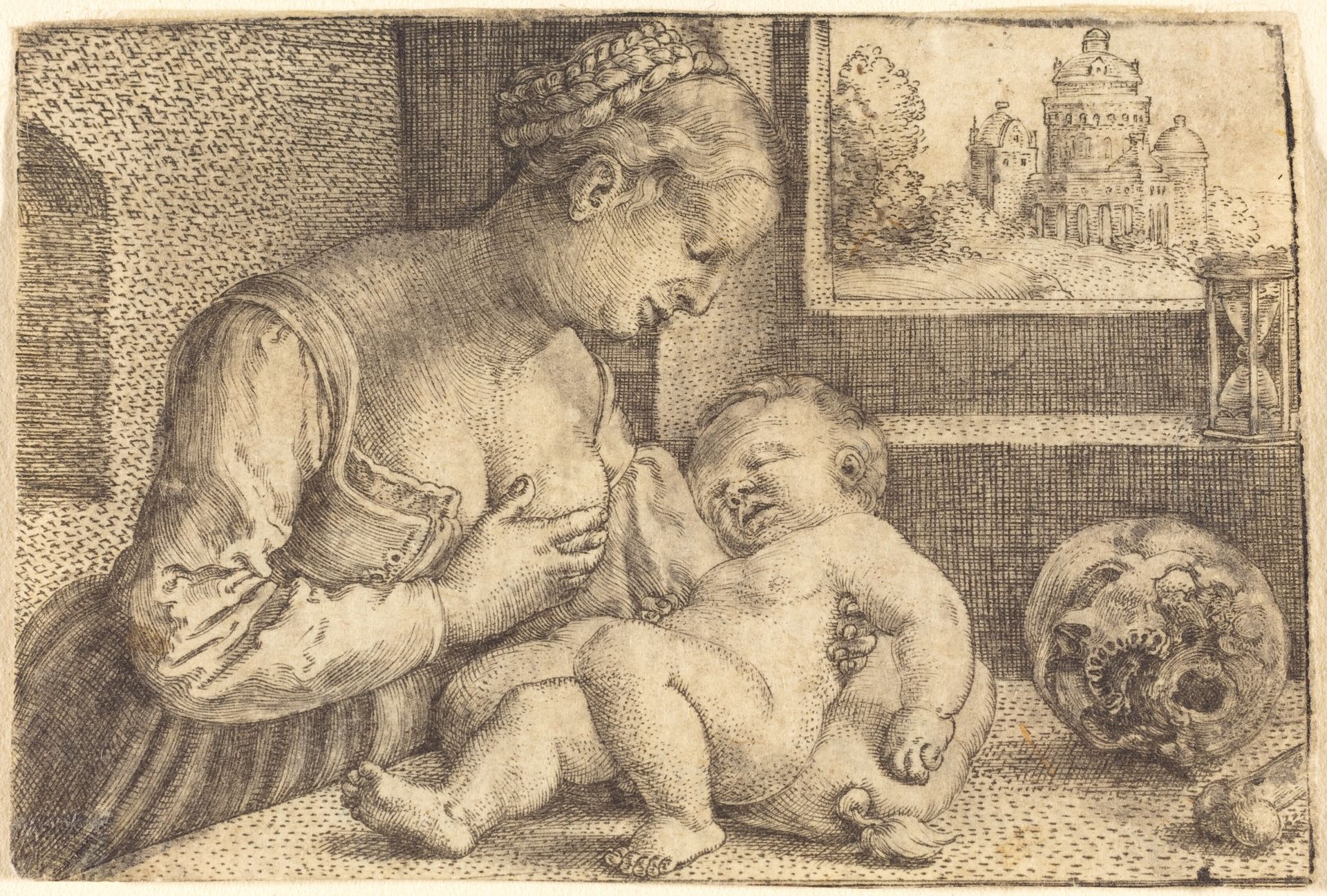
Madonna with Skull


Listen to curator's interpretation
Curatorial notes
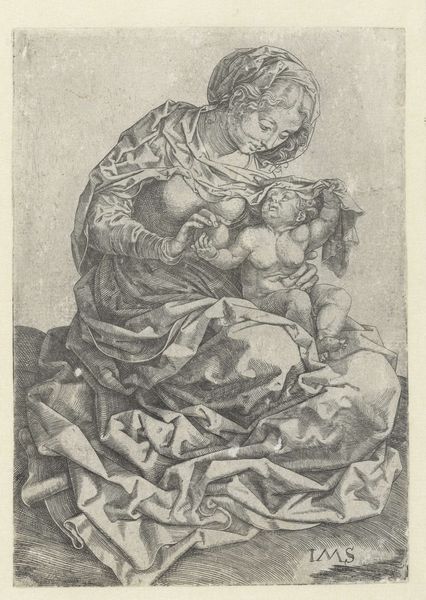
Barthel Beham created this tiny engraving, “Madonna with Skull,” in the first half of the sixteenth century. Its intimate scale invites close inspection of its densely packed composition and finely rendered details. The texture of the background, the folds of fabric, and the delicate lines defining the figures create a rich visual experience. The overall effect is one of intimacy, but also unease. The composition balances symbols of life and death. The Madonna, depicted nursing a child, is juxtaposed with a skull and an hourglass, potent symbols of mortality. The artist masterfully employs the traditional Madonna and Child theme, yet destabilizes its conventional meaning. The inclusion of the skull transforms a scene of maternal nurturing into a meditation on the transience of life. Beham uses the formal structure of the composition to underscore these conceptual tensions. The Madonna's downward gaze connects her visually to the skull, linking life and death in a continuous, unbroken line. This formal choice highlights how the artwork challenges fixed meanings, inviting ongoing interpretation and contemplation on the nature of existence.