About this artwork
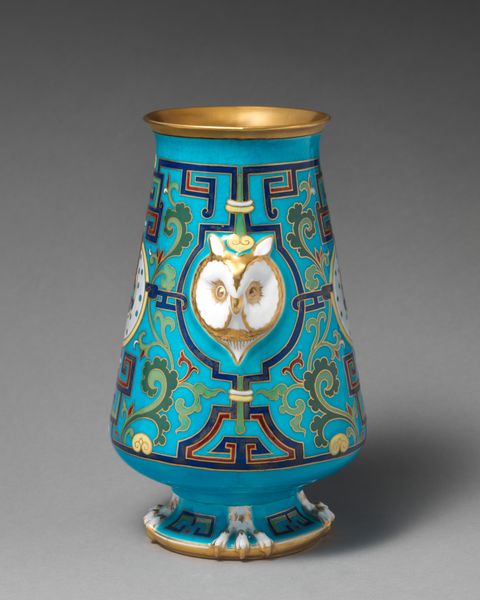
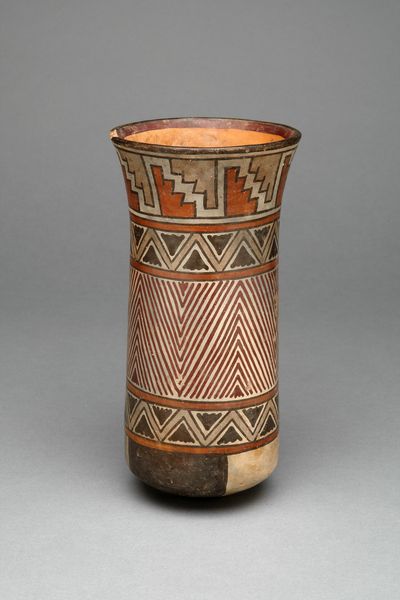
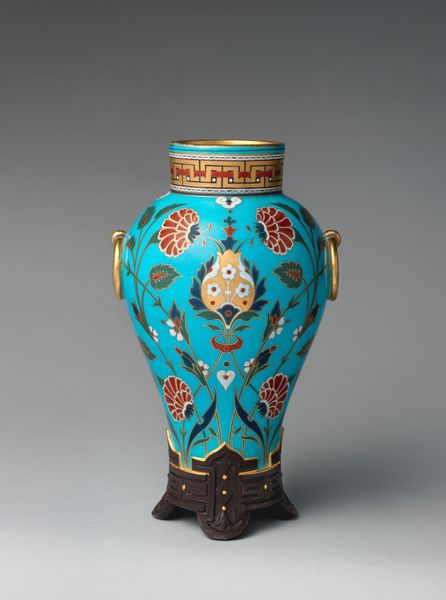
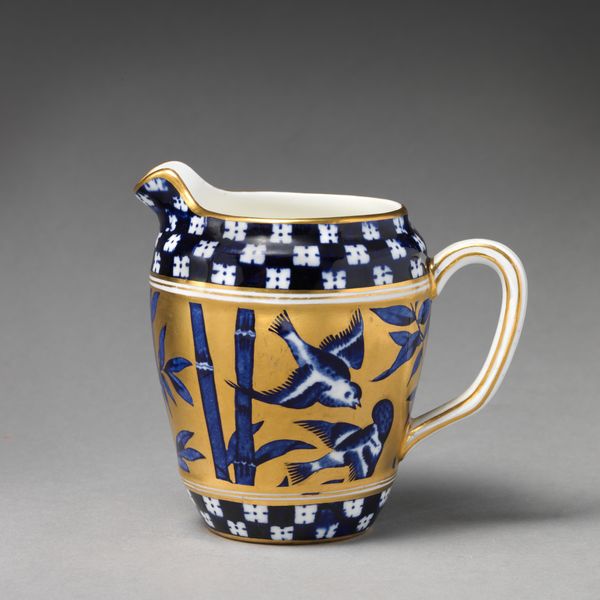
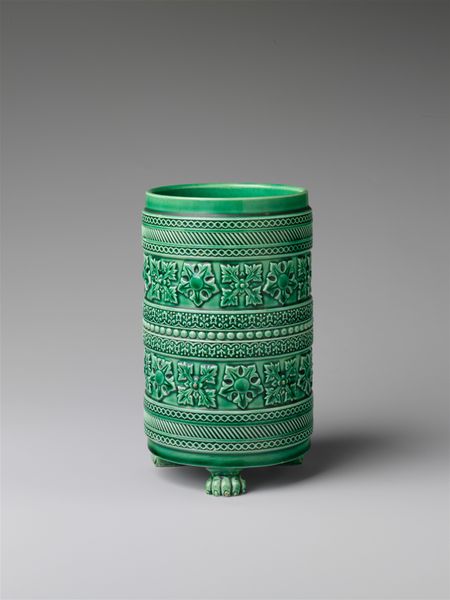
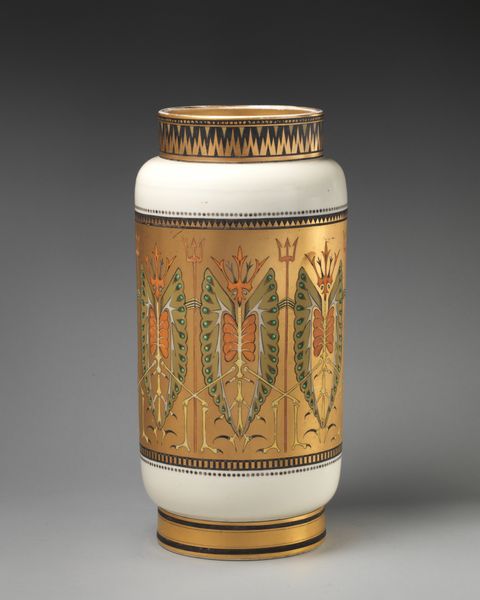
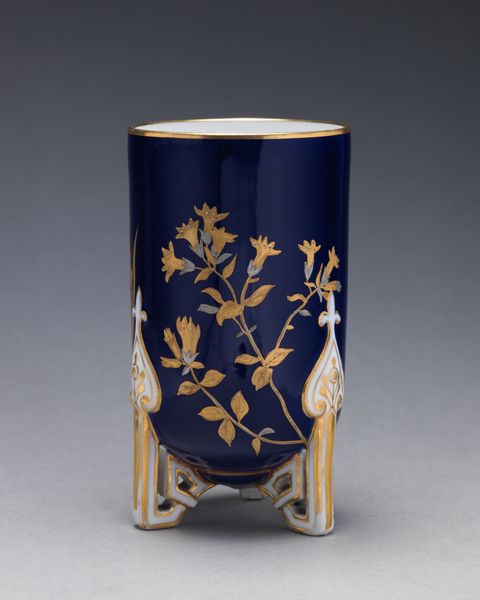
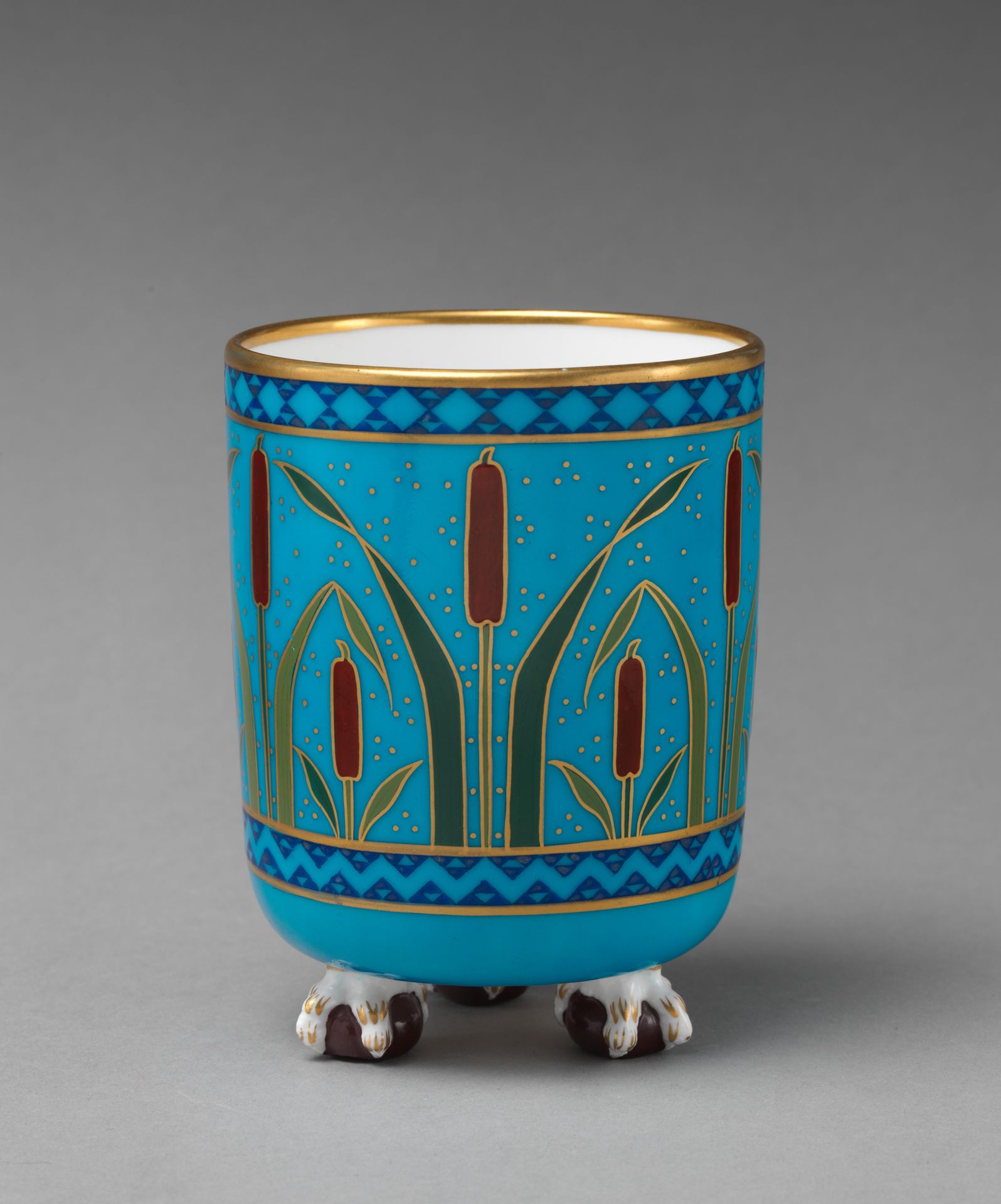
This cylindrical vase with cattail motif was created by Minton(s). While the exact date of its creation is unknown, the Minton company operated from 1793 to 2001. Consider the cultural context of the late 19th century, a time when the Aesthetic Movement was in full swing. The movement advocated “art for art’s sake,” emphasizing beauty and design over historical or moral themes. The vase exemplifies this ethos through its elegant form and decorative cattail motif. The design draws inspiration from nature. The delicate rendering of the cattails against a turquoise background suggests a harmony between nature and industry, a common theme in Aesthetic Movement designs. The animalistic feet of the vase are a reminder of the Victorian era's fascination with exoticism. The vase blends natural, artistic and exotic elements and reflects the Victorian era's complex cultural landscape.
Cylindrical vase with cattail motif
1860s


Artwork details
- Medium
- ceramic, porcelain, sculpture
- Dimensions
- confirmed: 4 1/2 × 3 1/4 × 6 1/4 in., 8.818oz. (11.4 × 8.3 × 15.9 cm, 250g)
- Location
- Metropolitan Museum of Art, New York, NY
- Copyright
- Public Domain
Tags
Comments
Share your thoughts
About this artwork
This cylindrical vase with cattail motif was created by Minton(s). While the exact date of its creation is unknown, the Minton company operated from 1793 to 2001. Consider the cultural context of the late 19th century, a time when the Aesthetic Movement was in full swing. The movement advocated “art for art’s sake,” emphasizing beauty and design over historical or moral themes. The vase exemplifies this ethos through its elegant form and decorative cattail motif. The design draws inspiration from nature. The delicate rendering of the cattails against a turquoise background suggests a harmony between nature and industry, a common theme in Aesthetic Movement designs. The animalistic feet of the vase are a reminder of the Victorian era's fascination with exoticism. The vase blends natural, artistic and exotic elements and reflects the Victorian era's complex cultural landscape.
Comments
Share your thoughts