
Curatorial notes
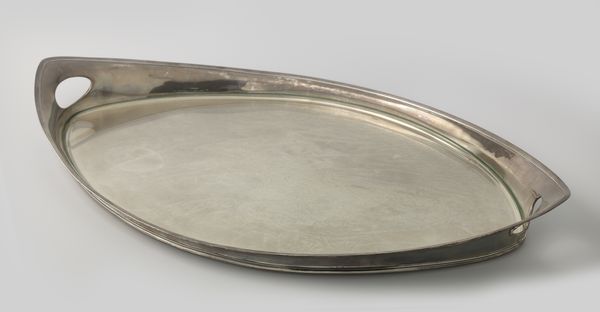
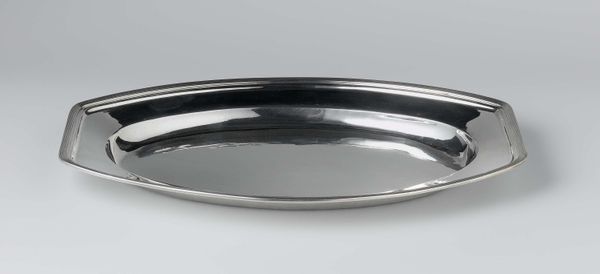
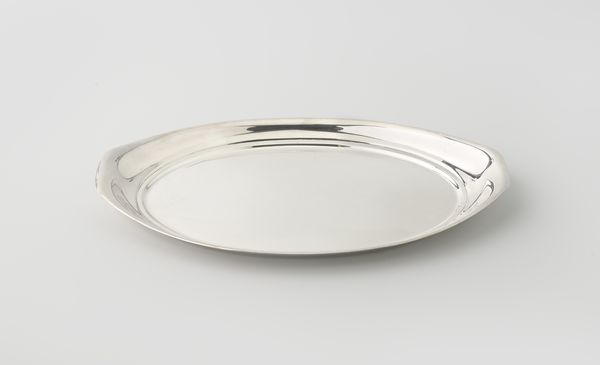
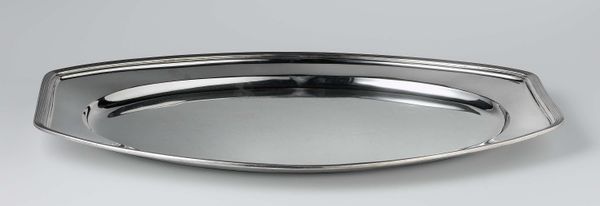
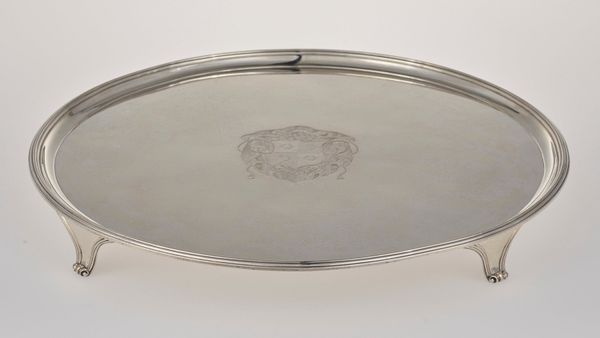
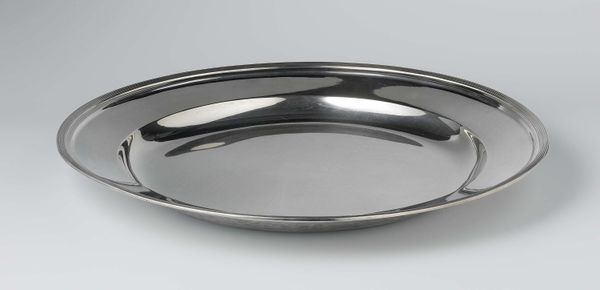
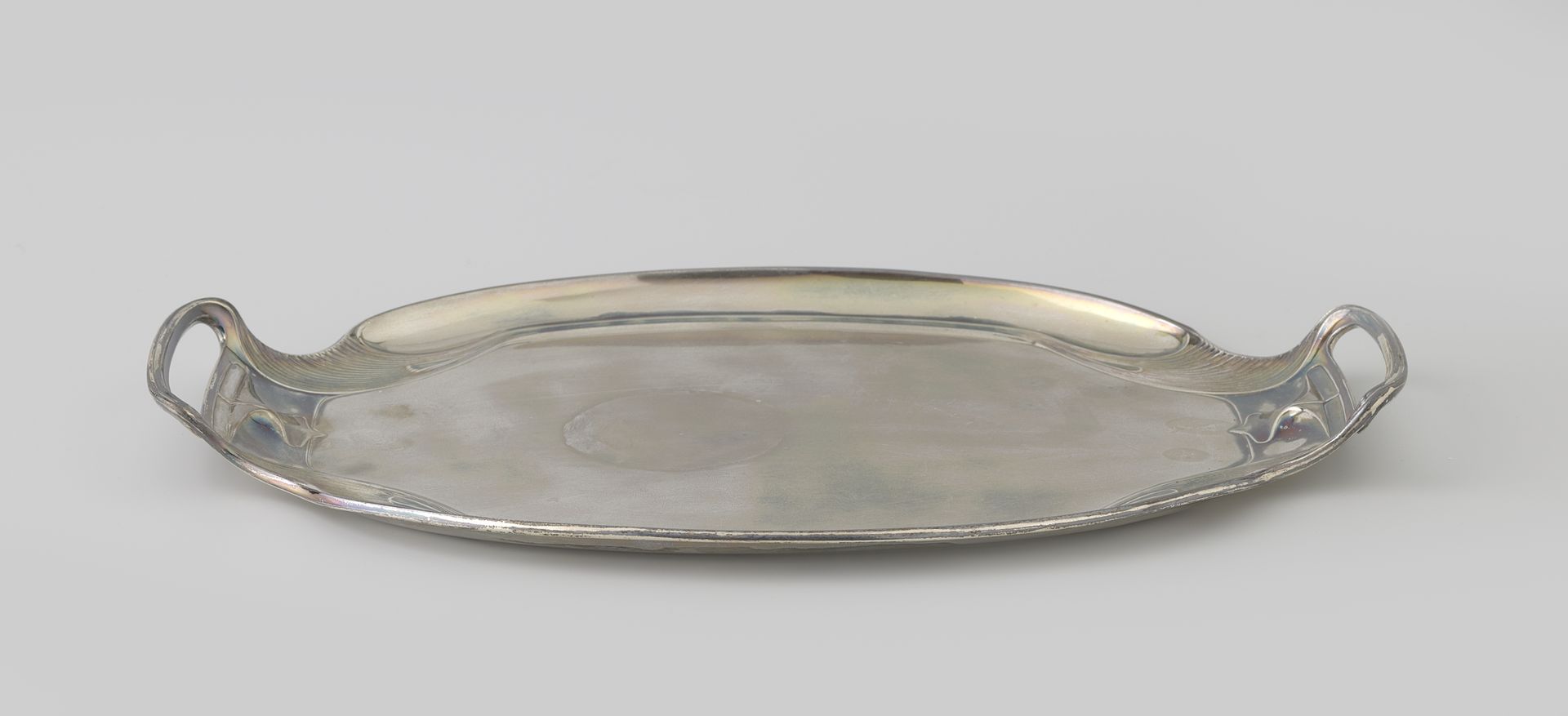
Editor: Here we have a "Presenteerblad," or presentation tray, crafted around 1905 by Orivit. It’s metal, plated with silver. I’m struck by its elegant simplicity; the muted shimmer gives it such a calm, understated feel. What story does this seemingly simple object whisper to you? Curator: Ah, whispers indeed. This isn't just a tray, it’s a silent poem to the Art Nouveau, or Jugendstil if you will. Its flowing lines, the gentle curves of those handles - imagine the hands that crafted this, channeling nature itself. Don't you sense a longing for simpler, more beautiful world? It feels almost alive doesn't it? Think of it as holding fruits, pastries… tiny jewels. It’s an invitation, a question: How can something so functional also be a small vessel for beauty? Editor: I hadn't thought about the connection to nature so explicitly, but I can totally see it now in the handles and even in the overall shape. It really softens what could have been just another utilitarian object. Curator: Exactly! Art Nouveau rebelled against industrial coldness, bringing craft back to the table – literally! Consider that slight tarnish; it whispers of history, of touch. You almost want to add some antique linen and create a small painting yourself, doesn't it bring up that sensation? What items would *you* present on it? Editor: Ooh, I would maybe arrange some polished stones or sea glass – echo its own silvery smoothness but with different textures. I love thinking about how it transforms in different contexts! Curator: Precisely, a simple form can reflect your spirit into being – and then it has *truly* fulfilled its function, as an objet d'art *and* use. It becomes an accomplice of our own creation. That is beauty! Editor: This was a really interesting piece to ponder and it actually made me consider functionality and history for artworks that seem very simple.