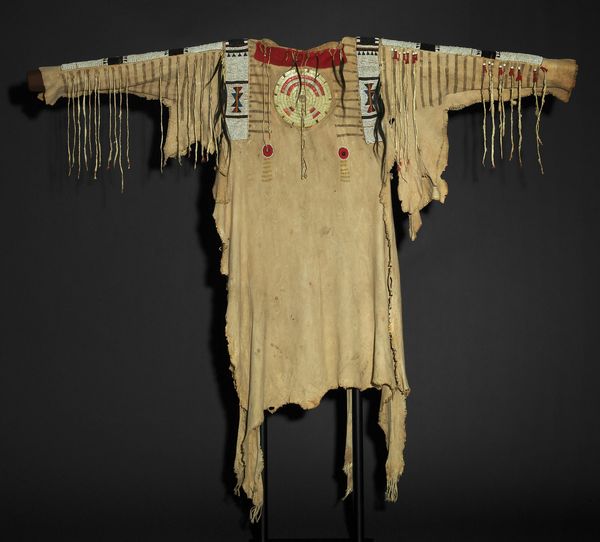
c. 1870
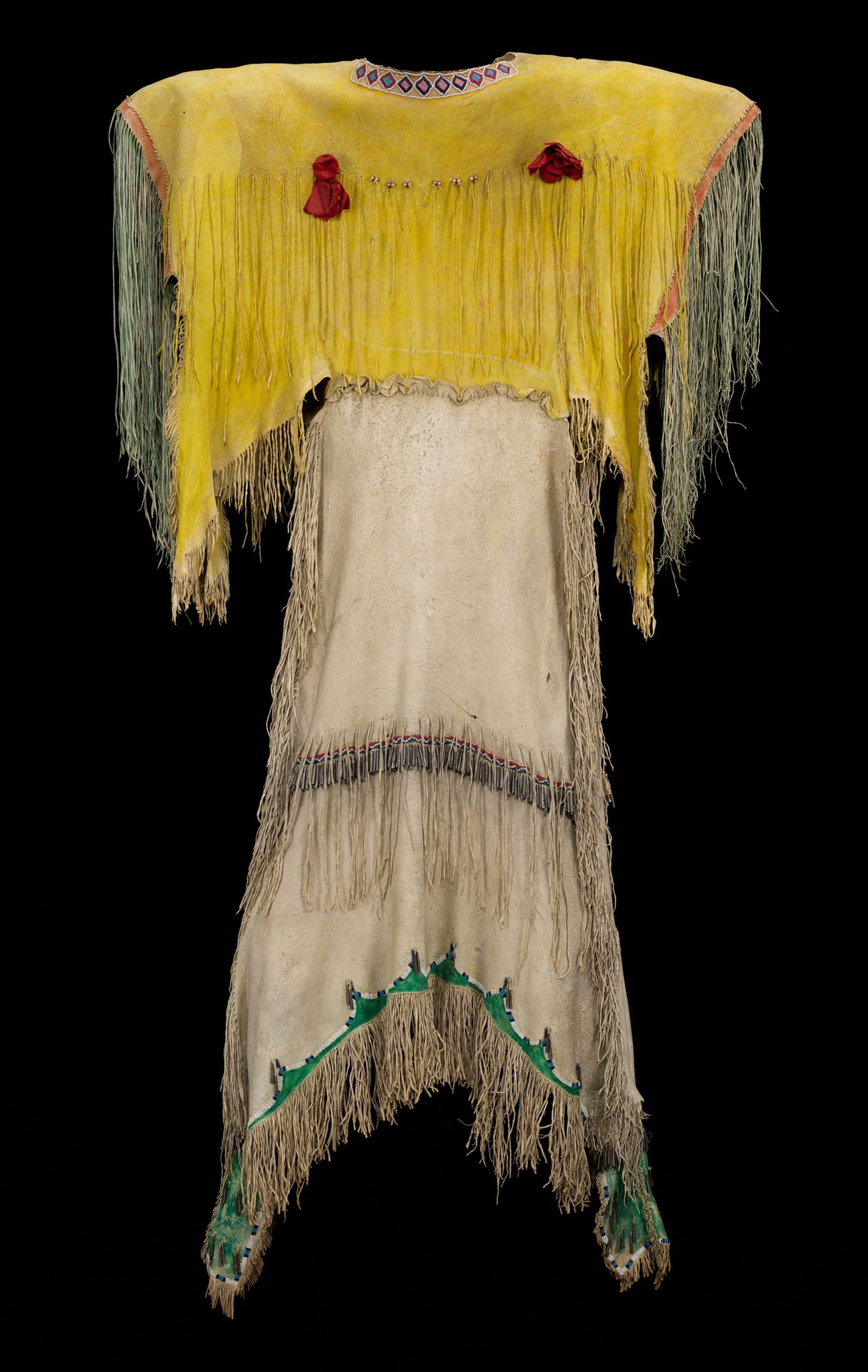
Dress


Listen to curator's interpretation
Curatorial notes
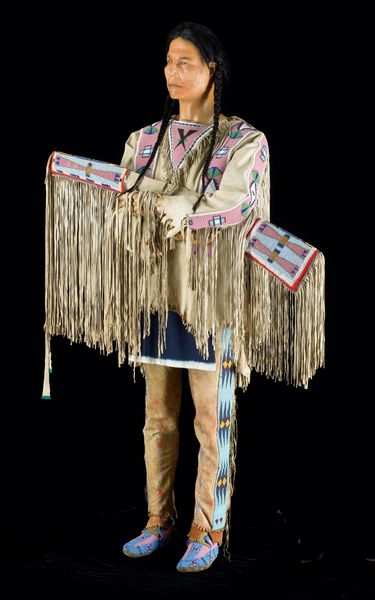
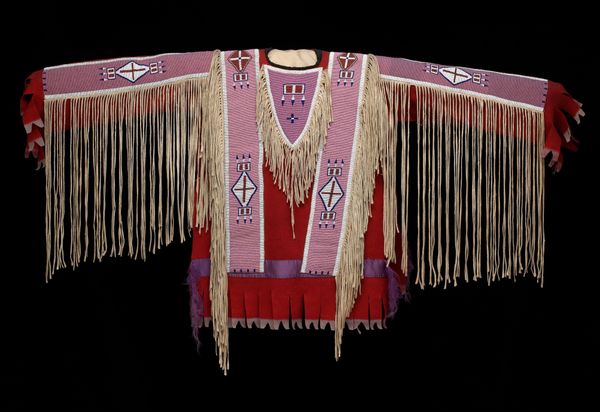
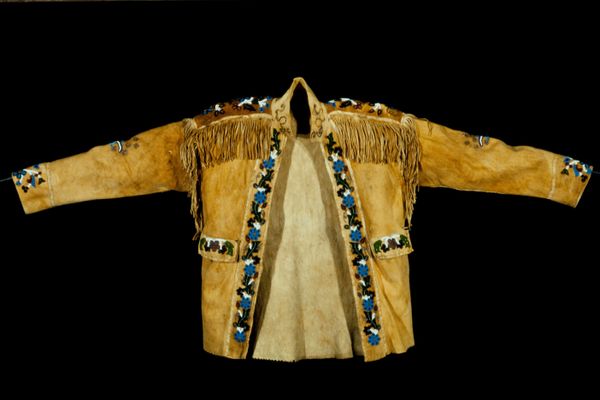
This dress was made by Ka’igwu, a Kiowa artist, from tanned deerskin, glass beads, and thread, employing both traditional techniques and materials obtained through trade. Garments like this weren't merely clothing; they were potent symbols of identity, status, and cultural values deeply embedded in the Kiowa community. The dress embodies the Kiowa’s historical and social context, particularly their nomadic lifestyle on the Great Plains and their intricate relationship with the land. The use of deerskin reflects the reliance on natural resources and the skill in transforming them into functional and artistic objects. The glass beads, acquired through trade, mark intercultural exchange and adaptation. The yellow paint could be a reference to tribal ceremonies or an individual’s status, and the tassels may be symbolic of rain. Consider how the dress represents Kiowa women's roles as keepers of tradition, artists, and community leaders, or the ways in which it embodies Kiowa resistance and resilience in the face of colonization. What does it mean to see such a personal object displayed in a museum?