drawing, print
drawing
organic
organic pattern
geometric
decorative-art
Dimensions: Sheet: 8 11/16 × 12 5/8 in. (22 × 32 cm)
Copyright: Public Domain
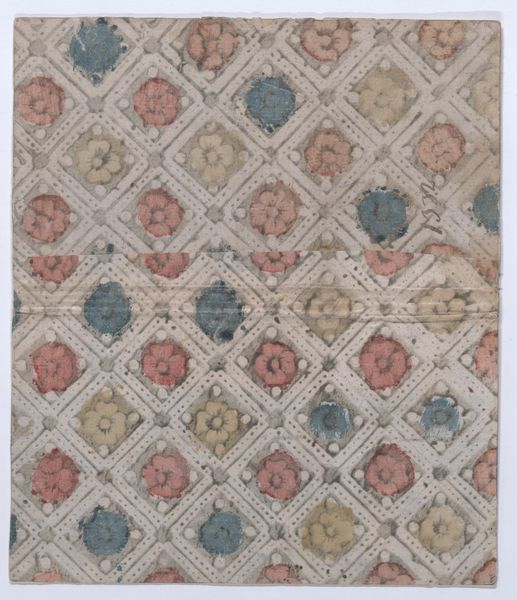
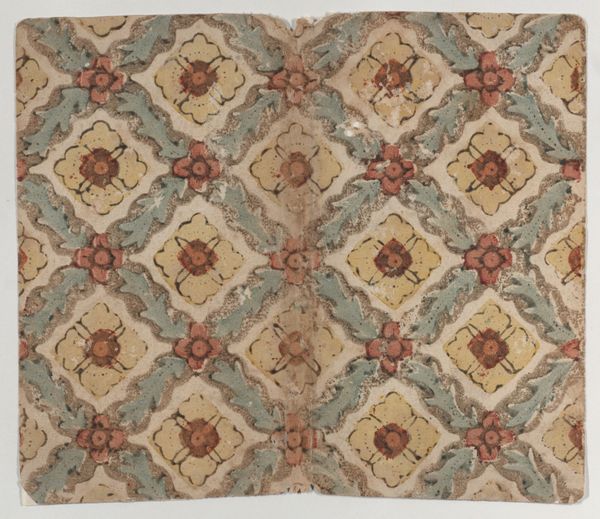
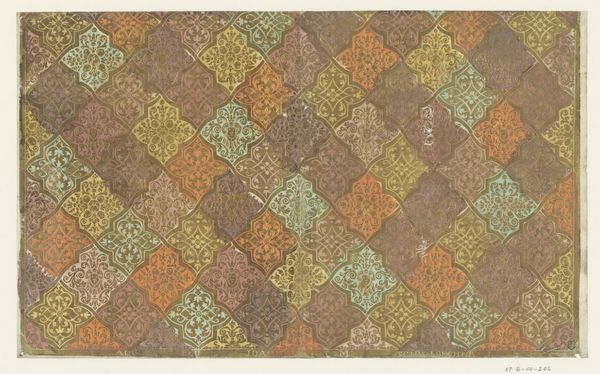
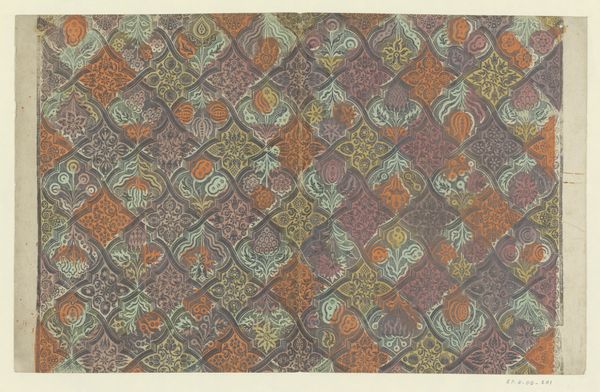
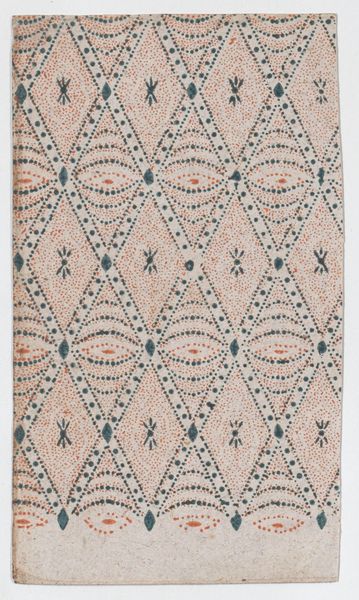
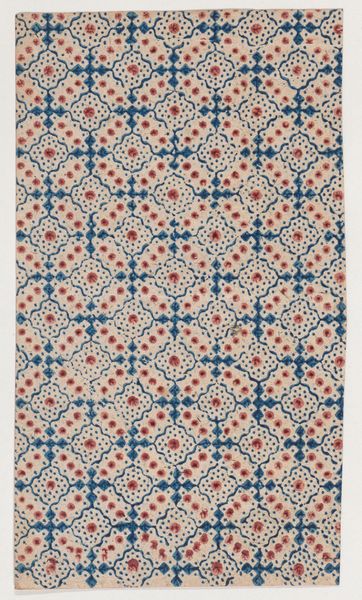
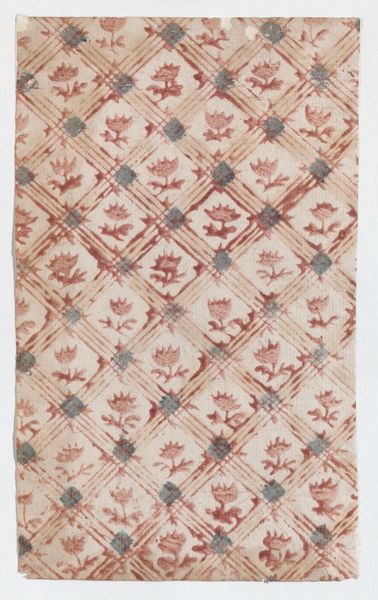
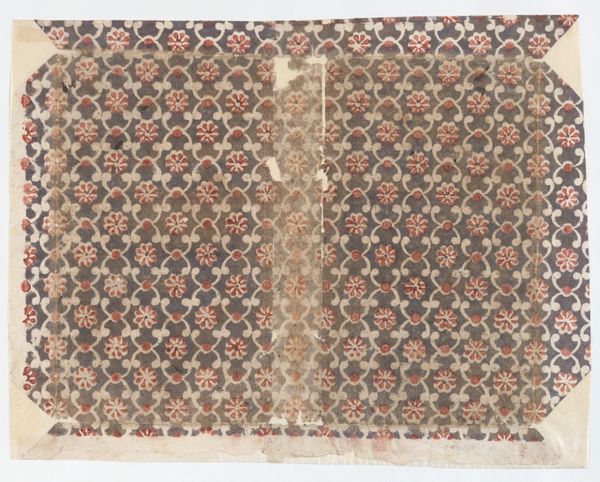
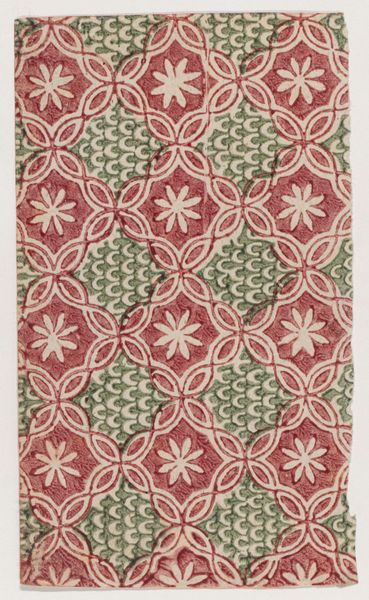
Curator: Here we have an anonymous drawing and print from sometime in the 1800s, a design for a book cover featuring an overall circular motif. Editor: My first thought is that the repetition creates a nice visual texture, even if the colors are somewhat muted. You can really see the process involved in layering the pattern. Curator: Precisely. The piece gives us insight into design traditions and consumer culture of the time, pointing to a burgeoning interest in decorative arts that blurred lines between craft and fine art. Editor: Agreed. And the materiality of it speaks to this exact intersection: the hand-drawn aspect combined with the printing process tells a story about production and labor of such images at the time. Curator: These patterned papers, so prevalent in bookbinding, reflect a growing literacy rate and, more broadly, a shift towards mass production shaping the artistic landscape. We should also consider the socio-political implications here. This simple book cover likely played a subtle yet definite role in class differentiation, allowing those with means to present themselves, and their books, with sophistication and an implicit statement of status. Editor: It also highlights the constraints on both the patron and the maker. Choices made around available pigments and their cost. How a need to fill space efficiently drove production of this kind of overall decorative scheme. Curator: Considering that its function was to simply beautify and add value to the bound product, this is indeed some thought-provoking visual texture and form for reflection. Editor: I concur. From humble materials and function, something emerges to hint at both its labor and the broader culture it was intended to embellish.
Comments
No comments
Be the first to comment and join the conversation on the ultimate creative platform.
 React
React Comment