About this artwork
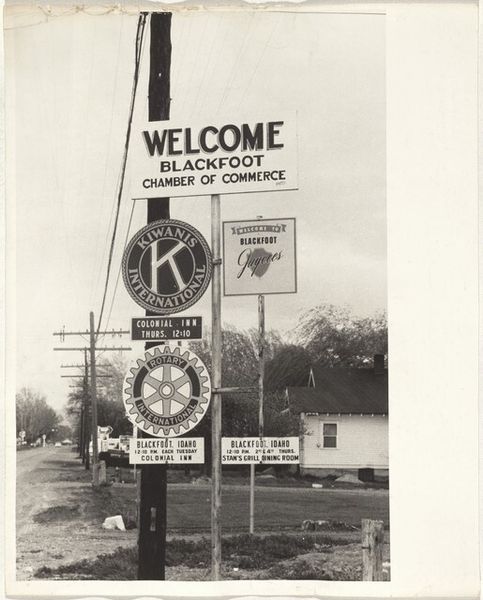
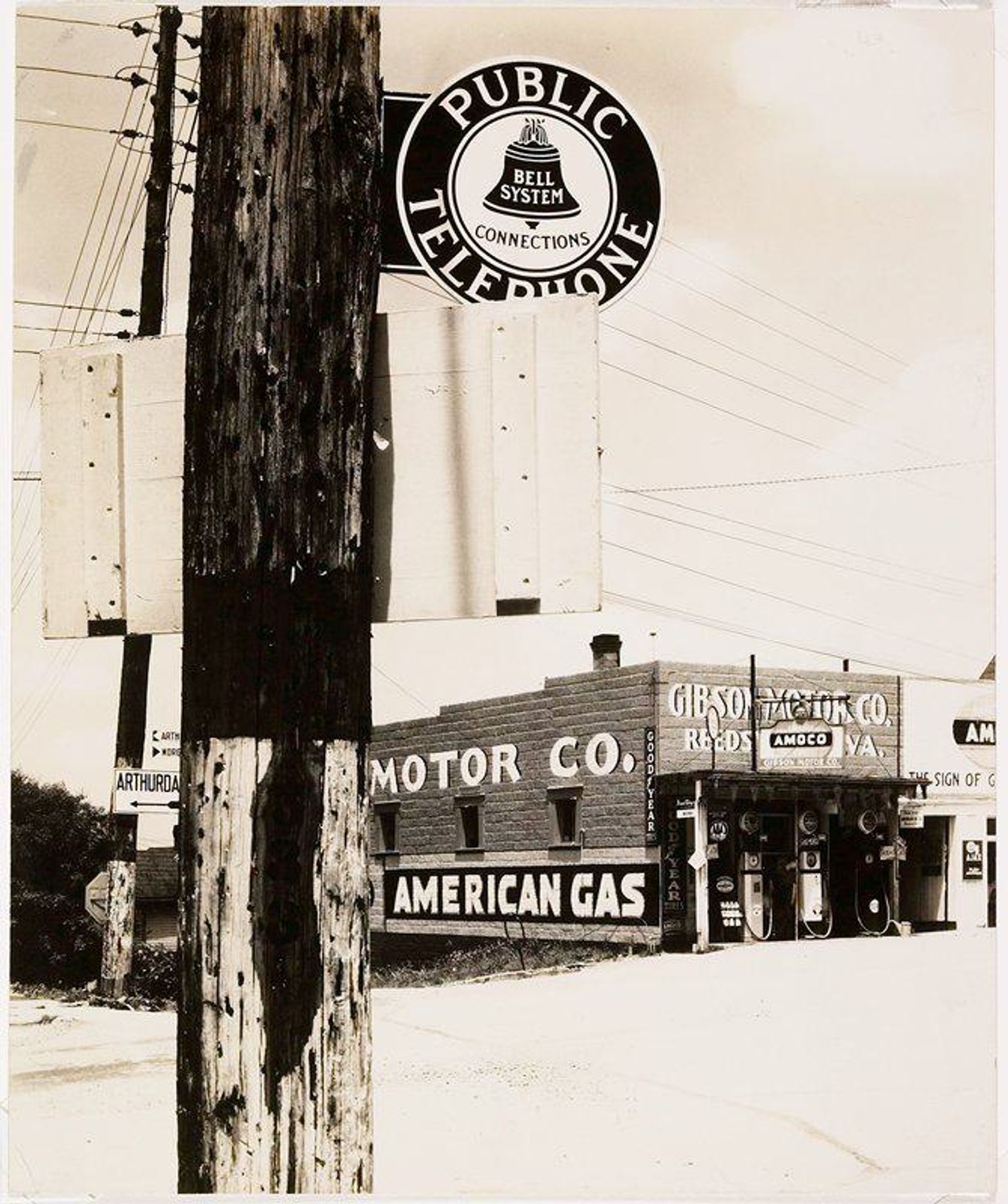
Walker Evans made this photograph, Highway Corner, using black and white film. The composition is so arresting, it’s all about surfaces and signage, a real slice of Americana. Look at the telephone pole taking up so much of the foreground; it's got this rough, almost tactile texture. The telephone sign with the Bell logo, looks like it's been painted directly onto the metal, no gloss, all matte. Then there's the building in the background with “American Gas” emblazoned on it. I find the contrast between the telephone pole's organic texture and the hard-edged typography so satisfying. Evans reminds me a bit of someone like Bernd and Hilla Becher, who exhaustively documented industrial structures. But Evans is warmer, more humane. Both of them show that art isn't about creating something from nothing, but about seeing what's already there. It's all about looking and seeing.
Highway Corner 1935


Artwork details
- Medium
- gelatin-silver-print, photography, gelatin-silver-print
- Dimensions
- 9 x 7 7/16 in. (22.86 x 18.89 cm) (image, sheet)18 7/8 x 14 7/8 x 1 1/2 in. (47.94 x 37.78 x 3.81 cm) (outer frame)
- Location
- Minneapolis Institute of Art
- Copyright
- No Copyright - United States
Tags
precisionism
gelatin-silver-print
landscape
outdoor photograph
street-photography
photography
historical photography
gelatin-silver-print
united-states
realism
Comments
No comments
About this artwork
Walker Evans made this photograph, Highway Corner, using black and white film. The composition is so arresting, it’s all about surfaces and signage, a real slice of Americana. Look at the telephone pole taking up so much of the foreground; it's got this rough, almost tactile texture. The telephone sign with the Bell logo, looks like it's been painted directly onto the metal, no gloss, all matte. Then there's the building in the background with “American Gas” emblazoned on it. I find the contrast between the telephone pole's organic texture and the hard-edged typography so satisfying. Evans reminds me a bit of someone like Bernd and Hilla Becher, who exhaustively documented industrial structures. But Evans is warmer, more humane. Both of them show that art isn't about creating something from nothing, but about seeing what's already there. It's all about looking and seeing.
Comments
No comments