c. 1805
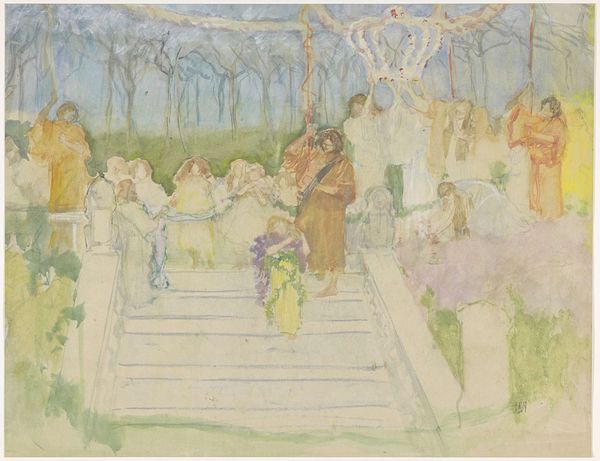
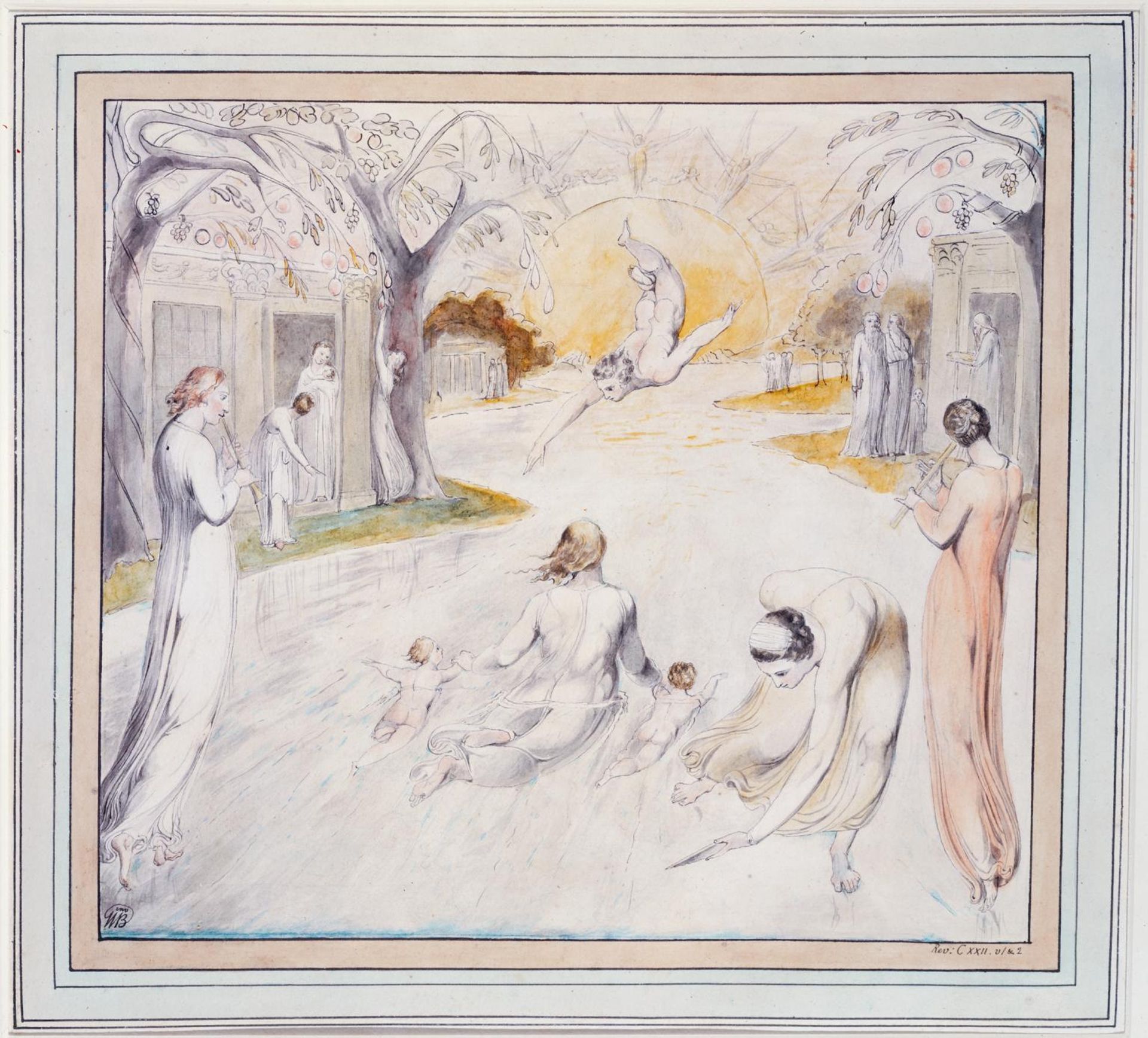
The River of Life


Listen to curator's interpretation
Curatorial notes
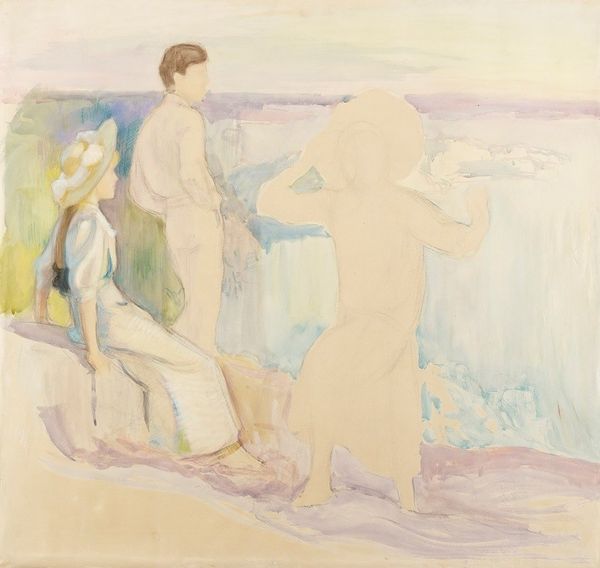
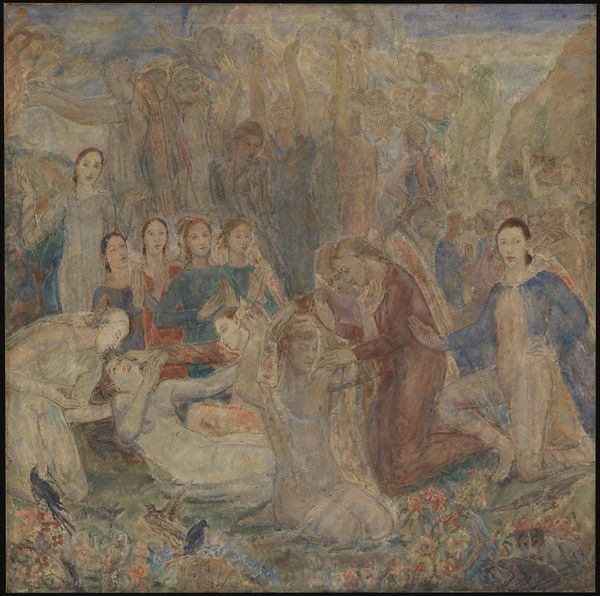
Curator: Here we have William Blake's "The River of Life," held at the Tate. Notice its ethereal wash of color. Editor: Yes, there’s something dreamlike about it. The figures seem to float, almost suspended in time. The colour palette is faded, it's like a memory. Curator: Blake, born in 1757, often explored themes of spirituality and human existence. I see the river as a symbol of life's journey. The figures seem to be moving through different stages. Editor: The figures, emerging and submerging, remind me of baptismal imagery—rebirth and renewal. The bodies diving through the sun's light, is it a representation of enlightenment? Curator: It’s crucial to consider Blake's radical social views, even as we interpret the artwork's symbols. His philosophy of liberation, especially regarding the body and spirit, is very modern. Editor: Right, the gender ambiguity is compelling. He is exploring the fluidity of being and representation. Blake's figures do feel beyond the social constrictions of his era. Curator: A beautiful blend of symbolism and social commentary, I'd say. Editor: Absolutely, Blake’s imagery here offers us a glimpse into his unique vision of life and the human spirit.