Copyright: Boris Margo,Fair Use
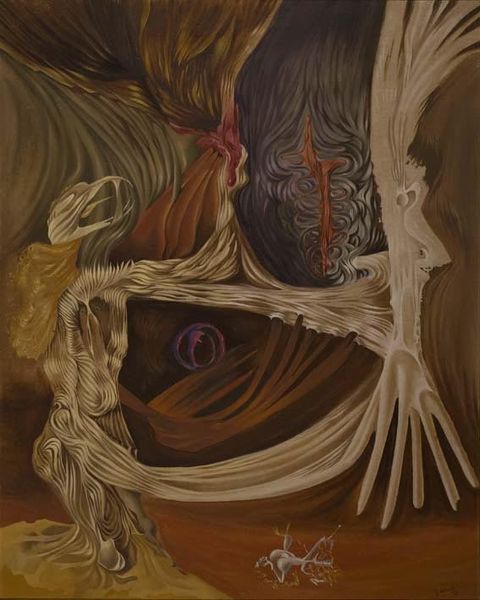
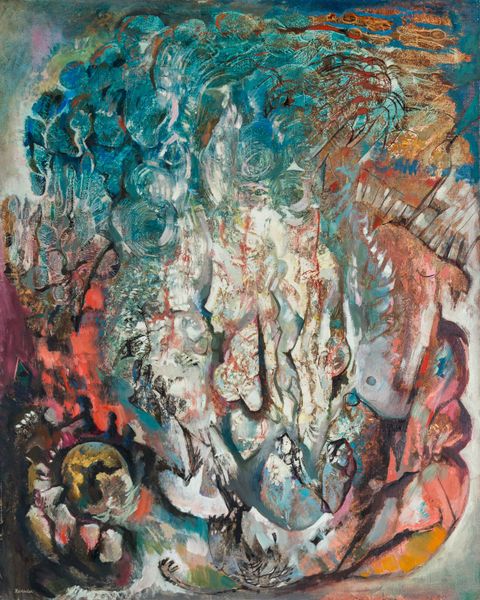
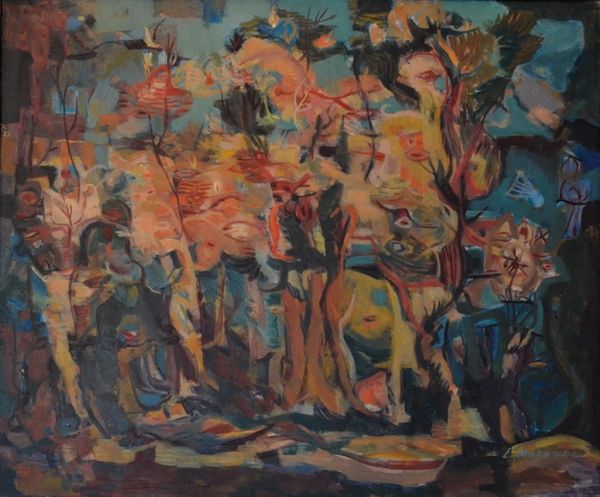
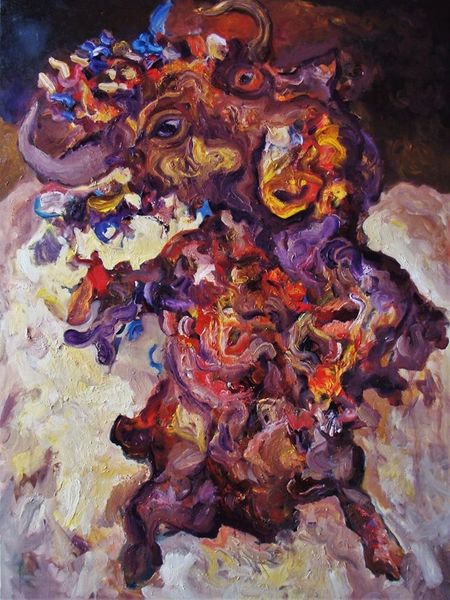
Curator: We are looking at Boris Margo's "Portrait of My Mother," an oil painting created in 1935. It’s an excellent example of early abstract expressionism. Editor: It definitely evokes a dreamscape or perhaps a fractured memory. There is a distinct feeling of melancholy, the colours blend as a thick honey, it’s a warm yet slightly unsettling feeling. Curator: Margo, along with other artists of his time, was deeply engaged with the material conditions of art production. Oil paint allowed for a fluidity and layering, facilitating this very expressionistic style. Do you think the title is relevant to how we perceive it? Editor: Absolutely, knowing this is a portrait—though heavily abstracted—changes everything. Consider the social pressures and the expected gender roles placed on women in the 1930s. The swirling forms could reflect internal turmoil, a resistance to societal constraints, maybe a sort of fractured identity born from limited freedoms. Curator: That's a potent interpretation. We know Margo emigrated from Russia, coming to the U.S. Is that a potential lens for analysis? The experience of the immigrant can involve that sensation, too. The layers of the paint here literally enact layers of lived experiences. Editor: Yes, migration can have an incredible impact on how artists render belonging and memories. Margo lived at a time where political polarization shaped individuals' lives significantly; wars were ravaging Europe. Thinking about all this could allow the audience to consider the role of the artist as an observer in turbulent times. Curator: It is incredible to think about Margo experimenting so freely, even with formal concerns dominating discussion at the time. A consideration of materials gives us a lot to think about, though, seeing how radical his techniques became. Editor: For me, contextualising the artwork reminds us of the emotional and social currents swirling around the artist at that time. Let's hope visitors take away both!
Comments
No comments
Be the first to comment and join the conversation on the ultimate creative platform.
 Collect
 React
React Comment
More like this