About this artwork
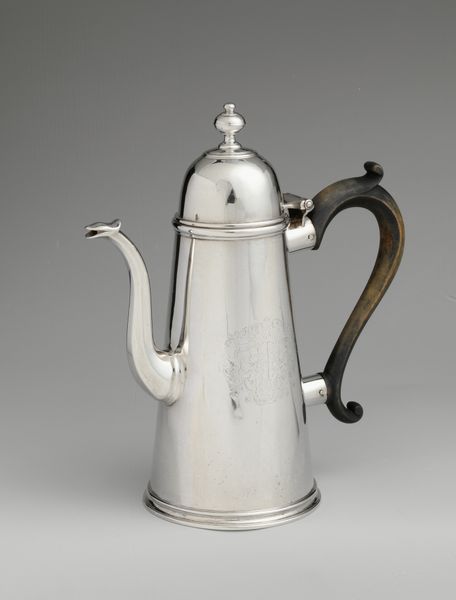
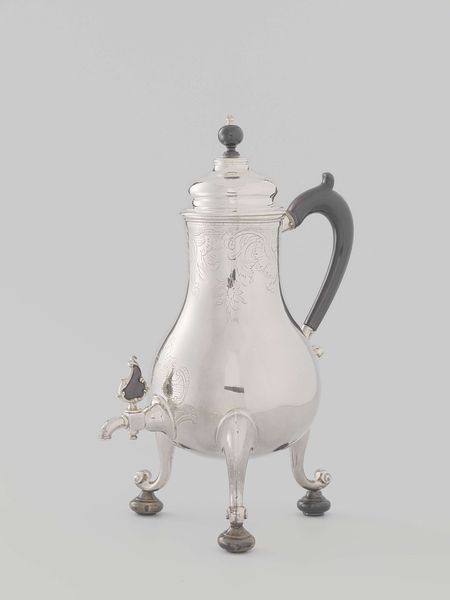
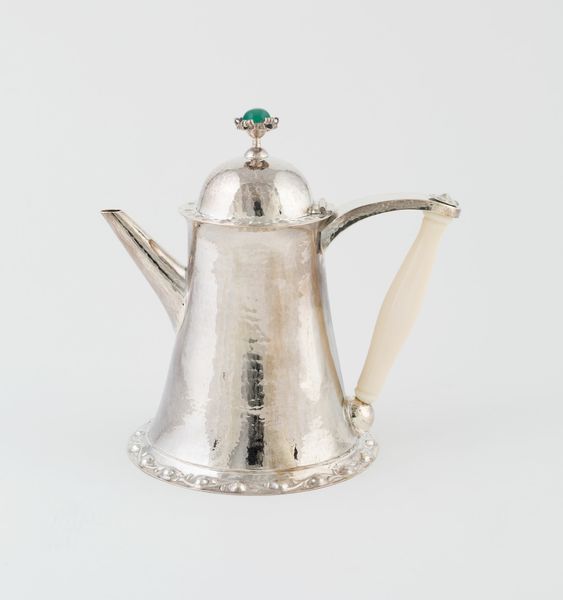
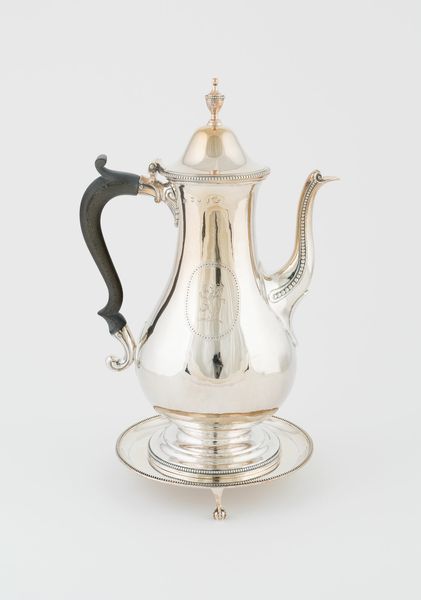
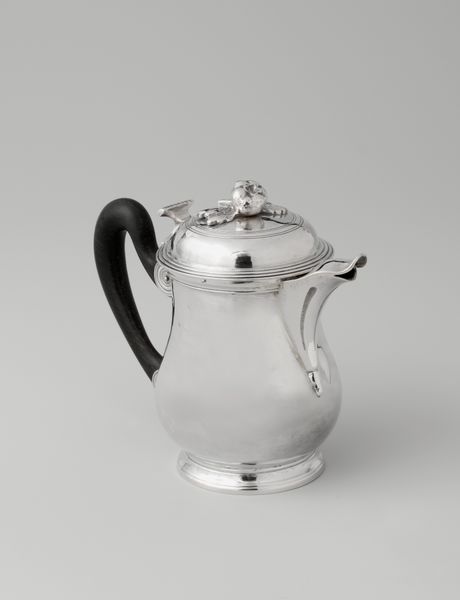
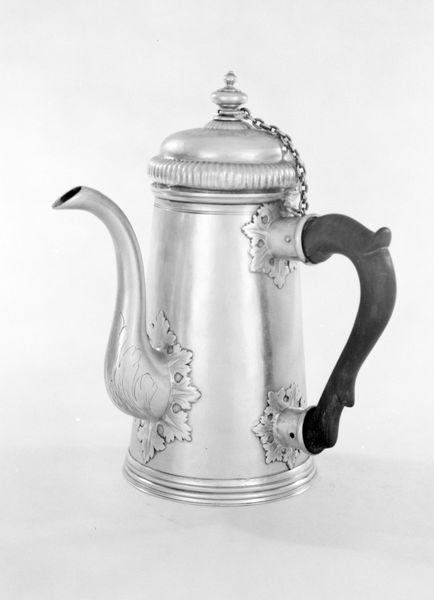
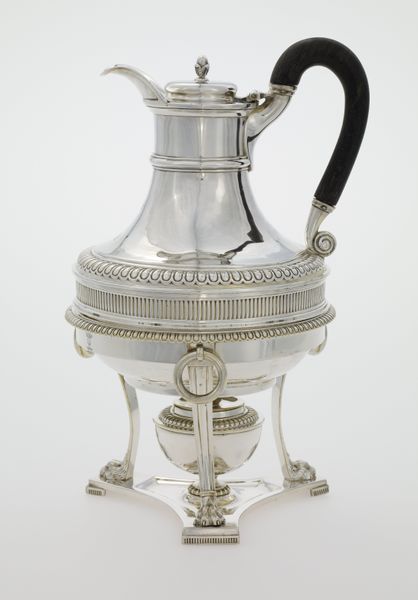
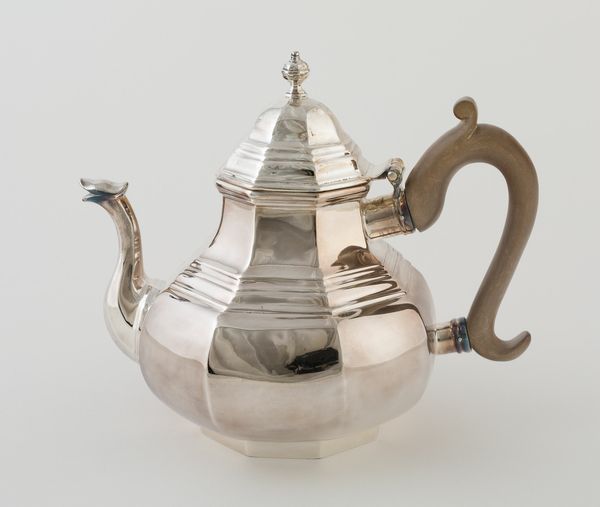
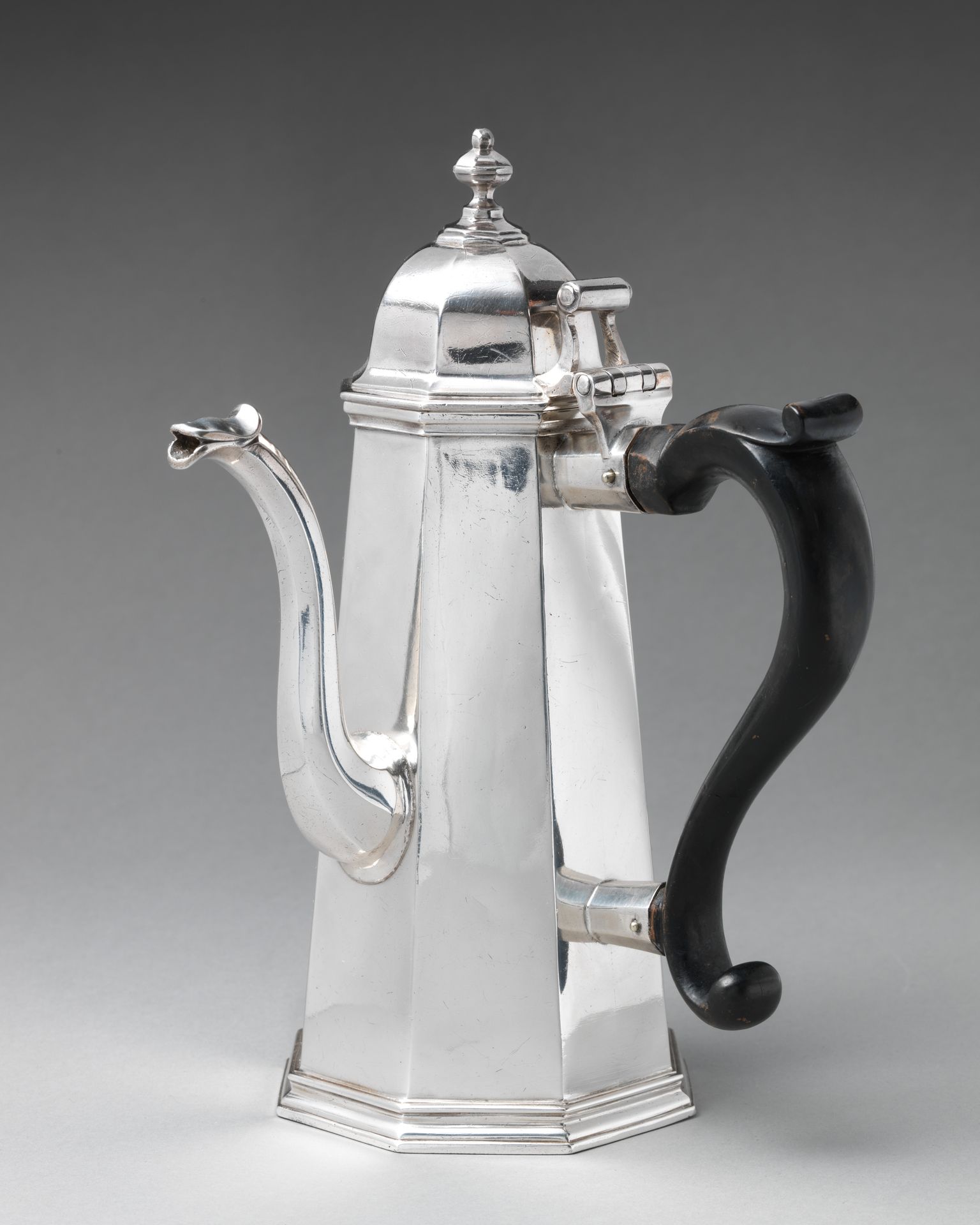
Editor: This is a Coffeepot, made between 1712 and 1713 by Robert Timbrell. It’s crafted from silver and has a wooden handle. It’s really striking how geometric it is. What stories do you think this coffeepot could tell us about its time? Curator: Well, on the surface, it seems like just a refined piece of decorative art from the Baroque era, indicative of wealth. But let's dig deeper. Silver pieces like this weren’t just functional objects, they were signifiers of social status. Think about it: who had access to coffee, silver, the leisure time for elaborate coffee rituals? It speaks volumes about class divisions. Editor: So, it’s about more than just enjoying a beverage? Curator: Precisely! Coffeehouses in the 18th century were hubs of political and intellectual debate, mostly excluding women and the working class. This coffeepot isn’t just serving coffee; it's participating in, and solidifying, a specific social hierarchy. What does the form suggest to you? Editor: The geometric design makes me think about industrialization and precision. But wouldn’t that be premature for 1712? Curator: Interesting! While it predates the full force of industrialization, it hints at a changing aesthetic, a move towards order and control that reflects broader societal shifts. Consumption habits were becoming codified, tied to notions of civility and power. Editor: I never thought I'd see so much in just a coffeepot! It really changes my understanding of art's role in reflecting society. Curator: Exactly! And that’s the beauty of it, isn't it? Ordinary objects can reveal extraordinary insights into the past and its enduring legacies.
Coffeepot
1712 - 1713


Artwork details
- Medium
- silver, metal, sculpture
- Dimensions
- Overall: 9 3/8 × 5 7/8 × 6 1/2 in., 28.921oz. (23.8 × 14.9 × 16.5 cm, 0.8 kg)
- Location
- Metropolitan Museum of Art, New York, NY
- Copyright
- Public Domain
Tags
Comments
Share your thoughts
About this artwork
Editor: This is a Coffeepot, made between 1712 and 1713 by Robert Timbrell. It’s crafted from silver and has a wooden handle. It’s really striking how geometric it is. What stories do you think this coffeepot could tell us about its time? Curator: Well, on the surface, it seems like just a refined piece of decorative art from the Baroque era, indicative of wealth. But let's dig deeper. Silver pieces like this weren’t just functional objects, they were signifiers of social status. Think about it: who had access to coffee, silver, the leisure time for elaborate coffee rituals? It speaks volumes about class divisions. Editor: So, it’s about more than just enjoying a beverage? Curator: Precisely! Coffeehouses in the 18th century were hubs of political and intellectual debate, mostly excluding women and the working class. This coffeepot isn’t just serving coffee; it's participating in, and solidifying, a specific social hierarchy. What does the form suggest to you? Editor: The geometric design makes me think about industrialization and precision. But wouldn’t that be premature for 1712? Curator: Interesting! While it predates the full force of industrialization, it hints at a changing aesthetic, a move towards order and control that reflects broader societal shifts. Consumption habits were becoming codified, tied to notions of civility and power. Editor: I never thought I'd see so much in just a coffeepot! It really changes my understanding of art's role in reflecting society. Curator: Exactly! And that’s the beauty of it, isn't it? Ordinary objects can reveal extraordinary insights into the past and its enduring legacies.
Comments
Share your thoughts