About this artwork
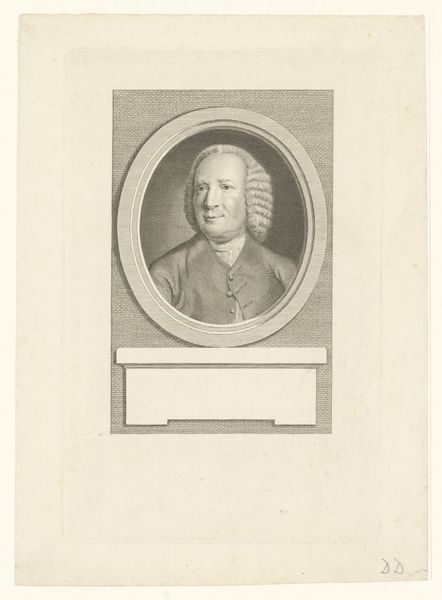
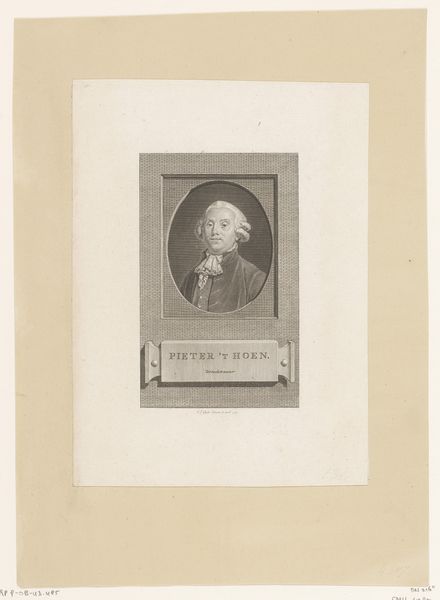
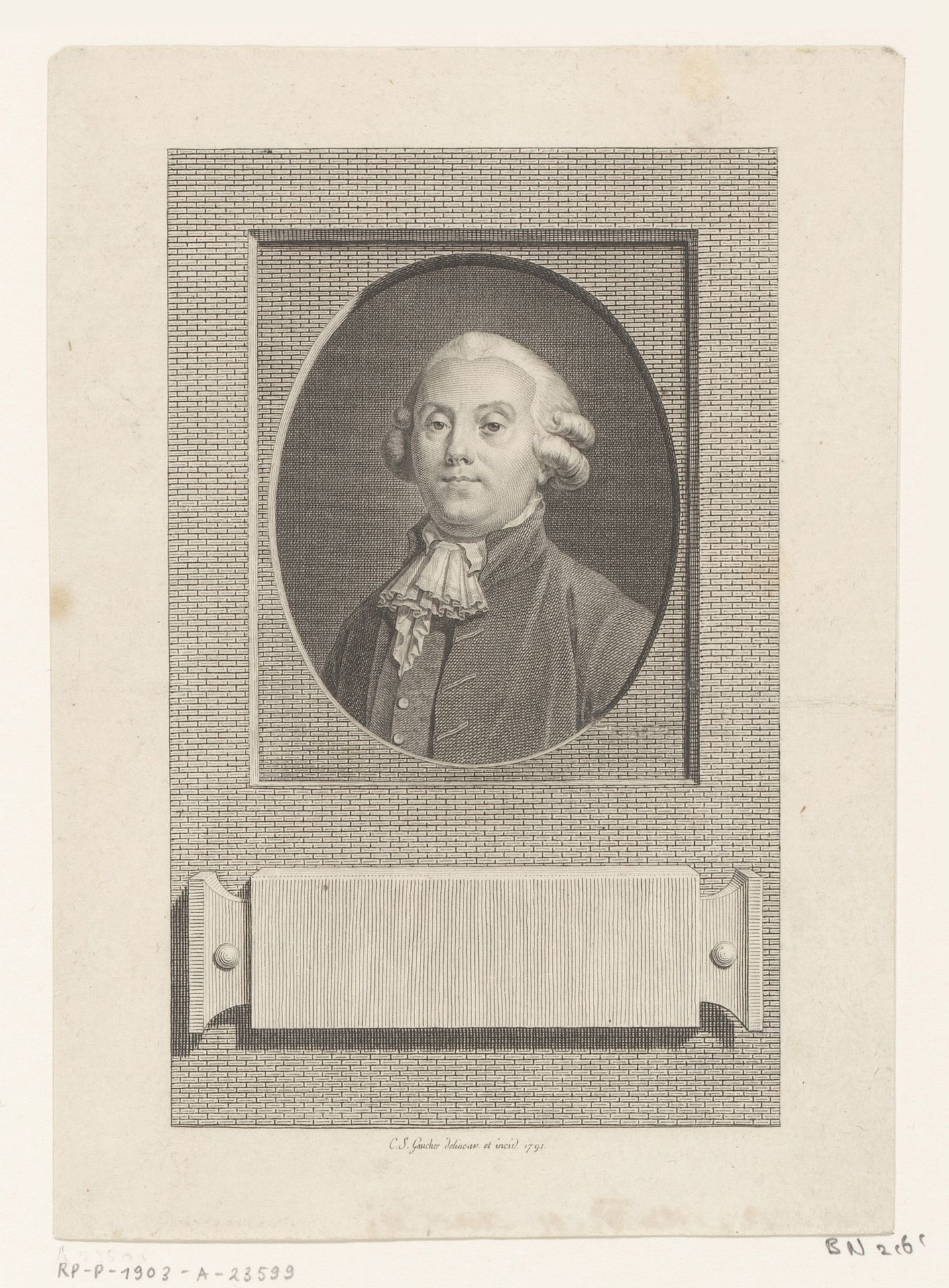
Editor: So this is Charles Etienne Gaucher's "Portret van Pieter 't Hoen," created in 1791. It’s an engraving and gives off a very formal, almost austere vibe. What do you see when you look at this piece? Curator: I see an artwork deeply embedded in the socio-political currents of its time. It depicts Pieter 't Hoen, who was an important figure in the Dutch Patriot movement, advocating for greater democratic participation and challenging the power of the Stadtholder. Editor: I see, so the artwork itself might be seen as a political statement, subtly or not. How would you say the historical context affects how the work might have been viewed at the time? Curator: Precisely. This engraving, with its Neoclassical style that often evokes civic virtue and republican ideals, could be seen as promoting the values associated with the Patriot movement. Consider its audience: who was consuming these images and what messages were they receiving about the subject's role in society? Editor: So it's less about the individual, maybe, and more about what he stood for within the broader political discourse? Curator: Absolutely. And don't forget the role of prints like this in disseminating political ideas. Before mass media, engravings like this played a crucial part in shaping public perception and bolstering political movements. It’s crucial to remember art's function as more than aesthetic. The medium served as a powerful tool for influencing the cultural milieu of the time. What do you think about how art and power might be seen today in museums? Editor: I see how powerfully these kinds of artwork played a political role. Thinking about it, I suppose, even portraits exhibited now say as much about us and our values, as of those from the past.

Artwork details
- Medium
- drawing, engraving
- Dimensions
- height 161 mm, width 114 mm
- Copyright
- Rijks Museum: Open Domain
Tags
Comments
Share your thoughts
About this artwork
Editor: So this is Charles Etienne Gaucher's "Portret van Pieter 't Hoen," created in 1791. It’s an engraving and gives off a very formal, almost austere vibe. What do you see when you look at this piece? Curator: I see an artwork deeply embedded in the socio-political currents of its time. It depicts Pieter 't Hoen, who was an important figure in the Dutch Patriot movement, advocating for greater democratic participation and challenging the power of the Stadtholder. Editor: I see, so the artwork itself might be seen as a political statement, subtly or not. How would you say the historical context affects how the work might have been viewed at the time? Curator: Precisely. This engraving, with its Neoclassical style that often evokes civic virtue and republican ideals, could be seen as promoting the values associated with the Patriot movement. Consider its audience: who was consuming these images and what messages were they receiving about the subject's role in society? Editor: So it's less about the individual, maybe, and more about what he stood for within the broader political discourse? Curator: Absolutely. And don't forget the role of prints like this in disseminating political ideas. Before mass media, engravings like this played a crucial part in shaping public perception and bolstering political movements. It’s crucial to remember art's function as more than aesthetic. The medium served as a powerful tool for influencing the cultural milieu of the time. What do you think about how art and power might be seen today in museums? Editor: I see how powerfully these kinds of artwork played a political role. Thinking about it, I suppose, even portraits exhibited now say as much about us and our values, as of those from the past.
Comments
Share your thoughts