About this artwork
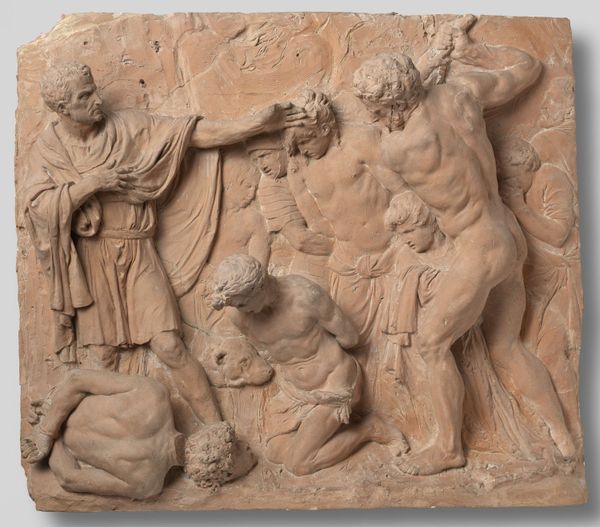
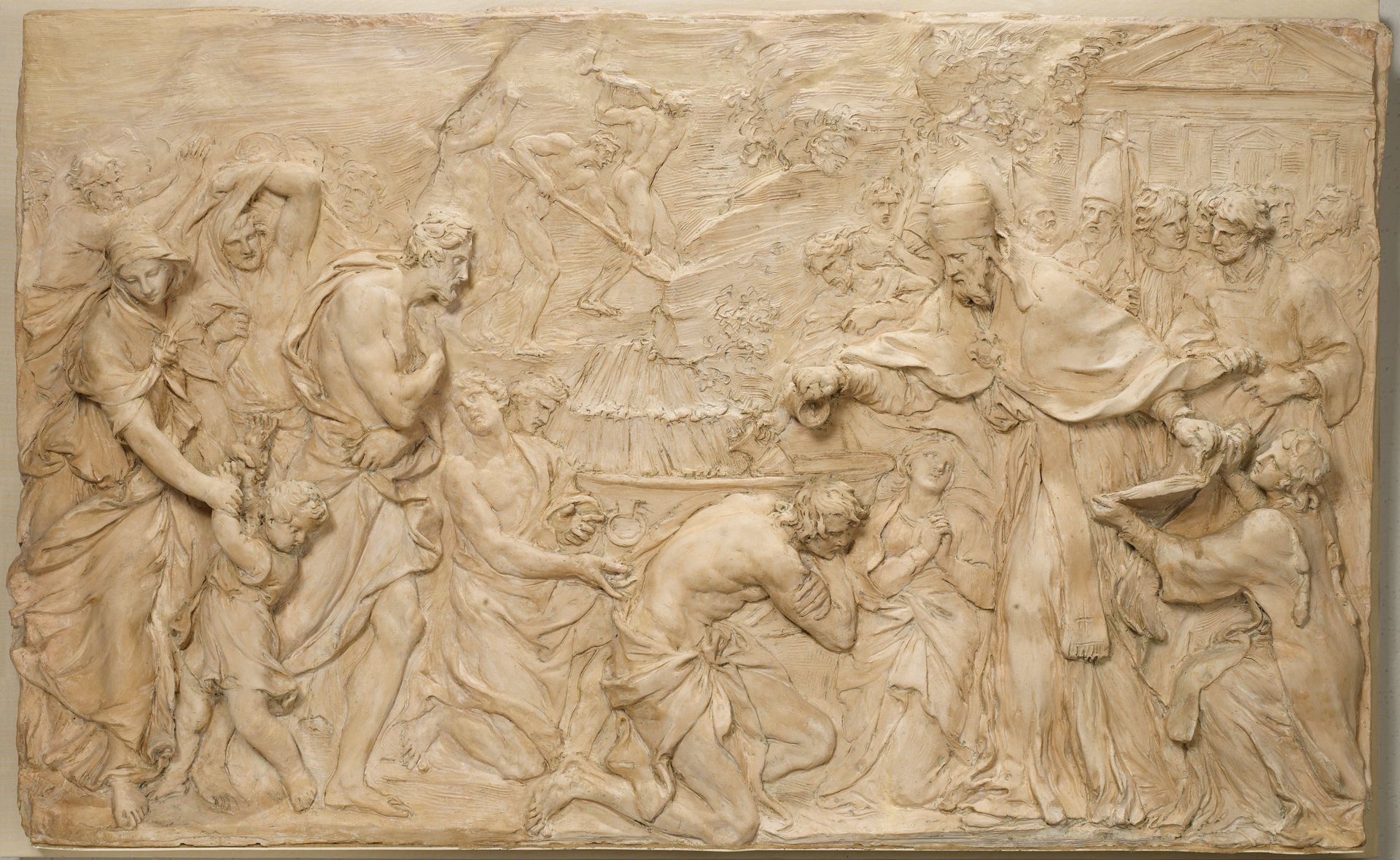
Editor: So, this terracotta relief is "Pope Liberius Baptizing the Neophytes" by Alessandro Algardi, created between 1647 and 1649. It’s packed with figures, all swirling around this central scene of baptism. I'm struck by the chaos and the intensity of emotion...What symbolic meaning do you see in this piece, beyond the obvious religious context? Curator: Well, it's important to recognize that baptism itself is a potent symbol of purification and rebirth. The figures huddled together speak to community and transformation, of casting off old identities. Notice how Algardi juxtaposes these new converts with those digging in the background. Does this labor carry any significance? Editor: Possibly, but what? Are they meant to represent the old, pre-Christian ways being buried? Or is it that new followers are needed to "plant" Christianity. Curator: Exactly! Algardi presents the active obliteration of pagan symbols to emphasize the triumph of Christianity. Consider the careful positioning of Pope Liberius. He is, figuratively and literally, towering over these people. What kind of connotations come with being taller than someone else? Editor: The immediate thing I would take away from this relief is power. I guess if I view the cross above the converts being at the very apex of the piece I can see that ultimate "power" rests in Christianity in Algardi's rendering of this subject. Curator: Precisely. By representing a historical event with such drama, and by utilizing visual cues like these, Algardi transforms this relief into a powerful statement about the pervasiveness and supremacy of the Catholic Church. This kind of art reminds its audience to celebrate change, which helps its overall message connect so strongly! Editor: I see now how the symbolic details enhance the overall message of religious dominance. Thinking about it in terms of symbolism and power has definitely changed my perspective! Curator: Glad to have had the chance to illuminate some aspects of visual and social culture.
Pope Liberius Baptizing the Neophytes
1647 - 1649
Artwork details
- Medium
- relief, sculpture, terracotta
- Dimensions
- 21 1/2 x 36 x 1 in. (54.61 x 91.44 x 2.54 cm)
- Location
- Minneapolis Institute of Art
- Copyright
- Public Domain
Tags
Comments
This terra-cotta relief is the only known study in clay for a sculpture decorating the marble fountain of Saint Damasus in the Vatican. The fountain was erected in the 17th century by Pope Innocent X to mark his restoration of aqueducts built for Pope Damasus in the 4th century. The relief shows Damasus’ predecessor, Liberius, baptizing new converts to Christianity. Damasus stands behind him, lifting his mantle. The easily worked medium of clay allowed Algardi to experiment and refine his ideas before carving the relief in marble. By sculpting the foreground figures almost fully in the round and those more distant in ever shallower relief, he achieved an illusion of depth and volume. Over time, weather and abrasive cleaning have taken a toll on the marble version, but the clay model remains evidence of the artist’s intent.
About this artwork
Editor: So, this terracotta relief is "Pope Liberius Baptizing the Neophytes" by Alessandro Algardi, created between 1647 and 1649. It’s packed with figures, all swirling around this central scene of baptism. I'm struck by the chaos and the intensity of emotion...What symbolic meaning do you see in this piece, beyond the obvious religious context? Curator: Well, it's important to recognize that baptism itself is a potent symbol of purification and rebirth. The figures huddled together speak to community and transformation, of casting off old identities. Notice how Algardi juxtaposes these new converts with those digging in the background. Does this labor carry any significance? Editor: Possibly, but what? Are they meant to represent the old, pre-Christian ways being buried? Or is it that new followers are needed to "plant" Christianity. Curator: Exactly! Algardi presents the active obliteration of pagan symbols to emphasize the triumph of Christianity. Consider the careful positioning of Pope Liberius. He is, figuratively and literally, towering over these people. What kind of connotations come with being taller than someone else? Editor: The immediate thing I would take away from this relief is power. I guess if I view the cross above the converts being at the very apex of the piece I can see that ultimate "power" rests in Christianity in Algardi's rendering of this subject. Curator: Precisely. By representing a historical event with such drama, and by utilizing visual cues like these, Algardi transforms this relief into a powerful statement about the pervasiveness and supremacy of the Catholic Church. This kind of art reminds its audience to celebrate change, which helps its overall message connect so strongly! Editor: I see now how the symbolic details enhance the overall message of religious dominance. Thinking about it in terms of symbolism and power has definitely changed my perspective! Curator: Glad to have had the chance to illuminate some aspects of visual and social culture.
Comments
This terra-cotta relief is the only known study in clay for a sculpture decorating the marble fountain of Saint Damasus in the Vatican. The fountain was erected in the 17th century by Pope Innocent X to mark his restoration of aqueducts built for Pope Damasus in the 4th century. The relief shows Damasus’ predecessor, Liberius, baptizing new converts to Christianity. Damasus stands behind him, lifting his mantle. The easily worked medium of clay allowed Algardi to experiment and refine his ideas before carving the relief in marble. By sculpting the foreground figures almost fully in the round and those more distant in ever shallower relief, he achieved an illusion of depth and volume. Over time, weather and abrasive cleaning have taken a toll on the marble version, but the clay model remains evidence of the artist’s intent.