


Curatorial notes
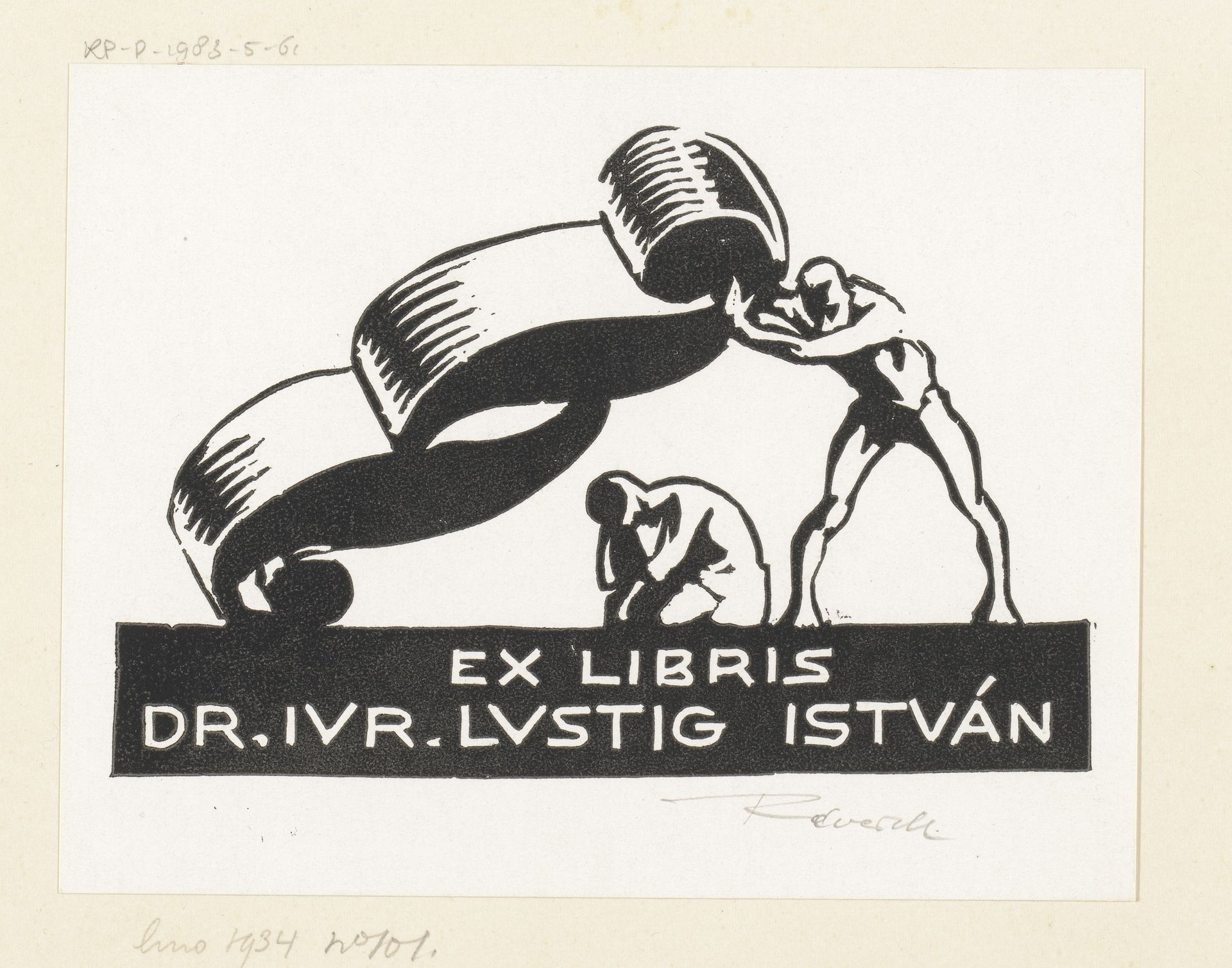
Curator: Let’s turn our attention to this bookplate—or ex libris—designed in 1934 by Kornél Révész for István Lusztig. It's a linocut print. Editor: Stark. My initial reaction is the sheer contrast and the stark graphic nature of the linocut. It's dramatic, almost oppressive in its composition. Curator: Oppressive is interesting. How so? We see the heavy, looming form above these figures. Révész is employing strong symbolic language. Observe the man struggling to hold up this massive weight, juxtaposed with another figure collapsed beneath its potential force. The geometric tension and simplified forms are palpable. Editor: Right. Given that it’s 1934, one cannot ignore the socio-political context. There is something incredibly potent here, about the burdens individuals carry and the weight of oppressive structures bearing down on them, perhaps reflective of Hungary's interwar anxieties. Curator: An insightful connection. It reflects broader European anxieties, certainly. Note how Révész uses the black ink not just to delineate, but to suggest immense weight and pressure. And the very choice of linocut—a relief printing technique—enhances the tactile nature of the piece, emphasizing the physical struggle represented. Editor: It’s worth considering who István Lusztig was and what kind of books he owned. Bookplates speak volumes, both literally and figuratively. Curator: Agreed. Knowing his intellectual or professional leanings would undoubtedly add another layer to our understanding. The "Ex Libris" itself announces ownership, doesn't it, framing this image as a marker of identity and belonging during an era defined by displacement and loss. Editor: The figures themselves, though generalized, carry a weight that feels intensely personal and undeniably connected to broader themes. Curator: Indeed. The effectiveness of this piece resides in its elegant simplicity and enduring emotional resonance. It offers a powerful vignette. Editor: A small print, but its statement reverberates with the larger movements and pressures of its time.